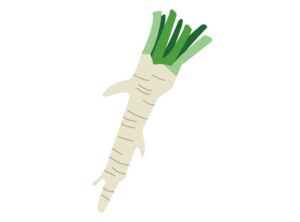
 The horseradish, also called “Armoracia rusticana,” is a plant from the cruciferous family. This plant is particularly known for its white pen-shaped root: the horseradish.
The plant can be traced back to about 1,000 years before Christ, where the Greeks and Romans were already incorporating the root into their diet.
The carrot is known for its sharp taste and is also very healthy. We explain why.
The horseradish, also called “Armoracia rusticana,” is a plant from the cruciferous family. This plant is particularly known for its white pen-shaped root: the horseradish.
The plant can be traced back to about 1,000 years before Christ, where the Greeks and Romans were already incorporating the root into their diet.
The carrot is known for its sharp taste and is also very healthy. We explain why.
Building materials in the root
Horseradish contains many minerals and vitamins, each of which helps to support your overall vitality. We list the important substances for you.
- (lots of) vitamin C;
- buyer;
- calcium;
- potassium;
What is horseradish good for?
The vitamins and minerals found in horseradish have several positive properties for your health. Vitamin C, for example, is good for your immune system and helps protect your body as an antioxidant against harmful free radicals. Potassium is good for your heart and helps keep your muscles strong and flexible. For your bones, on the other hand, the high calcium content in horseradish is beneficial. This mineral is important for the composition of your bones. Your energy metabolism gets extra support from the ample amount of copper provided by the horseradish.
Why do we use the horseradish?
Horseradish contains numerous healthy and important vitamins and minerals. These are good for many different functions in your body. Besides being incredibly healthy, horseradish is also a true seasoning in many dishes. You can use it grated, thinly peeled, crushed into powder or diced as an addition to a dish. Its pungent flavor works wonders for our dishes. For this reason, we love to use horseradish.