11 December 2014
Organic makes sense, doesn’t it?
Lately, more and more people are choosing to shop organic, but do they really know why you should choose organic? Eko Plaza and Marqt are opening more and more stores and more and more people are apparently choosing organic and better quality food. Unfortunately, it is still the majority of consumers are unaware of why organic food is so important for your health.About 200 years ago and well before that, we had access to the purest, best and freshest food available at the time. Unfortunately, times have changed tremendously now and that is no longer the case.
 Healthy soil (or soil) also determines the health and immune system of the crop growing on it. Did you know that a healthy piece of soil is full of minerals (approximately between 48 and 52 types) and countless nutrients to help your crop thrive. These companies generally leave the soil in a poor state, because of course this is much cheaper than adding all kinds of expensive minerals and trace elements to it or allowing healthy soil to develop naturally which again takes many years and there is no time for that.
Because unfortunately that takes a lot of time and time costs money.
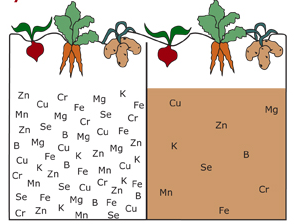
Did you know that in a non-organic soil there are only a few important minerals present instead of the many tens of minerals and trace elements?
Healthy soil (or soil) also determines the health and immune system of the crop growing on it. Did you know that a healthy piece of soil is full of minerals (approximately between 48 and 52 types) and countless nutrients to help your crop thrive. These companies generally leave the soil in a poor state, because of course this is much cheaper than adding all kinds of expensive minerals and trace elements to it or allowing healthy soil to develop naturally which again takes many years and there is no time for that.
Because unfortunately that takes a lot of time and time costs money.
Did you know that in a non-organic soil there are only a few important minerals present instead of the many tens of minerals and trace elements?
 This story has become quite long, but we hope that after reading this article you understand the importance of consuming organic food and juices. Organic food is grown on very fertile and healthy soil, the plants are not genetically modified and chemical pesticides are hardly used.
So what are you waiting for, eat organic, it makes perfect sense!
This story has become quite long, but we hope that after reading this article you understand the importance of consuming organic food and juices. Organic food is grown on very fertile and healthy soil, the plants are not genetically modified and chemical pesticides are hardly used.
So what are you waiting for, eat organic, it makes perfect sense!
All about the money
Food is now made in masses and people want to eat more and more and have it as quickly as possible. Big companies ship this to our supermarkets for the ever-increasing population and an ever-increasing demand for food. Food is being produced faster and faster with the quality getting worse and worse. The big food industries like the well-known Unilever only have the goal of making as much money as possible and as fast as possible for their shareholders and unfortunately they do not care about the health of the people who buy their products.Weakened soil
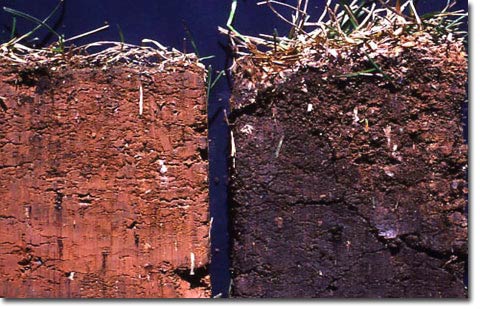
But what exactly about today’s food industries that sell and grow non-organic food? What we already briefly explained is that they try to grow as much as possible on a small piece of land, so the yield is many skinny higher. The more land you have the more it costs to maintain it. So your yield per square meter is hugely important. The soil used by non-organic farmers and farms is cheap to buy and often poor in many minerals and important nutrients. In addition, most pieces of soil that are grown on are enormously contaminated with all kinds of heavy metals that are in the soil.Left: soil lacks nutrients – right: same soil but organic
Plants look the same, but in the soil there are big differences
The chemical pesticides
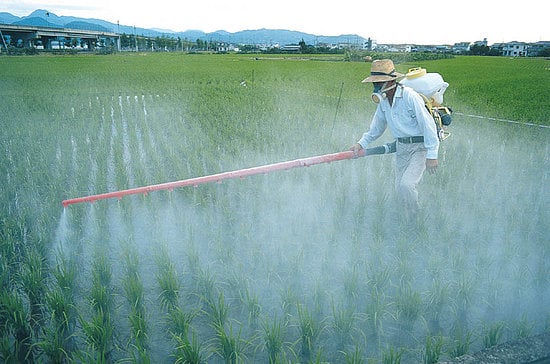
When a plant grows in a healthy soil full of minerals and important nutrients, that plant also grows up with more healthy nutrients and we eat those plants that are packed with nutrients again and of course that is healthy for our immune system. This of course should be the case but unfortunately 98% of the crops we grow on are in poor condition and far from organic. The food industries use very poor soil to grow on. Which means that the plants also lack or completely miss valuable nutrients. This in turn also means that we are not getting these either and are lacking nutrients. Growing the plants as densely as possible on weak soil also means that the plants have a weak immune system, which of course attracts all kinds of insects, weeds and fungi. In healthy plants, their natural defense mechanism is many times stronger and many of these problems can be kept at bay, but unfortunately this is virtually impossible for plants that are not healthy. So the convenient food industries have come up with something for that too. And what is the solution, the well-known highly toxic pesticides, herbicides and fungicides! These are used to kill anything that might endanger the plants and thus the income of those farmers. In case you don’t know, these pesticides are highly toxic to say the least and proven to be harmful to health. This food which is already deficient in nutrients is also full of poison and this then ends up at Albert Heijn, Jumbo, Aldi and the well-known non-organic supermarkets. From the supermarket into our shopping bag and hop into our mouth. So in summary, we eat plants that have many deficiencies and are immersed in all kinds of toxins. Do you really want this?Farmer using pesticides
Once picked
To add to that. Most of the food we consume is not even from our own country because of favorable purchase prices. It comes from very far and the food is sometimes 5 to 15 days in transit in ships, planes & trucks. Then they spend some time in the warehouse or distribution center before it is actually in the supermarket. Then it’s in the supermarket for a few days before the food is purchased by us. And then it sits in your refrigerator for a few more days before you eat it at all and then we cook the food too! The food is on the road for an average of 2 weeks before it only ends up in your mouth. What are we trying to say with this? The day a piece of fruit or vegetable is picked it already loses nutrients, and every day it is on the road it loses more and more important nutrients. And when we cook it, another more than 50% of nutrients and essential enzymes are lost. So what do you think you’re actually eating? Hardly anything This is not beneficial to our health. Our body is a wonderful healing mechanism that can heal itself just fine provided the body is healthy. If we eat food that has all kinds of deficiencies, then our body naturally also receives far fewer nutrients. Our immune system then does not get the optimal support. There are many thousands of convincing scientific studies that show that if you eat and live healthily you can help your body stay healthy and vital.Organic is not sacred
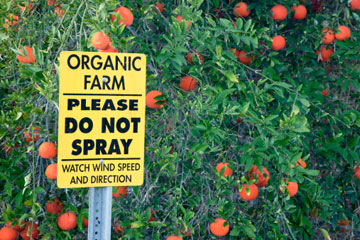
Organic food is not sacred, of course, but it is incredibly strictly controlled for pesticides. The soil is cleaner or thoroughly cleaned and therefore in much better condition, the farmers have more love for their produce, it is more often local and therefore it takes less time on the road and of course as most important no chemical pesticides are used Of course organic fruits and vegetables also contain small amounts of chemicals and pesticides, because the planes with their kerosene gases just fly over the crops, the exhaust gases from cars among others also blow by the wind over the clean crops, the dirt in the rivers and seas pollutes the soil, non-organic farmers in the neighborhood use pesticides and the rain that falls nowadays is not so clean either because of air pollution. You may be shocked but this is the reality we live in. However, organic food is many times cleaner than non-organic.
This story has become quite long, but we hope that after reading this article you understand the importance of consuming organic food and juices. Organic food is grown on very fertile and healthy soil, the plants are not genetically modified and chemical pesticides are hardly used.
So what are you waiting for, eat organic, it makes perfect sense!