Sapje or Smoothie, which is healthier?
When the hype of juicing came over from America and Australia a few years ago, we were not yet part of the juicing craze. On the contrary, we had many questions about making vegetable juice and we wondered why on earth you would drink fruits and vegetables instead of eating them. You barely get any fiber and you drink calories without feeling satisfied. So we can imagine you’re sitting with the same questions. We decided to dive deeper into it to learn as much as we could about juices. We’ve read our asses off, watched countless movies and attended various seminars. How many health benefits a juice drink brings about is shocking! So of course better late than never we too became hooked on juicing daily.
Why drink a juice?
According to the Nutrition Center, we should eat about 450 grams of fruits and vegetables a day, but the average Dutch person (about 95 percent) falls far short of this. In addition, vegetables are almost always cooked, so many vital nutrients can be lost. Also, the farmland on which we grow food is much poorer in minerals, trace elements and other essential nutrients, which can cause you to run into deficiencies faster. So we actually need to eat far more fruits and vegetables than the recommended daily allowance to get enough micro nutrients.
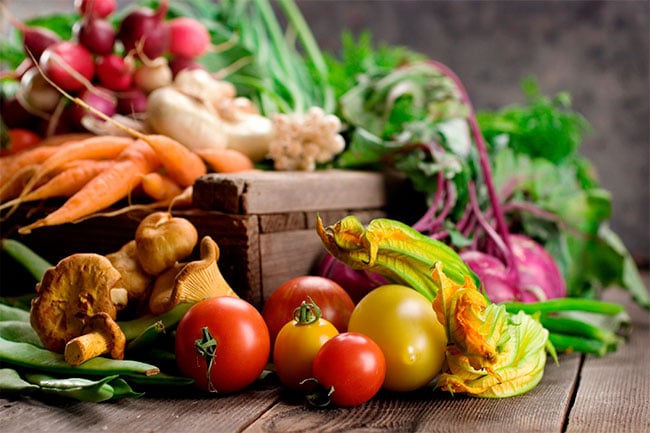
But have you ever considered eating 1 kilo of lettuce daily…? Well, neither have we. That’s why we juice: a juice you drink in no time and often has more nutritional value than a regular salad or cooked vegetable.
Equal nutritional value
For example, a fresh juice of about 250 milliliters has about as much nutritional value as about 400 to 500 grams of fruits and vegetables. This is because you are incorporating much more vegetables into a juice than you would normally eat. In addition, the vegetables in the juice are uncooked and therefore contain much more nutrients, enzymes, minerals and vitamins than, say, a stir-fry, microwave meal or steamed vegetables. Ideally, the juice should contain proportionally more vegetables than fruit.
In fact, drinking a lot of fruit juice is not good for your blood sugar levels because almost all the fiber has been taken out.
Good absorption by the body
Another advantage of a juice is that the nutrients are absorbed into your body mega-fast. Because a juice contains less fiber, your body can absorb it super efficiently within minutes. Normally, fruits and vegetables take three to four hours to digest and nutrients are released a lot slower.
Replenish nutrients easily
In short, a juice is an easy way to replenish lost and depleted nutrients without feeling too full. Think of it as replenishing your bank account. You need to replenish so you can get back into the plus and that’s done a lot faster and more efficiently by drinking a vegetable juice. This is not to say that you should stop eating fruits and vegetables altogether, but by cleverly combining them, you will be able to give your health the ideal support.
And the fiber in a vegetable juice?
There is very little fiber in a juice; about 10 to 20 percent remains, depending on the type of juicer you use. Fortunately, you can easily get fiber through other healthy foods. Our bodies need living food to build living cells. Animals, as well as fruits, vegetables, nuts and seeds, are called living foods. The sun and the earth convert all their life energy into the growth of trees, animals and plants. This forms the life energy, which we then take in. Our digestive system ensures that the fiber is separated from the juice so that the cells in our body can extract what they need to perform their work optimally. Separating the fiber from the juice in your body is broadly similar to making juice with the slow juicer. When you drink juice, your body no longer has to separate the fiber and juice and the nutrients can be absorbed in a unique and efficient way.
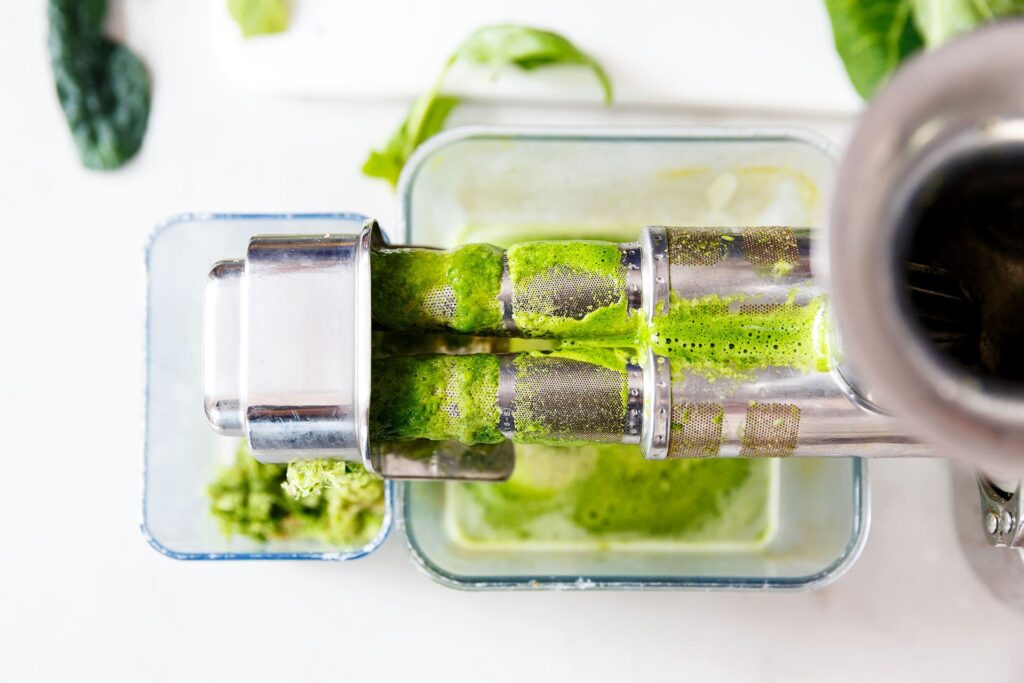
Nevertheless, many people still question juicing. You can throw fruit or vegetables into the blender, right? The answer is simple: the blender purees the food into a liquid version. The amount of fiber makes you satiated faster. Green smoothies are part of a healthy lifestyle, but you can think of a smoothie as a pre-chewed meal. The juicer actually extracts the most important thing from your fruits and vegetables – the juice. In other words, the life energy of the plants. When you drink this, it immediately nourishes your body through your bloodstream. In summary, drinking vegetable juice combined with eating healthy foods provides your body with enough fiber for a super healthy lifestyle.
And so is a multivitamin healthy?
A synthetic vitamin or mineral is replicated in a laboratory and does not remotely resemble the natural variety. Your body does not recognize it as well and will try to excrete it. Some unnatural vitamins can even be toxic to your body. When something comes from nature, your body recognizes the food and will absorb it naturally.
Scientific studies have shown that drinking juices has many benefits. It can help you get enough vegetables and give you more energy. It supports your metabolism, helps protect your body from oxidative damage, supports your immune system and bones and is good for your skin, hair and nails. Drinking juices can also help raise awareness about your diet and help you toward a healthier lifestyle. In addition, juices are great for people who are not so into fruits and vegetables, but who actually need the very important nutrients from fruits and vegetables extra, such as children and older people.
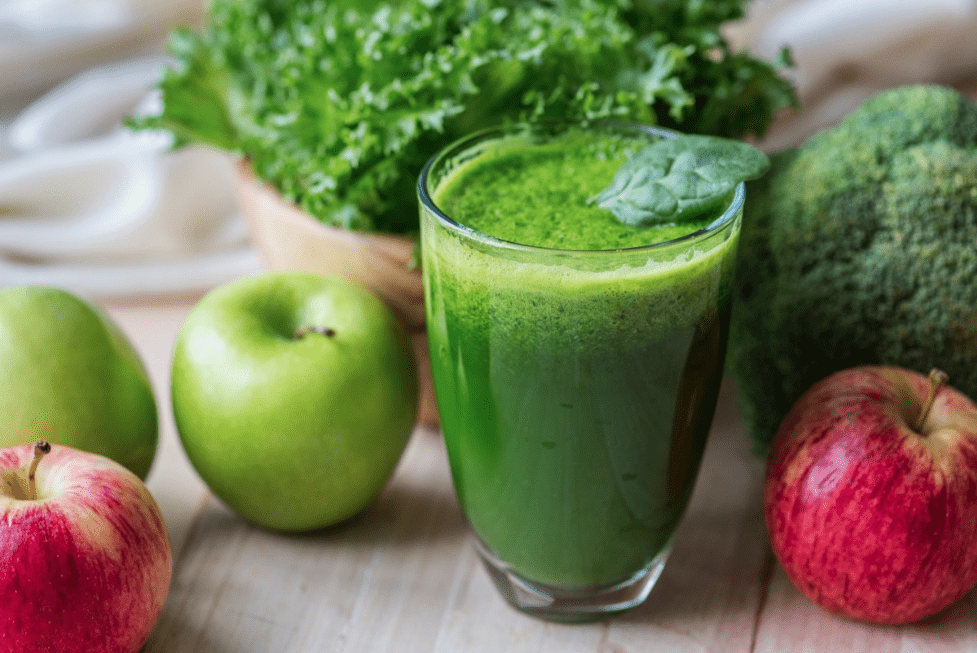
Sapje versus smoothie comparison
Both a smoothie and a vegetable juice are super healthy, however, they are also different. The smoothie has more plant and fruit fiber, but is therefore more of a liquid meal. With a slowjuice vegetable juice, on the other hand, you are extracting all the nutrients and micronutrients from the plants, fruits, herbs and spices and making them many times easier for your digestive system to absorb. Anyway, the more vegetables you consume whether it’s through a juice, soup, salad, smoothie or any other meal the healthier you are.
recipe example: smoothie of 250 ml
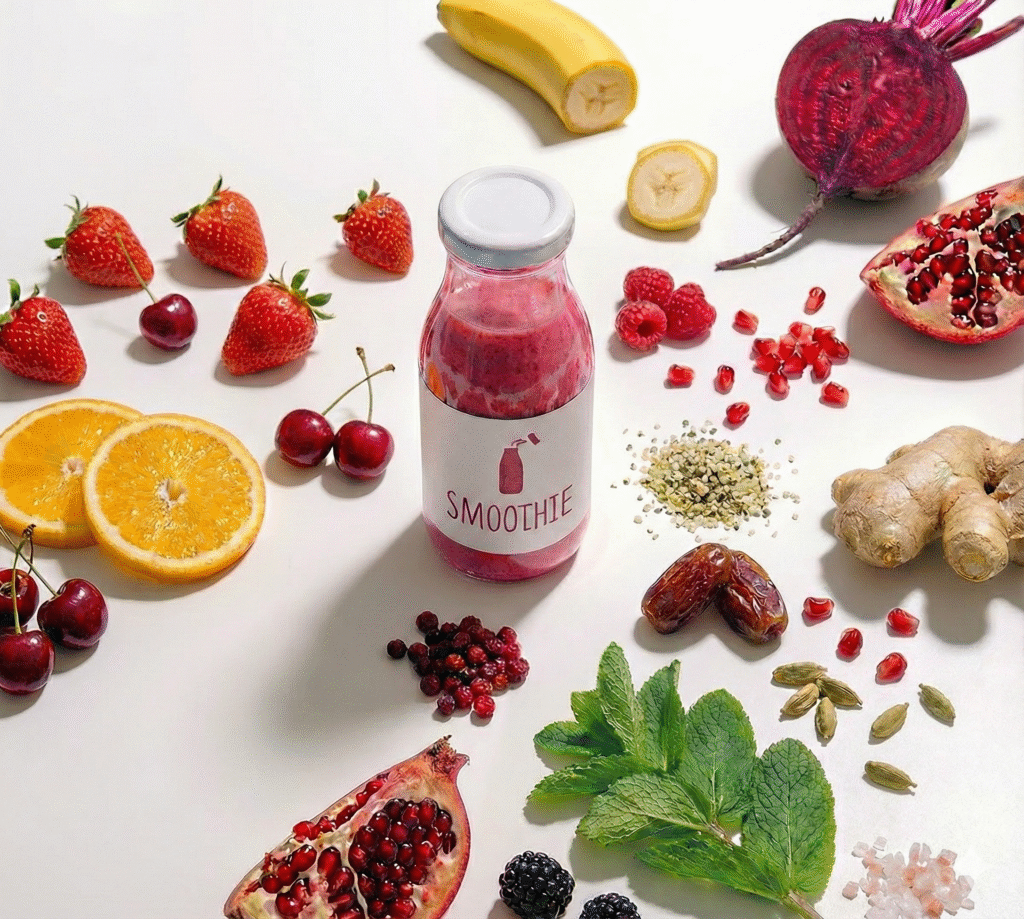
In a smoothie of 250 ml you put 150 ml water, coconut milk, almond milk or another liquid variety. Then add, for example, 1 handful of spinach, 1 banana, some turmeric powder and maybe some nuts. Otherwise the smoothie will be too thick to drink.
recipe example: vegetable juice of 250 ml
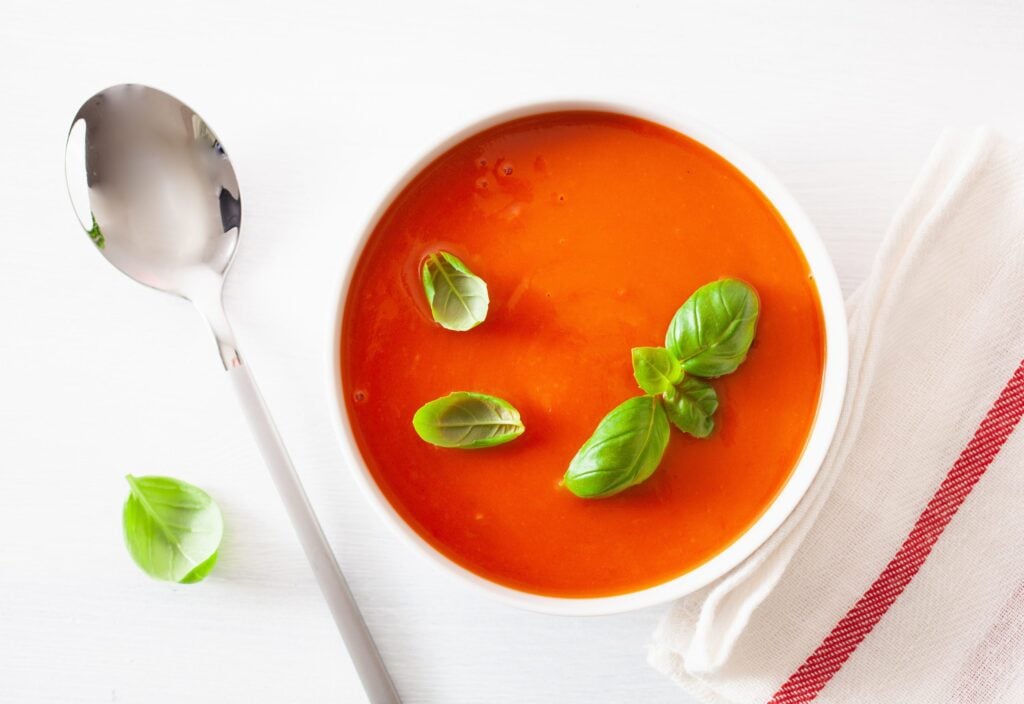
So you already put in 3-4 handfuls of spinach, 3 broccoli florets, 3 celery stalks, 1 fresh turmeric bulb, 1/2 lime, 1/4 apple, some parsley stalks and another 1/4 head of endive. So in a juice, you don’t add water as a base.
Do you see the difference?
With a smoothie you do get the complete nutrition with the fiber from a to z but you might as well eat a meal. With the vegetable juice you get many times more nutrients, enzymes, flavonoids, micronutrients, vitamins and minerals and all kinds of nutrients for which we don’t even know the name in the same content. To look only at the fiber intake then we don’t think is justified. Because the juice again contains many other nutrients that the smoothie again does not. Both a smoothie and a juice are healthy, but very different if you look at how many nutrients you get. We recommend for both a smoothie and a juice to use at least 70-80% vegetables, otherwise you can consume too many fruit sugars. We recommend if you want to support your health and your immune system and replenish your nutrient bank account substantially to rather choose a vegetable juice. We see a vegetable juice as a liquid health boost and drinking it daily is the best gift for your body.
What is the difference between a smoothie and (vegetable) juice?
In a smoothie, this pulp is still in there. This makes you feel full faster from a smoothie and also reduces your intake of vitamins and minerals.
So, in short, you get more vitamins and minerals from a glass of vegetable juice than one smoothie.