Centrifugal juicing, slow juicing, blending or cold pressing?
At Sap.je, we are obsessed with the quality of our vegetable juice. That’s why we did a lot of research on the best method to get the tastiest and healthiest juice. Below we compare centrifugal juicing, slow juicing, blending and cold pressing. Important aspects are the price of the machine, the quality of the juice, the taste of the juice, the amount of pulp left, the ease of cleaning the machine, the noise level (some machines make a lot of noise) and the types of ingredients that can be squeezed. Find out below which method and machine produces the best vegetable juice!
Making vegetable juice: what are the actual methods?
Making vegetable juice can be done in many ways these days. In fact, there are so many machines available that you can soon lose sight of the forest for the trees. Fortunately, you can save time and effort by reading our findings on four well-known methods: centrifugal juicing, blending, cold pressing and slow juicing. We discuss each method separately and go over such things as the texture, nutritional value, color, smell and taste of the juice you make with it. We also discuss how efficient juicing is, i.e., how much food is lost with it.

Centrifugal juices
The first juicer we had – we didn’t know much about it at the time – was a standard centrifugal juicer. After a while we bought another juicer because a centrifugal juicer was very tedious to clean and, more importantly, it wasted an enormous amount of fruits and vegetables. The pulp remained very wet and leafy vegetables and herbs remained fairly intact, so it looked like not much juice had come out. In addition, the speed of the turntable was very fast which created quite a lot of heat and that heat could potentially cause important nutrients to be lost.
The Juice Extractor
In recent years, more and more people have had a juicer appear on their kitchen counter. The name refers to the way the machine handles fruits and vegetables. A juicer swings them around at high speed. This also produces quick results, which is an advantage for some people. But there are also disadvantages to centrifugal juicing. This is because the rapid swirling releases heat, causing the juice to lose nutritional value.
The juicer suffers from oxidation relatively quickly: the ingredients are exposed to oxygen. In the process, important nutrients are also lost. Another disadvantage of a juicer is that it does not work equally well with all types of fruits and vegetables. In our experience, only tougher fruits and vegetables were suitable for centrifugal juicing. In addition, we were not satisfied with the efficiency. The pulp left over was still very wet, so we felt we had to throw away a lot of food.
Blenden
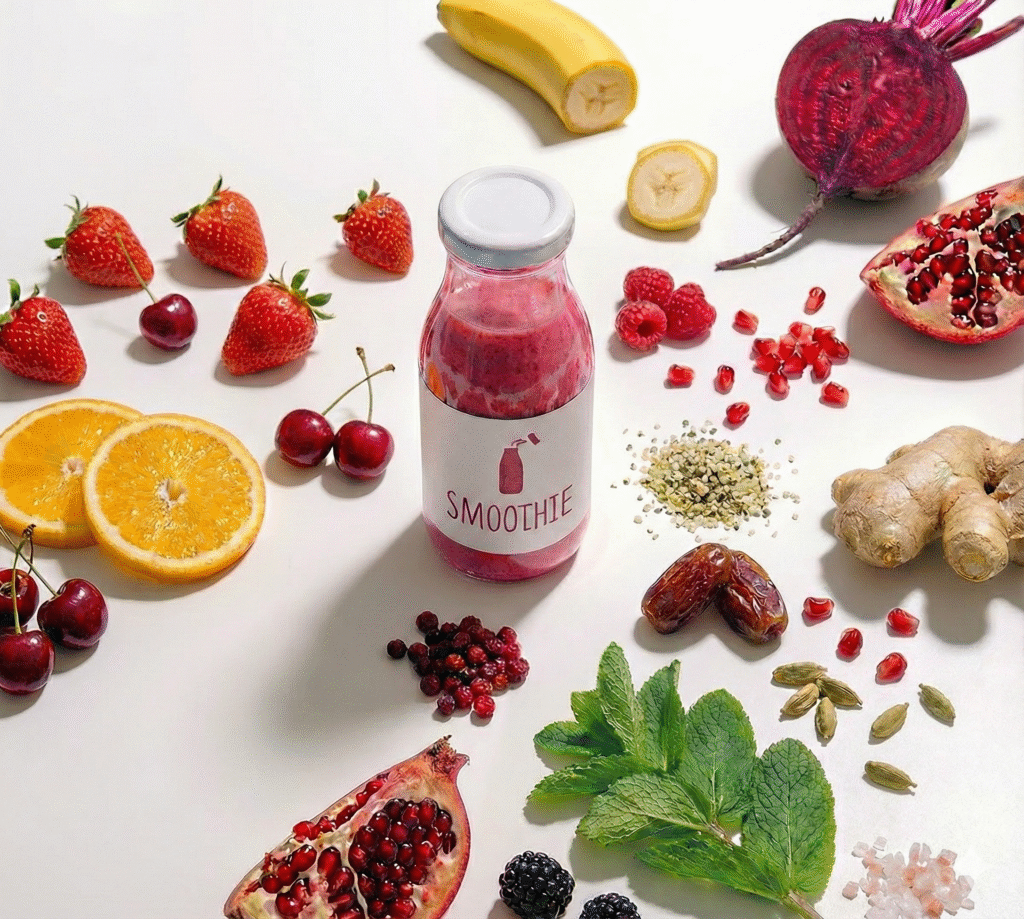
You will also find a blender in many kitchens. You can use it to make everything from juices to soups and sauces. In a blender, fruits and vegetables are basically pureed using sharp blades. The juice is not separated from the rest of the ingredients: you get out what you put in, just in a more liquid form. Because the result is usually a kind of mush, you will usually have to add liquid to get a smoothie you can drink. As a result, you can only use a limited amount of fruits and vegetables for a full glass. That also means you get fewer vitamins and minerals per glass than with other methods.
What you do get is a lot of fiber. Good for bowel movement, but it also makes you feel full. This makes a smoothie actually a meal in itself, rather than a supplement to your diet. Want to read more about whether a juice or smoothie is healthier?
Cold pressing (cold pressing)
Cold pressing is done with a machine that actually crushes or squeezes the ingredients between two plates. This method has its advantages. Cold pressed juice from such a machine is not exposed to heat like juice from a juicer. You get more juice and less fiber than with a smoothie, so you can also count on more nutrients. One disadvantage of this pressing method is that the juice is not optimal in terms of taste and texture. Often the result is a bit watery. Moreover, crushing vegetables and fruits is not the best way to extract all the substances from them. leafy vegetables, herbs and spices, cannot be juiced with this method, because the ingredients are not crushed, but crushed.
Slowjuicing
Last but not least: slow juicing. As you probably know, at Sap.je we only work with this method. This is because our research has shown that it gives you the highest quality, delicious and healthy juice, in the most efficient way. Our stainless steel Angel slow juicer has a powerful screw press that grinds vegetables, fruits, herbs, spices and seaweed slowly and efficiently.
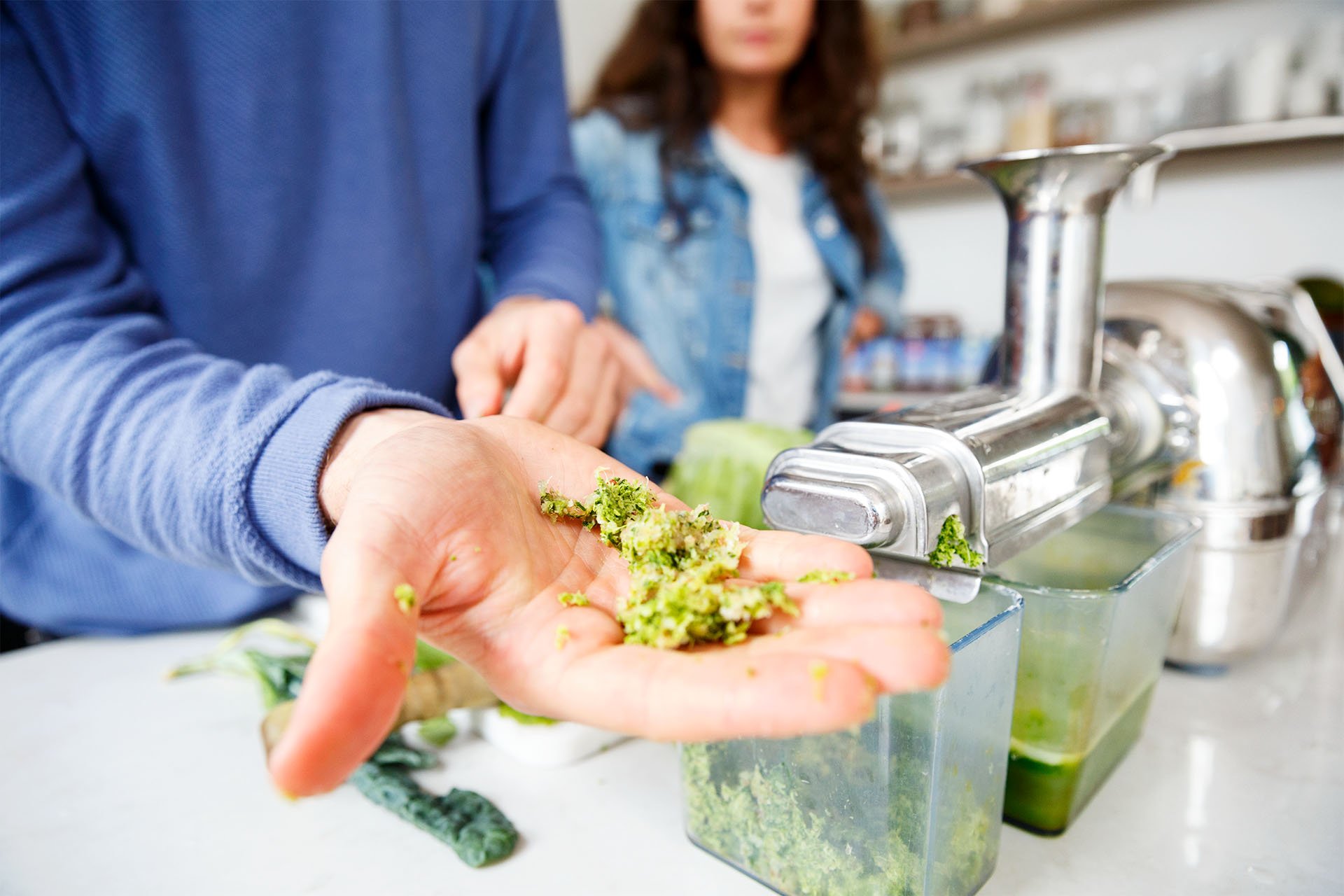
Slow juicing does not involve heat (slow juicing is also a form of cold pressing) and the ingredients are not exposed to oxygen. This machine imitates the chewing movements of your mouth, with this the machine extracts all the good nutrients from the ingredients. These are therefore easier for your body to absorb. The smell, color and taste of the juice are also better. Moreover, hardly any food is lost: all the juice is squeezed from the ingredients. The little pulp that remains is as dry as sawdust. By the way, even this is still good to use, for example in a homemade vegetable soup or vegetable omelet. Because you use up all the ingredients this way, you need to buy less. In this way, you will recoup the investment of the machine over time. What more could you want? Read more benefits of slow juicing here.
The king among slow juicers
After a long search, we changed our minds and bought the – in our opinion – king among current slow juicers: the Angel juicer. You can actually drink the divine juice from this device like water. The pulp that comes out of it is as dry as sawdust; even our rabbit won’t eat the leftover pulp. You get much more juice from fruits and vegetables than with previous juicers, which ends up saving money in the long run. The taste of the juice is also fuller and even more nutrients and enzymes are retained due to the unique grinding quality with stainless steel screws. This juicer can even juice hard tubers, herbs, spices, seaweed and all grasses. Ideal for high quality vegetable juice and to experience a detox . Also nice to know: cleaning this juicer takes as much time as cleaning a centrifugal or other slow juicer.
What should you look for when buying a slow juicer?
- The juicer should be able to juice grasses, leafy vegetables, sprouts, herbs, hard tubers and fruits.
- Look for a juicer that grinds ingredients slowly (slow).
- The temperature should not exceed 40 °C during pressing (cold pressing).
- The juicer should have a very dry pulp yield, preferably as dry as sawdust.
- The juicer should be easy to clean in five minutes.
- The device should not make too much noise.
- The juicer should be stainless steel and not plastic so that the ingredients do not come into contact with harmful substances from plastic.