






Tomato juice: all the proven health benefits
Drinking tomato juice is a great way to support your health. It is full of vitamins, minerals and antioxidants. Read more about it here!
What makes tomato juice healthy?
Tomato juice is a true classic in juice-land: it is said to have been first made in the United States back in 1917. It quickly became popular: from the 1920s it was already widely produced there. Tomato juice is the main ingredient of a hearty Bloody Mary cocktail, but even without a splash of vodka, tomato juice is a drink that will give you a boost. This is because when you drink fresh, organic tomato juice, you get a good dose of vitamins, minerals and antioxidants. At the same time, tomatoes are low in calories and pure tomato juice contains no added sugars. These factors make tomato juice healthy. Read on quickly and find out:
- why it’s better to drink fresh-pressed tomato juice than packaged tomato juice
- what vitamins and minerals make tomato juice so healthy
- what you need to know about the compound lycopene in tomato juice
- Why tomato juice is also a suitable drink if you are extra health conscious
- how to make your own tomato juice (including a delicious recipe from our great juice book)
How healthy is tomato juice?
Of course, how healthy tomato juice is depends on any added ingredients and the processing process. Basically, it’s best to choose tomato juice that contains only the juice of fresh, ripe, raw tomatoes with no salt, sugar or preservatives added. Fresh
Freshly squeezed tomato juice
Fresh, organic tomato juice that you have squeezed yourself is very healthy. At the end of this article you will find a tasty recipe to make your own tomato juice. Don’t have time to make your own tomato juice? Then you can also buy it. The best option is organic tomato juice that has been preserved naturally to preserve the nutrients; for example, by
What nutrients are in tomato juice?
Ideally, your fresh tomato juice contains nothing but the juice of tomatoes (although you’ll discover other healthy ingredients in our recipe, but they don’t detract from the health of the fresh tomatoes that go into it). Let’s dig a little deeper into the nutritional profile of the tomato to see how healthy it actually is. According to the U.S. USDA (1), a medium-sized, ripe, raw tomato contains about:
- 22 calories
- 4.8 grams of carbohydrates
- 1.1 grams of protein
- 0.2 grams of fat
- 1.5 grams of fiber
- 3.2 grams of sugars
So a tomato is low in calories, but rich in vitamins and minerals. Below we list the healthy nutrients in tomato juice and their health benefits for you!
Vitamins and minerals in tomato juice
According to the above source, a medium-sized, ripe tomato contains approx:
- 16.9 milligrams of vitamin C (good for your immune system, skin and protection against free radicals)
- 51.7 international units of vitamin A(good for your eyes, skin and resistance)
- 9.7 micrograms of vitamin K (supports healthy blood clotting and maintenance of strong bones)
- 292 milligrams of potassium (good for your muscles, nervous system and healthy blood pressure)
- 0.1 milligrams of vitamin B6 (contributes to good energy levels, among other things)
- 18.4 milligrams of folic acid (supports red blood cell production)
In addition, a tomato contains even smaller amounts of the following nutrients:
- vitamin E (helps protect against free radicals)
- calcium (good for bones, teeth and muscles)
- iron (supports resistance, energy levels and a clear mind)
- magnesium (good for concentration and bones)
- phosphorus (promotes your energy metabolism)
- zinc (good for your concentration, skin, hair, nails and resistance)
- copper (contributes to a healthy immune system and nervous system, among other things)
- niacin (vitamin B3, contributes to energy supply)
- pantothenic acid (vitamin B5, also contributes to energy supply)
- choline
- betaine
- lycopene
For an average glass of tomato juice, you quickly use 2 medium-sized tomatoes, so this will give you a double dose of these healthy nutrients!
Lycopene and antioxidants in tomato juice
Tomato juice is a very rich source of antioxidants. Among other things, it contains a lot of vitamin E. These and other antioxidants in tomato juice can help your body trap free radicals. As a result, they help protect your healthy cells and tissues from oxidative damage.
Tomatoes are also known for their high content of lycopene (2). Lycopene is a carotenoid found exclusively in plants and is responsible for the red color of tomatoes. It is also often added to produce as a natural coloring agent. Other carotenoids in tomatoes include beta-carotene, gamma-carotene and several other forms.
Lycopene in raw and cooked tomatoes
Research (3) has shown that heating tomatoes causes the lycopene they contain to be even more easily absorbed by the body. This is especially true if the tomatoes are prepared with some form of fat, such as olive oil, for example. So do you want to take extra advantage of lycopene? Then make a nice tomato soup with a dash of olive oil in it!
Again, heating is usually not so good for other nutrients, such as vitamins and minerals. So want to reap the benefits of all those other beneficial compounds in tomato juice? Then drink it in its fresh, unprocessed form. Of course, you can also “have it both ways” by alternating raw tomato juice and cooked tomato soup. Fortunately, our recipe for ‘gazpacho’ tomato juice/tomato soup at the bottom of this article is delicious and healthy both cold and hot!
Other health benefits of tomato juice
Regularly drinking a glass of tomato juice can also be beneficial for the functioning of your blood vessels. This is because tomato juice contains a lot of vitamin C, which contributes to the formation of collagen, which is important for the favorable functioning of blood vessels. In addition, tomato juice is very rich in potassium, a mineral that is beneficial for your blood pressure.
Adding organic tomato juice to your diet is also a good idea for your muscles and bones. This is because tomato juice is high in calcium, and plays a role in maintaining strong muscles. A study (4) shows that tomato juice is also a healthy choice for overweight people. This is not only because of the healthy nutrients in tomato juice, but also because it is low in sugars (and calories in general).
The sugar content of tomato juice
As you may know, the tomato is actually not a vegetable, but a fruit, because it has seeds and the tomato plant gives flowers. Botanically, the tomato is classified with the berries. Therefore, tomato juice is not actually a vegetable juice, but a fruit juice.
While fruit juice can be rich in vitamins and minerals, it is also often high in fructose, or fruit sugars (aka fruit sugars). That’s why we at Sapje specialize in organic vegetable juices. These often offer just as many healthy nutrients, but are better for your teeth and energy levels. But for tomato juice, we like to make an exception. In fact, compared to other fruit juices, tomato juice is fairly low in fructose. Just look at the sugar levels of these well-known fruit juices per 200 ml glass:
- Apple juice: 92 calories, including 21 grams of sugars
- Grape juice: 130 calories, including 32 grams of sugars
- Orange juice: about 80 calories (from pack: 19 grams, fresh: 17 grams of sugars)
- Tomato juice: about 32 calories and 6.2 grams of sugars. (5)
Does tomato juice have any drawbacks?
Tomatoes are the fruits of the tomato plant (botanical name Solanum lycopersicum). This is a member of the nightshade family(Solanacaea), along with potatoes, peppers and eggplants, among others. Some people get an allergic reaction or other hypersensitivity reaction after consuming foods from this plant family. Therefore, if you belong to this group of people, it is not wise to drink (too much) tomato juice.
Making your own tomato juice: tasty and healthy slowjuice recipe
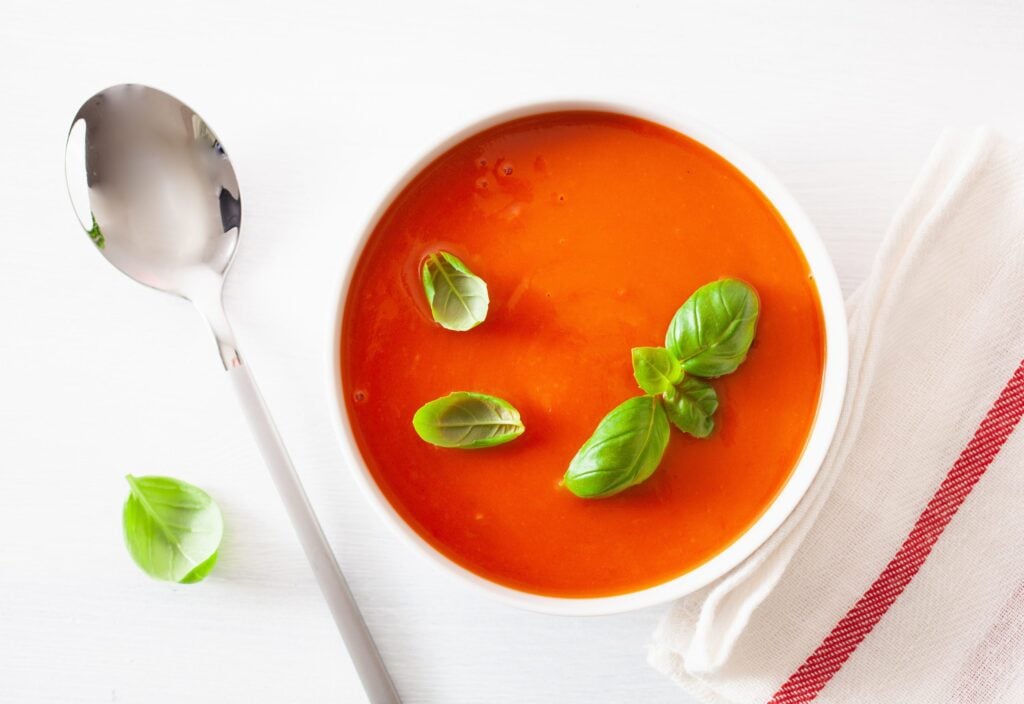
‘Gazpacho’ tomato juice/soup
Supplies per person:
- 2 tomatoes
- 1 stalk of celery
- 1 orange carrot
- red bell pepper
- cucumber
- 4 basil leaves
- clove of garlic
Preparation:
1. Squeeze the tomatoes in the slow juicer.
2. Squeeze the celery stem into the juicer, without the leaves.
3. Remove the ends of the carrot, cut it into small pieces and squeeze it into the juicer.
4. Remove the seeds from the bell bell pepper and squeeze into the juicer.
5. Squeeze the cucumber with peel into the juicer.
6. Squeeze the basil leaves including stems into the juicer.
7. Remove the outer skin of the garlic clove and squeeze it into the juicer.
8. Add a dash of olive oil if necessary.
9. Drink as soon as possible.
10. (Or warm it up, for that extra lycopene absorption)
Rather buy tomato soup or tomato juice?
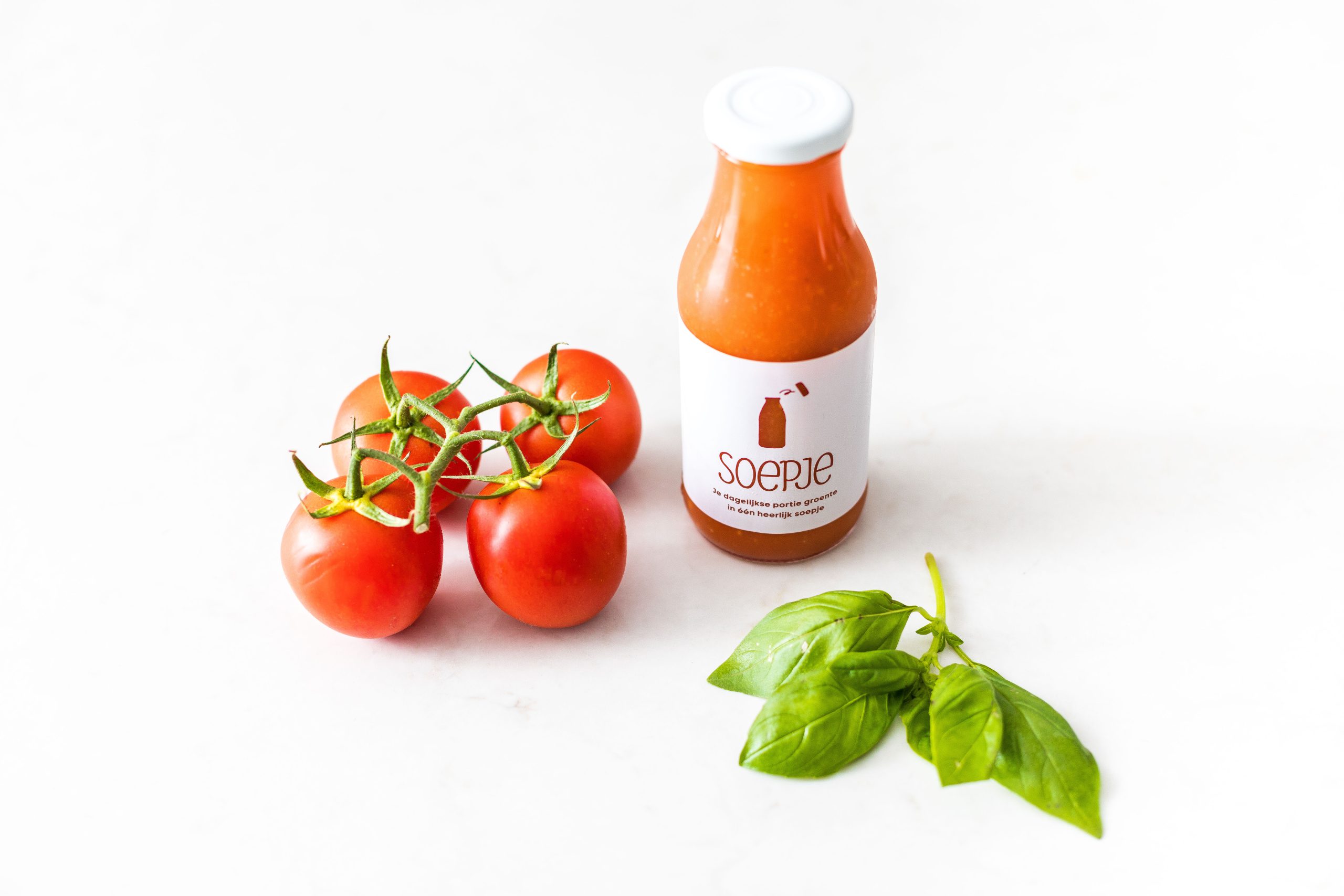
Don’t have time to make your own fresh tomato juice or tomato soup? Then make it easy on yourself and order our tomato juice made from organic tomatoes. This is made with the best fresh, local, seasonal ingredients and hand-pressed with the slow juicer to best preserve the flavor and nutritional value of the tomato juice. Our organic tomato soup is pan-cooked. Then both were quickly frozen using the shock freezer. This is a natural preservation method, so no other preservatives are needed. When ordering, you choose where and when we should deliver the juices or soups. You then only need to thaw them to easily enjoy all the goodness that fresh tomato juice and tomato soup have to offer your health!
Sources:
FoodData Central. (n.d.). https://fdc.nal.usda.gov/fdc-app.html#/food-details/170457/nutrients
Ghavipour, M., Sotoudeh, G., & Ghorbani, M. (2015). Tomato juice consumption improves blood antioxidative biomarkers in overweight and obese females. Clinical Nutrition, 34(5), 805-809. https://doi.org/10.1016/j.clnu.2014.10.012
Giovannucci, E. (2002). A Review of Epidemiologic Studies of Tomatoes, Lycopene, and Prostate Cancer. Experimental Biology and Medicine, 227(10), 852-859. https://doi.org/10.1177/153537020222701003
The Diabetes Fund. (n.d.). How much sugar is in fruit juice? https://www.diabetesfonds.nl/over-eten/hoeveel-suiker-zit-er-in/hoeveel-suiker-zit-er-in-vruchtensap
Nutrition Center. (n.d.). Page unfortunately not found. https://www.voedingscentrum.nl/nl/404.aspx?requestedpath=/encyclopedie/lycopeen.aspx
Can I drink tomato juice even if I am losing weight?
What vitamins and minerals are in tomato juice?
What are other health benefits of tomato juice?
How do I make my own healthy tomato juice?
Note that the tomato juice is made, according to our recipe, with a slow juicer. We use this device because it brings more vitamins and minerals to your (tomato) juice.
Don’t have a slow juicer? No problem! You can also use a hand blender or blender.