Everything you need to know about iron in your diet
Iron is a mineral that occurs naturally in our diet and is incredibly important for your health. But what does iron actually do in your body? How much iron do you need? And what foods can you eat to get enough iron? In this blog, we tell you everything you need to know about iron.
What does iron do in your body?
You may have already known that iron is important for your health. In fact, iron is an essential nutrient, which means you should get enough of it through your diet. The mineral is involved in many different processes in our body. Among other things, it helps in the normal formation of hemoglobin. This is the protein responsible for the color of your red blood cells. In addition, iron contributes to normal oxygen transport in your body. Other important functions of iron are:
- Promotes your energy metabolism
- Supports your immune system
- Contributes to the production of cells and tissues
- Helps to reduce fatigue
- Good for your memory and concentration
How much iron do you need?
The amount of iron you need daily depends on your age and gender. This is because women of childbearing age lose more iron through blood loss during menstruation. Hence, the recommended daily allowance (RDA) of iron for women of childbearing age is 16 mg per day, while it is 11 mg for post-menopausal women and men.
Your diet and lifestyle can also affect your iron requirements. For example, if you eat vegetarian or vegan, it is more difficult to absorb enough iron. We’ll tell you more about this in the next section. It can also be a challenge for people who exercise fanatically to absorb enough iron. After heavy training or competition, your body absorbs less iron. This is because after exercise, the protein
What does iron contain?
There are 2 types of iron found in foods: heme iron and non-heme iron. Heme iron is the iron bound to hemoglobin. You find this form only in animal products, especially in meat and fish. Plant foods contain only non-heme iron. An important difference between these two forms of iron is that heme iron is much more absorbable than non-heme iron. Your body absorbs about 25% of heme iron and only 1-10% of non-heme iron. Although with an average diet you only get 10% of your total iron intake from heme iron, the higher absorption does ensure that heme iron contributes the most to your iron supply. When you eat little or no animal products, you generally get less iron. For vegetarians and vegans, it is therefore good to take this into account.
Iron-rich foods
Good sources of heme iron (animal products)*:
| Food | Heme iron (mg/100g) | Non-heme iron (mg/100g) |
| Pork liver (prepared) | 4,9 | 18,4 |
| Beef tartare (prepared) | 2,3 | 1,2 |
| Beef steak (prepared) | 1,8 | 1,0 |
| Liver sausage | 1,3 | 4,1 |
| Mussels (cooked) | 1,0 | 3,0 |
| Tuna in water (canned) | 0,4 | 1,1 |
| Chicken breast (prepared) | 0,2 | 0,5 |
Good sources of non-heme iron (plant products)*:
| Food | Heme iron (mg/100g) | Non-heme iron (mg/100g) |
| Pumpkin seeds | 0 | 8,0 |
| Chia seed | 0 | 7,7 |
| Cashews | 0 | 6,7 |
| Chard | 0 | 4,0 |
| Turnip greens | 0 | 3,0 |
| Purslane | 0 | 3,0 |
| Red lentils (cooked) | 0 | 2,6 |
| Kidney beans (cooked) | 0 | 2,3 |
| Spinach | 0 | 2,0 |
*Source: NEVO-online version 2019/6.0
Improve absorption of non-heme iron
What your diet looks like affects not only how much iron enters your body, but also how much you actually absorb. In fact, there are several nutrients that can affect iron absorption. The most important of these is vitamin C. This vitamin helps absorb non-heme iron from your diet. Thus, by adding vitamin C to a meal, you can ensure that your body absorbs more iron.
There are also foods that can actually counteract iron absorption. For example, the polyphenols in coffee and tea reduce the absorption of non-heme iron. So to improve iron absorption, it’s best to avoid drinking coffee or tea around your meals. Phytates (or phytic acid) from grains and legumes also reduce the absorption of non-heme iron. Finally, the mineral calcium also reduces the absorption of iron, both heme and non-heme iron.
Promotes iron absorption:
- Vitamin C
Adverse to iron absorption:
- Polyphenols in coffee and tea
- Phytate in grains and legumes
- Calcium
Increase your iron intake with vegetable juices
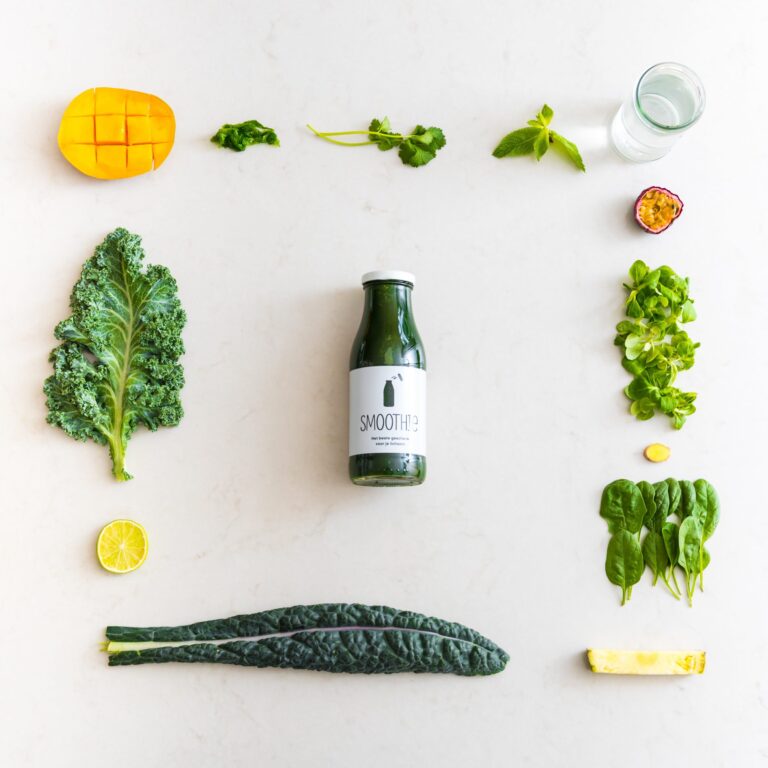
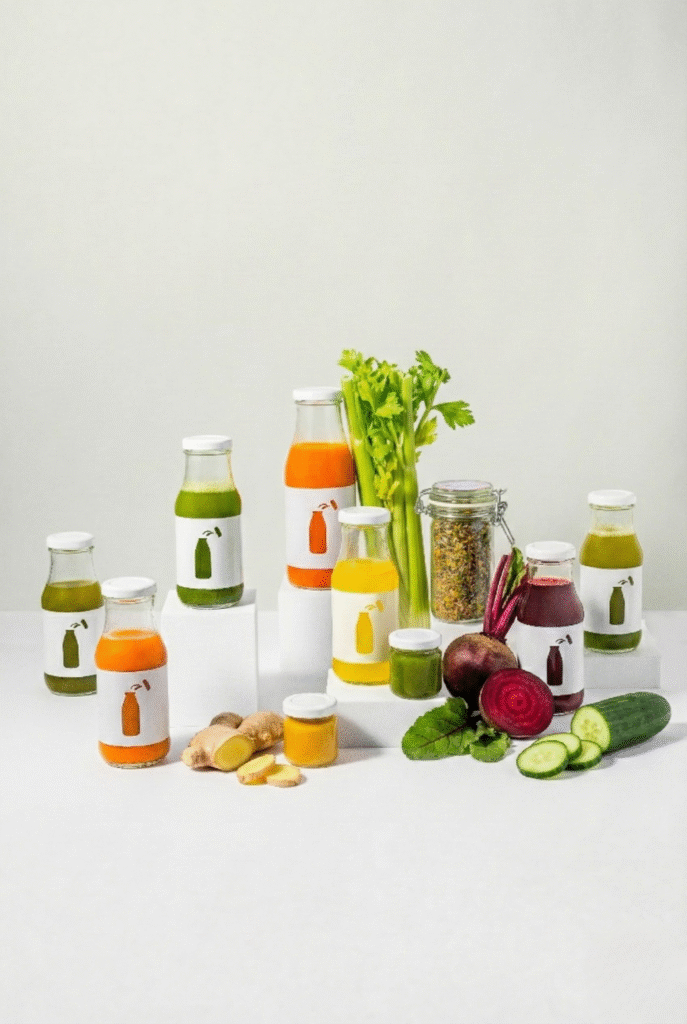
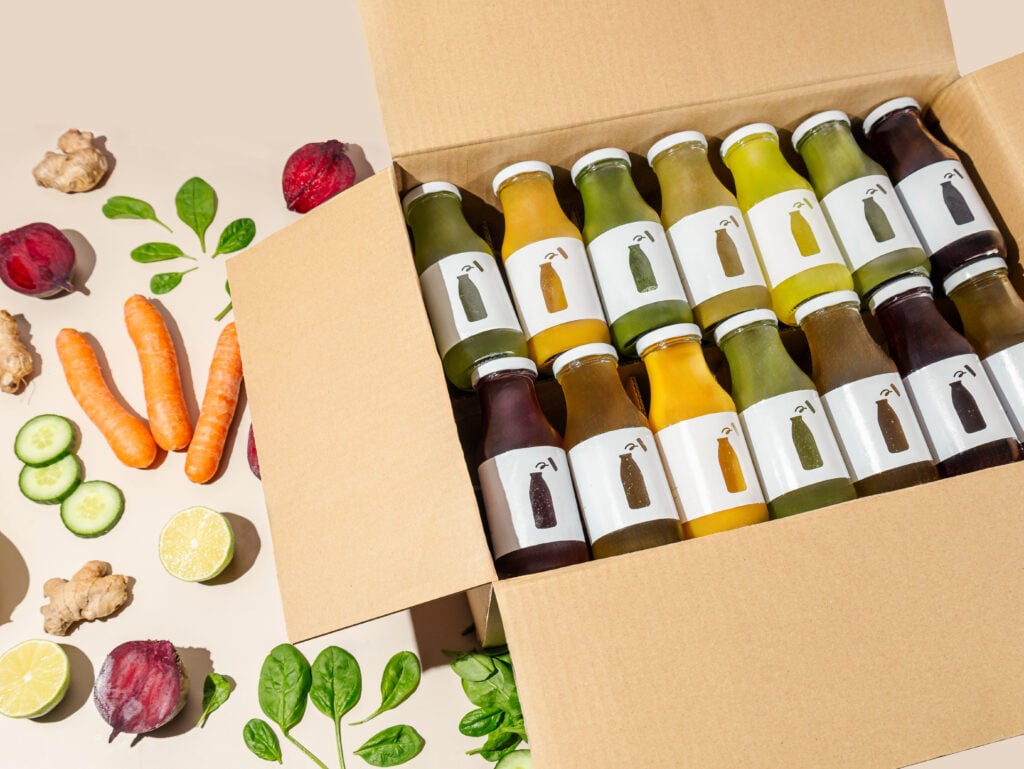
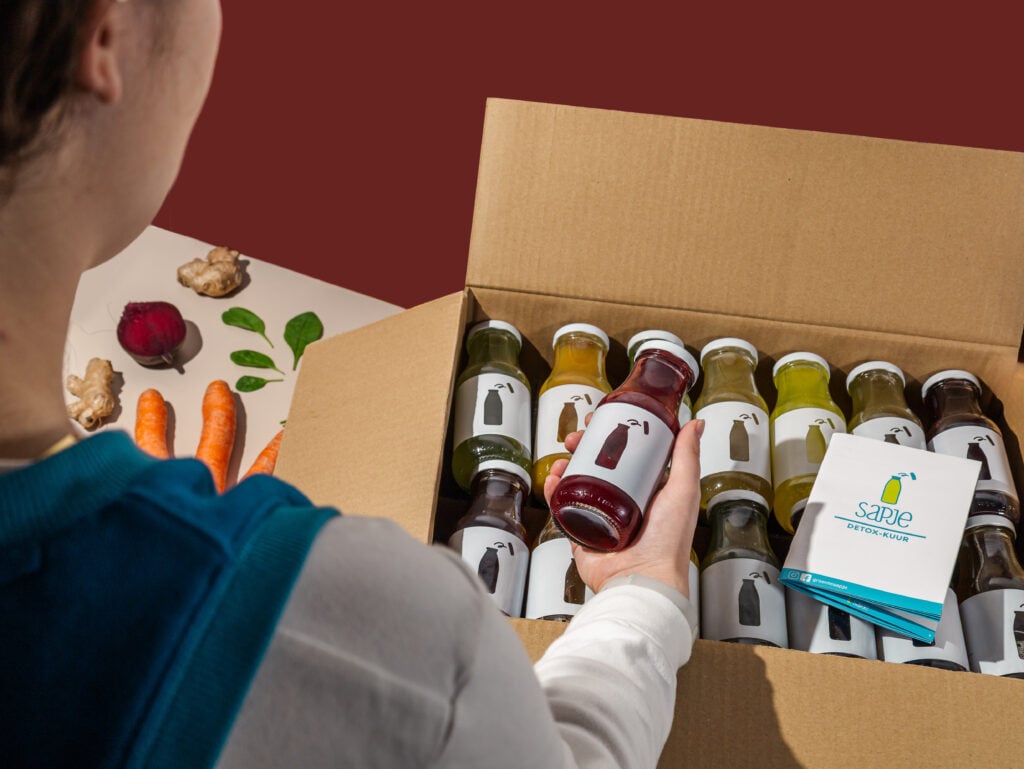
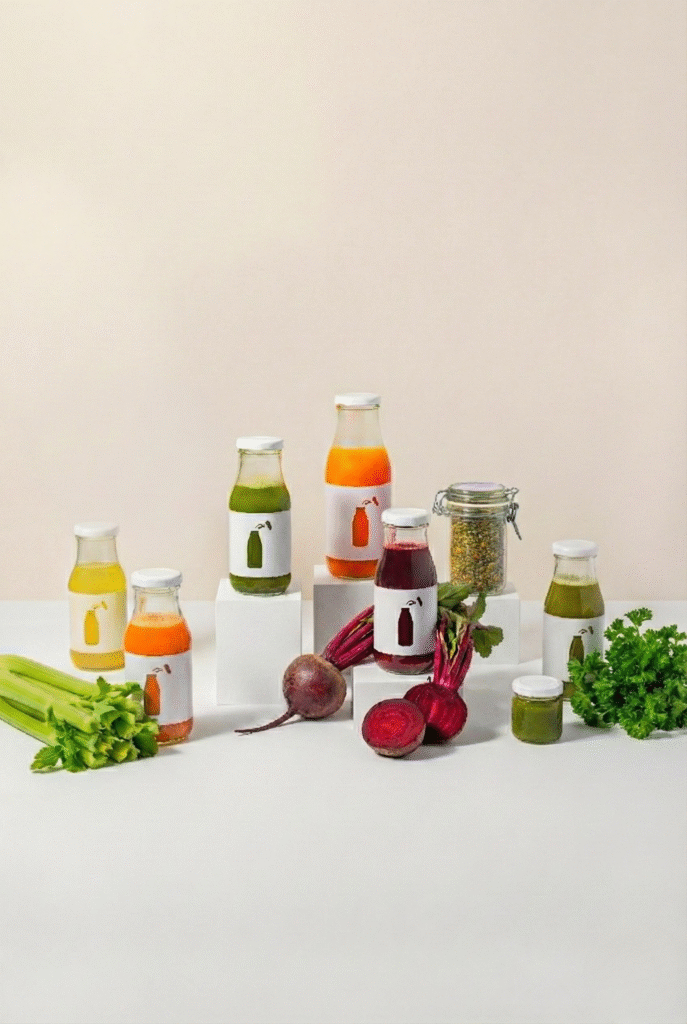
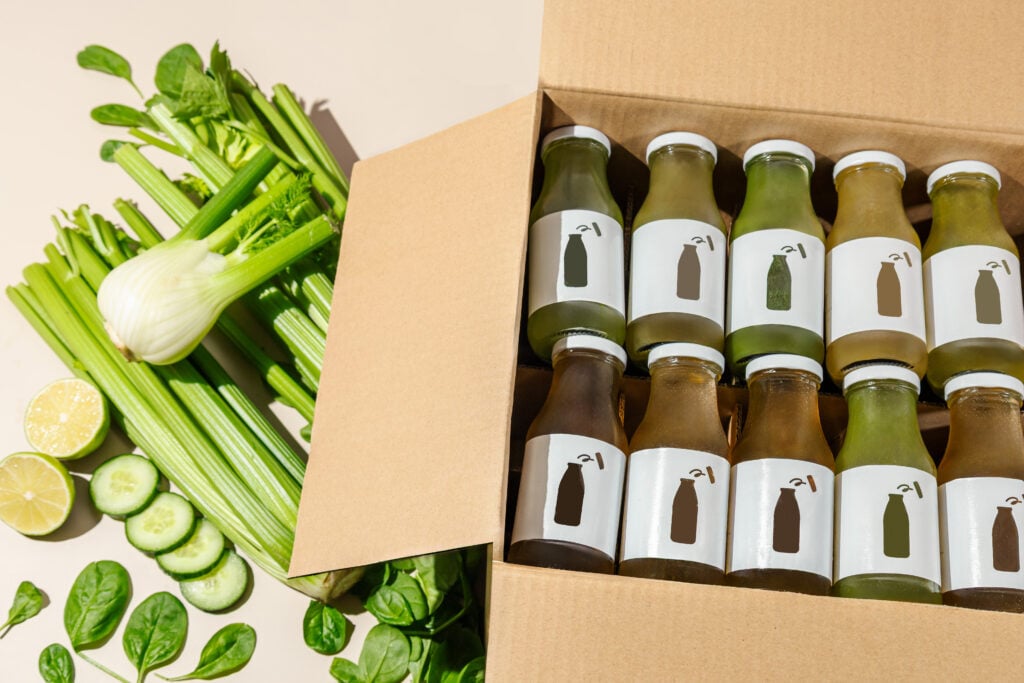
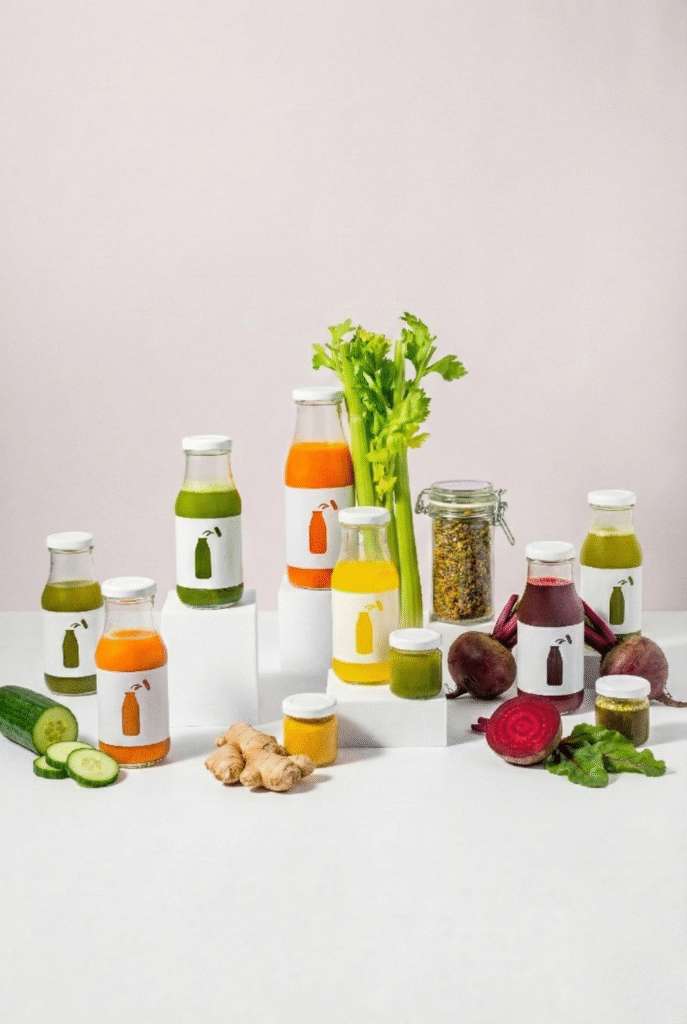
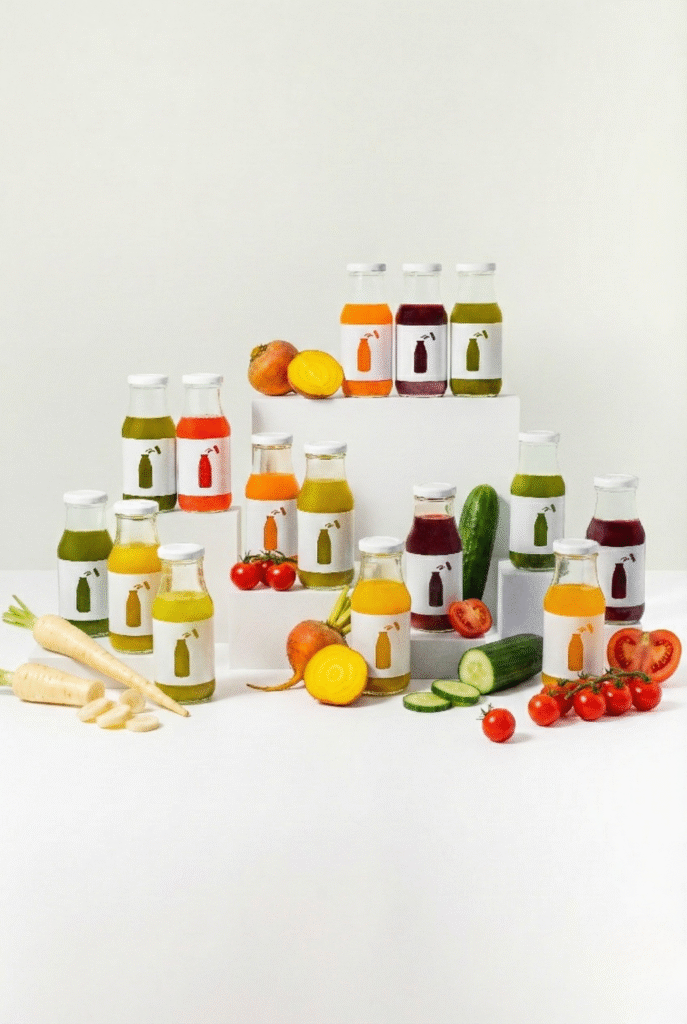
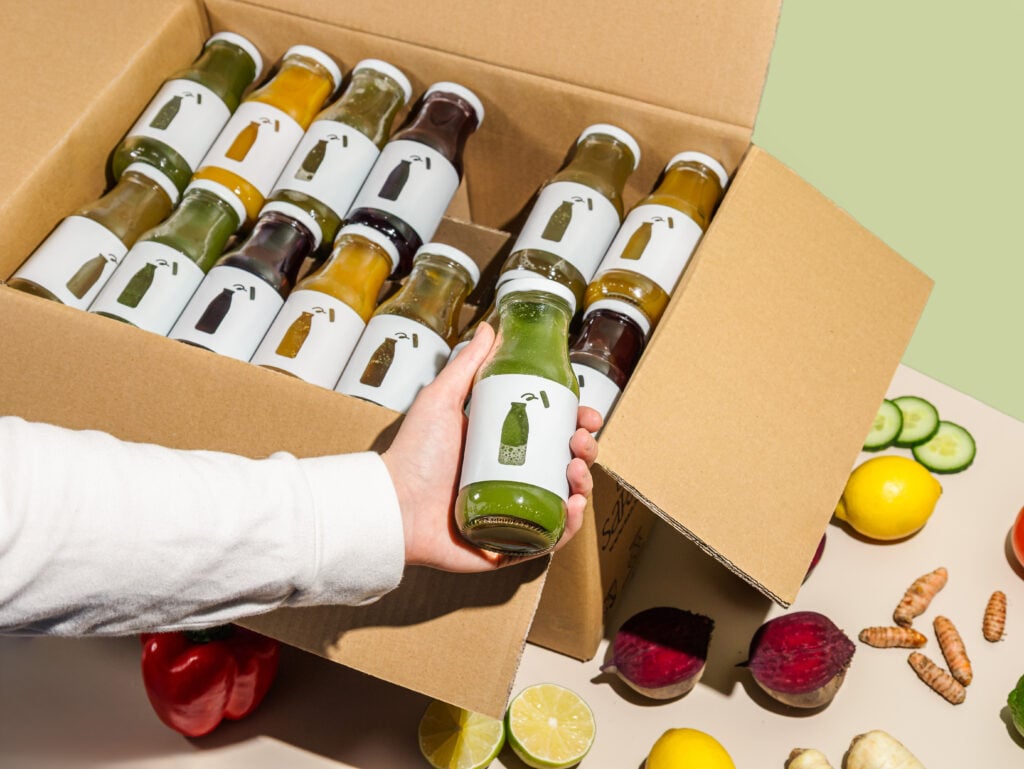
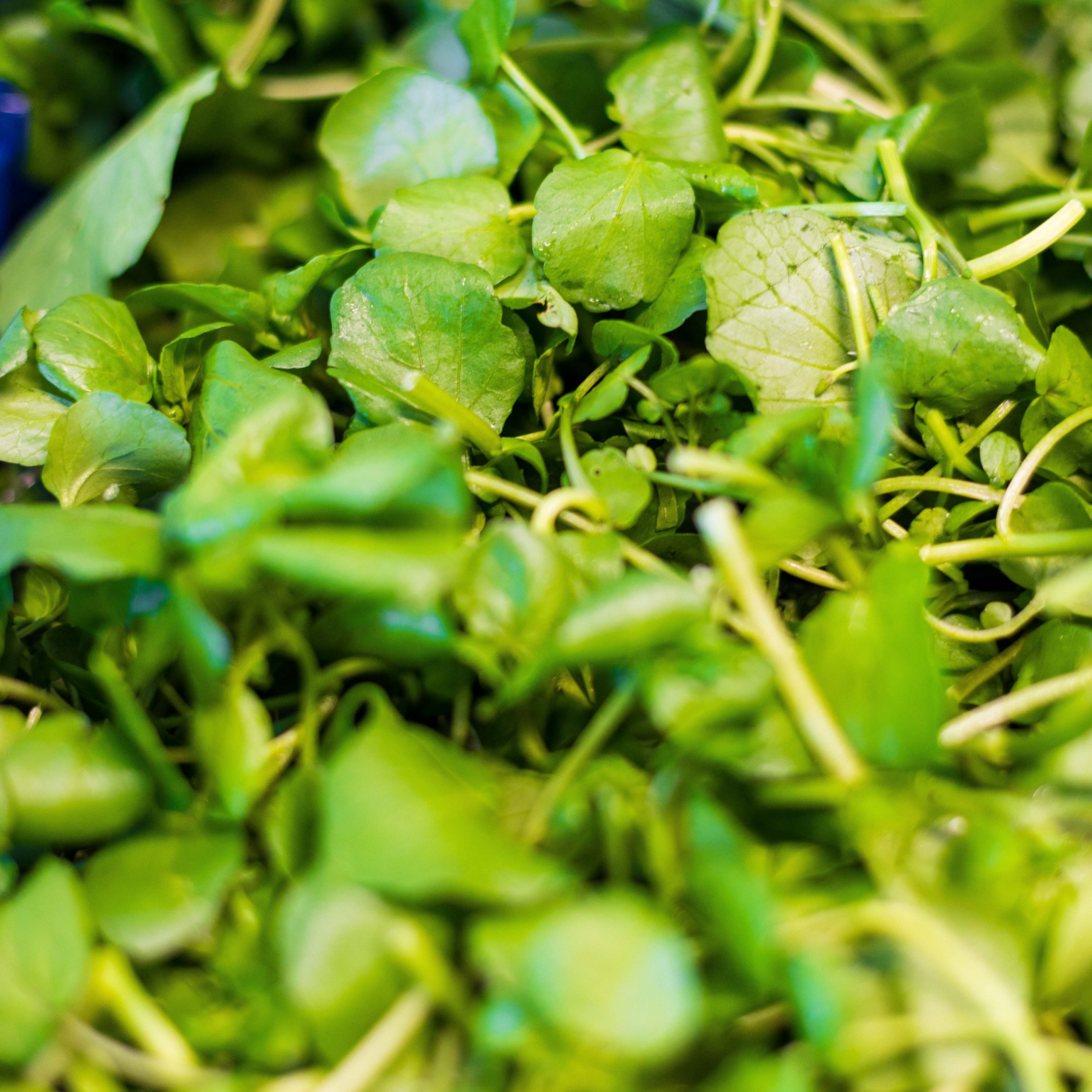
Although vegetables contain the less absorbable non-heme iron, they can still make an important contribution to your daily iron needs. So by eating more vegetables, you can give your iron intake a good boost. Green leafy vegetables are especially high in iron. In addition, vegetables are often rich in vitamin C, further increasing iron absorption. An easy way to get extra vegetables (and thus iron and vitamin C) is to drink vegetable juices. At Sapje, we have several vegetable juices that are high in iron and vitamin C. Our Detox juice, for example, contains a lot of chard and spinach, which means that with just one juice you already get 24% of the daily reference intake (RI) of iron and 120% of the RI of vitamin C. Our Fuel juice is also a real winner when it comes to iron. Below is an overview of our juices with the highest iron content.
| Vegetable Juice | Iron (as % of RI) | Vitamin C (as % of RI) |
| Fuel | 27% | 48% |
| Detox | 24% | 120% |
| Recharge | 24% | 33% |
| Wild | 24% | 39% |
| Recover | 19% | 30% |
| Seasons | 18% | 36% |
Conclusion
Iron is thus an important mineral for staying healthy and fit. Among other things, it plays a role in the production of red blood cells, oxygen transport in your body and the functioning of your immune system. In general, you can get enough iron by eating a healthy and varied diet. But for women of childbearing age, vegetarians and avid athletes, it can be more difficult. By consciously paying attention to eating iron-rich foods and adding vitamin C to meals, you can increase your iron intake. Sapje’ s vegetable juices can help you do just that. And in addition, they also provide numerous other health benefits