











What exactly do free radicals do in your body?
“Free radicals” is a term you see thrown around a lot in health circles. Do you ever wonder what exactly free radicals are and what they do in your body? In this blog, we take a closer look at the effects of free radicals on your health. Among other things, we discuss:
- What free radicals actually are
- How free radicals are created
- How free radicals function in your body
- When free radicals can cause damage to your body
- What the possible consequences of free radical damage are
- How your body counters this damage by creating antioxidants
- What antioxidants there are and what is known so far about their effects
- What you can do yourself to support your body in protecting against free radical damage
Read on quickly!
What are free radicals?
First, let’s address the question of what free radicals are. Free radicals are aggressive substances that are naturally released by various processes in your body. Very simply put, free radicals are created when your body uses oxygen to generate energy. They are therefore sometimes referred to as “oxidants” and exist in different forms(1).
How do free radicals form?
Free radicals are a natural byproduct of various bodily functions, including your immune system. They are also created during activities that are basically necessary or good for you, such as your digestion and exercise. Free radicals can also be released when you experience a lot of stress. Your body also produces free radicals when exposed to external factors such as air pollution, cigarette smoke and sunlight(2). In addition, free radicals can be released when there is inflammation in your body. So although free radicals are natural byproducts of everyday bodily processes, they can be harmful to your health.
How do free radicals function in your body?
“Free radicals” is a collective term for molecules and atoms that have become unstable because they contain an odd number of electrons in their outer layer, when it should be an even number. Free radicals deprive nearby tissues or cells of electrons in an attempt to stabilize themselves
When can free radicals cause damage to your body?
Free radicals can damage healthy cells and tissues when too many free radicals are present in the body or in a particular part of the body. In this way, an excess of free radicals can have negative effects on our health(5).
Are free radicals just bad for you?
No, free radicals are not just harmful to your health. In some cases, free radicals actually have a positive effect. For example, they are used by your immune system in fighting germs. They also play a role in getting rid of proteins damaged during physical exertion(8). Moreover, your body is basically made to deal with free radicals in a good way. So it is only when there are too many of them (in one place) that your body can lose control and a chain reaction can occur that can cause oxidative damage.
How does the body counteract oxidative damage?
The body counteracts oxidative damage by making so-called antioxidants, or deriving them from certain forms of food. Antioxidants help clear free radicals by providing them with the electrons they need. Free radicals thus lose the need to borrow them from healthy cells and tissues that cannot actually spare the electrons. Because of their special composition, antioxidants can donate electrons without becoming unstable and turning into free radicals themselves. Moreover, antioxidants can play a role in supporting the health of body cells(9).
What antioxidants are there?
The name “antioxidants” refers to hundreds, or perhaps thousands, of substances that can clean up free radicals. They come in different forms. Antioxidants can be produced by the body itself, or derived from food. Vitamins C and E, for example, are counted among antioxidants, as are trace elements and minerals such as selenium, manganese and zinc.
Proven health benefits of antioxidants from food
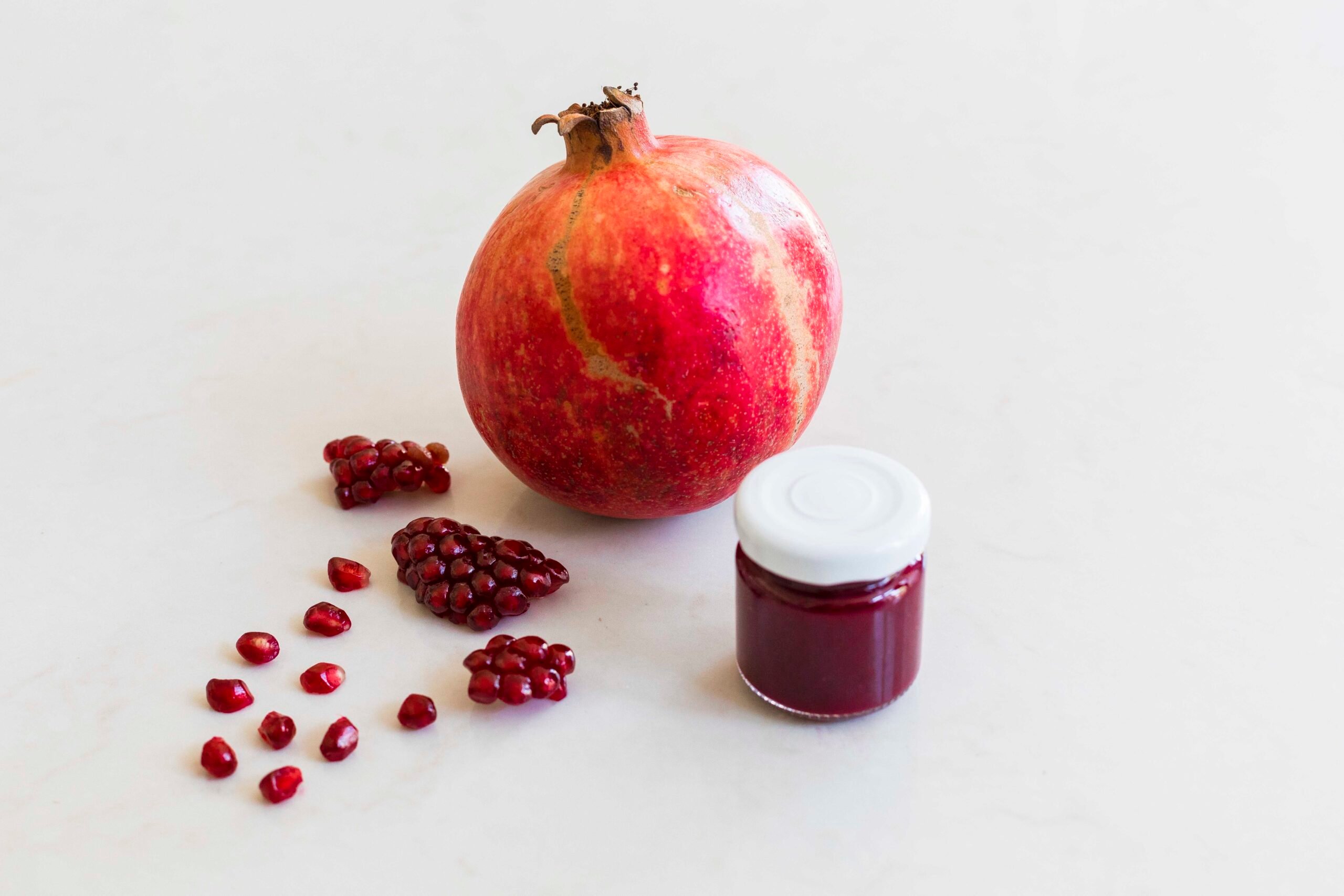
Meanwhile, the antioxidant effects of vitamins B1, C and E, selenium, zinc, copper and manganese are clearly scientifically substantiated. For the health benefits of many other antioxidants, especially the numerous bioactive compounds, the evidence is not yet always unequivocal. For example, while you can sometimes see in trials that they eliminate free radicals in a test tube, they have not yet been proven to have the same effect in the human body. It also depends, for example, on the body’s ability to absorb an antioxidant. Also, the antioxidant must get to the right place (where too many free radicals are present) to perform its function. Whether it does so is difficult to determine in this way
The effects of eating fruits and vegetables on oxidative damage
Several studies have shown that eating larger amounts of vegetables and fruits rich in antioxidants can help protect cells from oxidative damage. So while there is clear evidence that eating these fruits and vegetables can support your body in protecting against free radical damage, it is not yet clear exactly why. For example, it is difficult to say whether it is due to the antioxidants alone, or whether other components of fruits and vegetables also play a role (14). It is probably precisely a combination of nutrients that is responsible for the health benefits of fruits and vegetables. Either way, eating enough fruits and vegetables is a good way to support your body in the fight against free radicals and other important processes in the body. Here’s how to easily eat more fruits and vegetables.
What antioxidants do you find in which fruits and vegetables?
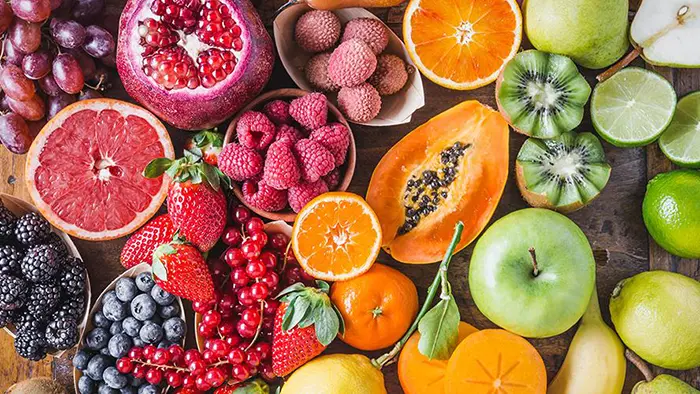
Below is an overview of the best-known antioxidants and the fruits and vegetables in which you will find them.
Vitamin C occurs naturally in such foods as broccoli, Brussels sprouts, cauliflower, citrus fruits, beets, cauliflower, kiwi, strawberries, sweet potato, tomatoes and peppers.
Vitamin E can be found in avocado, (chard) beets, turnips, red peppers and spinach (in cooked form).
Vitamin B1, selenium, zinc, copper and manganese are found in grains, seeds, nuts, legumes and animal products such as fish and shellfish, (beef) meat, chicken, brown rice, pumpkin seeds, sesame seeds, chickpeas and lentils. These antioxidants are also found in various vegetables, but often in slightly lower amounts than in the foods mentioned above(15),(16),(17),(18).
Can you get antioxidants from supplements, too?
To date, there is no scientific evidence of the health benefits of antioxidant supplements. They may even be harmful to your health if you take too much of them and actually increase the risk of certain serious conditions ( 16). In addition, they may interact with any medications you take. In contrast, there is no evidence that antioxidants from foods can be harmful. In fact, there is a chance that antioxidants from fruits and vegetables work better than supplements because they contain combinations of nutrients that enhance each other’s effects. In addition, supplements often contain only one antioxidant, while each antioxidant also has unique properties that cannot be replaced by other forms. Some antioxidants, such as vitamin E, also exist in different varieties themselves. Whereas vitamin E supplements usually consist only of alpha-tocopherol, you can find as many as 8 types of vitamin E in food. This is another reason why it is advisable to get antioxidants from food as much as possible and, for example, choose fruits and vegetables in such a way that you get different types of antioxidants. ( 17)
What antioxidants can you find in vegetable juices?
Drinking organic, slowjuice vegetable juices is an easy way to get many different types of antioxidants, as one juice often contains many different fruits and vegetables. For example, the juices Detox, Wild, Fresh and the ginger shot are good sources of manganese. The Sunny and Power juices and the Protect shot are rich in vitamin C. In Boost, you will find vitamin C, B1, copper and manganese, among others. Recharge is a source of vitamin B1, copper, manganese and zinc and Recover is rich in copper and manganese. Then, of course, there is the shot of Antioxidant, which is specially formulated from natural sources of many different types of antioxidants. It is rich in vitamin E and vitamin C, among others. Because we make our vegetable juices from the best organic vegetables and fruits, press them with the slow juicer and then freeze them immediately, you can count on them still containing many of the healthy nutrients from the whole vegetables and fruits.
What are antioxidants?
What are free radicals in the body?
What are high in antioxidants?
– Dark-colored berries (such as blueberries and blackberries)
– Green leafy vegetables (such as spinach and kale)
– Herbs and spices (such as turmeric, cinnamon and ginger)
– Dark chocolate (in moderation)
– Nuts, seeds and green tea
At Sapje, we incorporate many of these powerful ingredients into our juices and soups, so you get extra antioxidants naturally.