Cart

No products in the cart.

Abs are made in the kitchen

Feb. 26, 2015

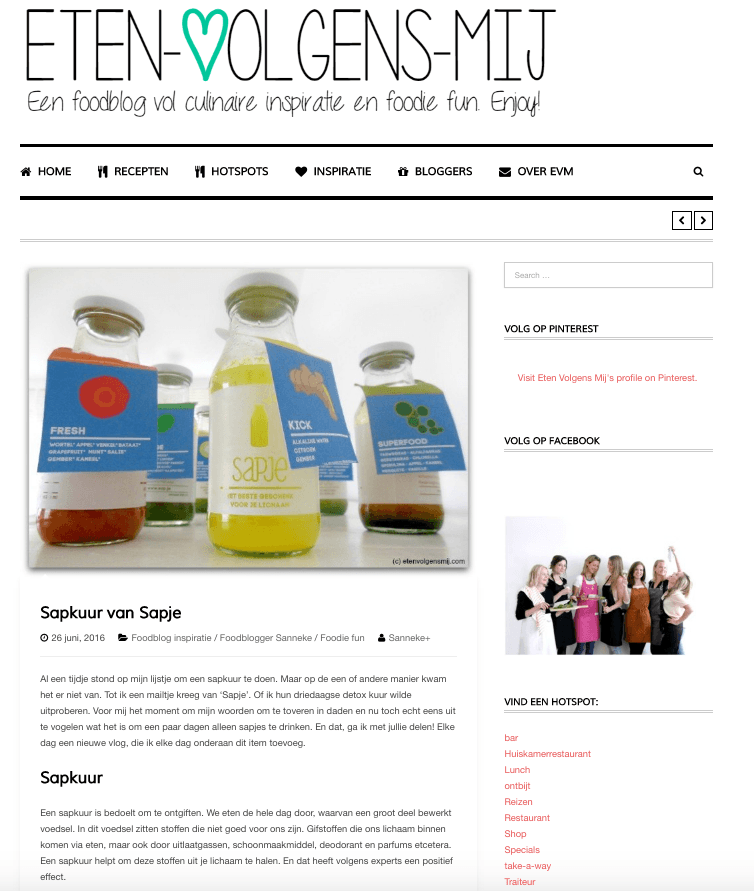
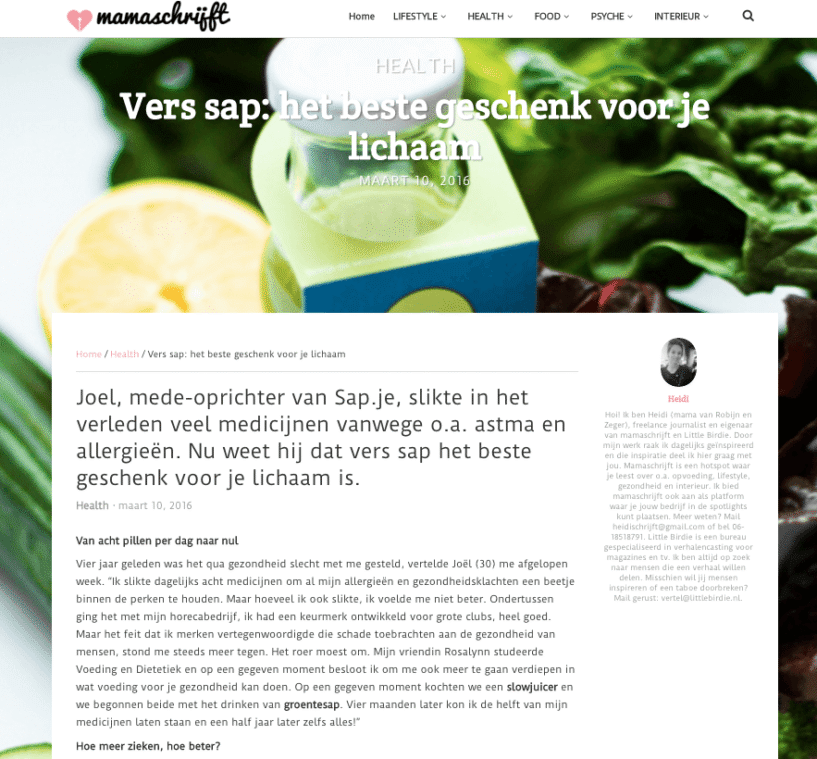
All hail Sapje because they not only have the most delicious raw and organic juices they produce everything slow, and deliver it fresh and tres rapido. I can still remember the day I had my Sapje deflowering like yesterday. One of my dearest former colleagues brought some for me. Hooked I was, totally hooked. And the fact is, my juicer isn’t juicing as much as it used to. Sapje is a godsend. I really don’t have a favorite either. I love all flavors equall. But a huge hot spot I do have for the newest flavor that I was secretly allowed to taste already.

Culy.co.uk

Feb. 18, 2015

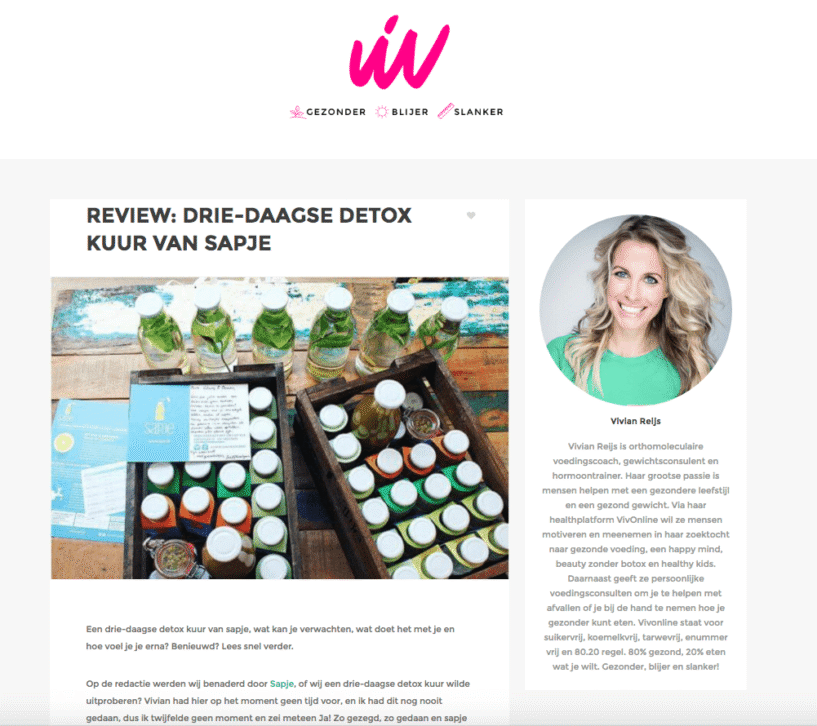
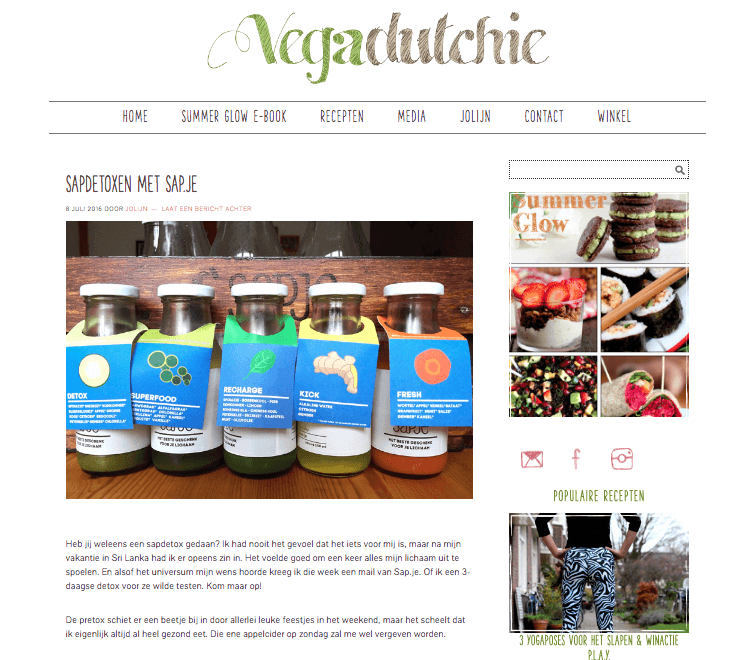
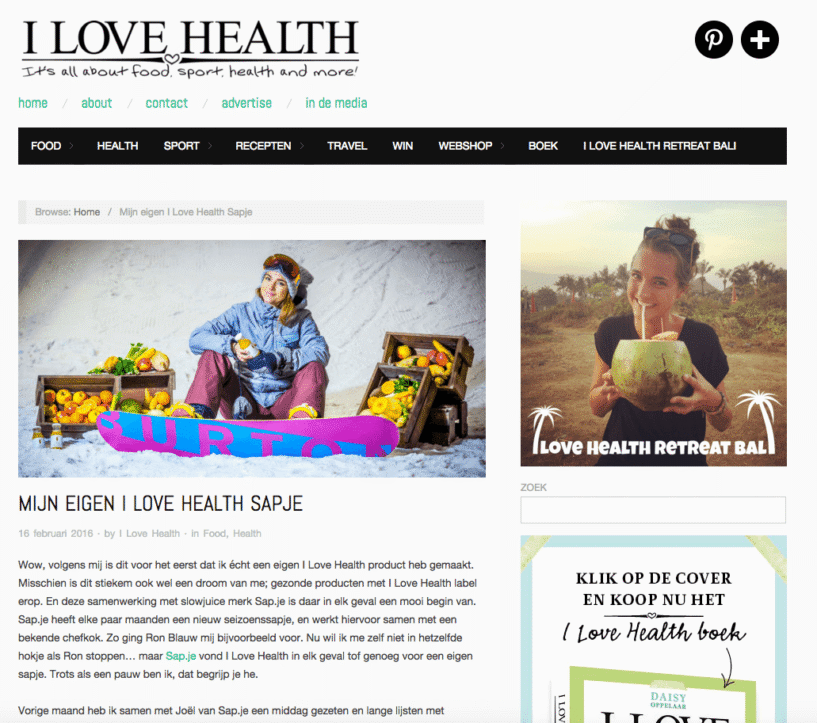
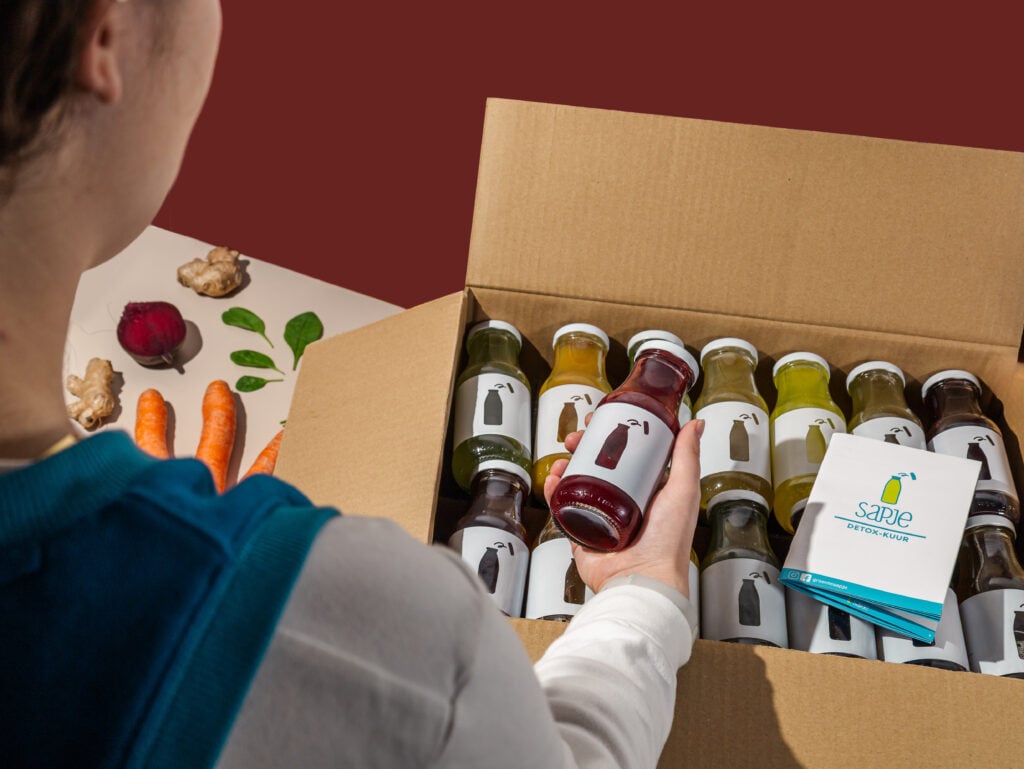
Juicing is hot, and if you don’t want to get started with a slow juicer at home, there are countless companies selling or home-delivering juices. In fact, there are so many companies, you really have to offer something innovative if you want to raise your head above the juicing field. We recently sampled Sapje’s detox juices and looked at how innovative this concept actually is.

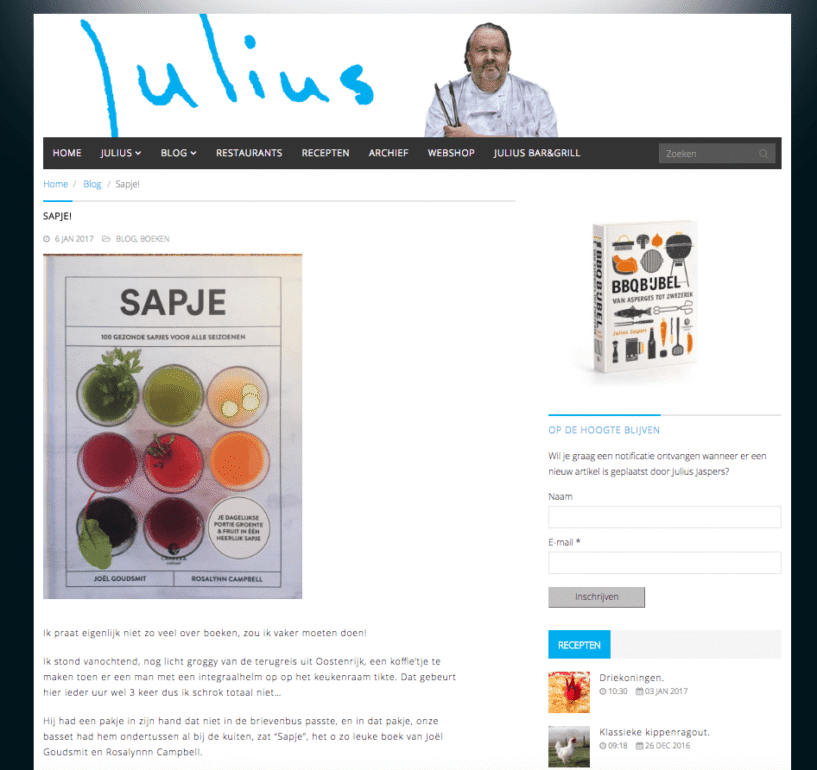
Sapje book: 100 healthy juices for all seasons

Sapje compiles 100 delicious juice recipes packed with vegetables, a little fruit, wild plants, seaweeds, mushrooms and various herbs and spices. From simple shots to effective detox drinks. For both the novice and advanced juice drinker. The recipes follow the seasons, each has a unique flavor, and vary in speed and difficulty; from two to as many as ten ingredients. Continue reading “Sapje book: 100 healthy juices for all seasons”

Pretox preparation detox cleanse

Properly preparing a soup cure or detox cleanse of 3, 5 or 7 days can greatly affect its effectiveness. Especially with the three-day detox, proper preparation is important. Not only will your detox then be more effective, but you are also likely to experience fewer side effects. Preparation is not mandatory, but we do recommend it.

Preparation and the Pretox

At least three days before your detox begins, try to taper off certain foods. Start slowly by reducing from three to two cups of coffee a day, for example, and build off more and more. Cutting down on coffee can be tricky, especially if you have to do it at the same time as your detox. So make sure you don’t quit cold-turkey. The same goes for animal protein, white bread, white rice, products with sugar and dairy products: build off these slowly. At the same time, try to drink more and more water and herbal teas. You can also get detox symptoms, such as headaches and low energy levels, from phasing out.

The detox roadmap

Remove solid and heavy foods from your diet step by step. Start this preferably three days prior to your cleanse.

3 DAYS BEFORE
No red meat and dairy products such as cheese, yogurt, cottage cheese and processed foods.

2 DAYS BEFORE
No meat and seafood (chicken, turkey, fish, shellfish), no eggs, no dairy, no carbohydrates from bread, rice and sugars.

1 DAY BEFORE
Eat only salads, soup, (raw) vegetables, fruits and nuts.

*Do not consume alcohol, coffee, medications, dietary supplements and cigarettes no later than three days before your detox begins.

Detox tips to prepare properly

  • Try to buy all your food organic. You get a lot more nutrients, vitamins, minerals and trace elements, and you avoid absorbing little to no pesticides and foreign bodies.
  • You may eat or drink unlimited raw or cooked vegetables
  • If you have a lot of pulls, at the pretox, detox and aftertox in between you can just eat healthy snacks and snacks tailored to our recommendations.
  • We advise against white rice, bread, pasta or other white flour products. Preferably limit your intake of starch products. Replace it with whole grain rice, gluten-free bread, sourdough, sprouted bread and sweet potatoes, parsnips, purple potatoes, beets and tubers.
  • We recommend avoiding refined sugars and not consuming too many natural sugars from fruits and raw honey. Avoid all sugars, including alternative sweeteners such as raw cane sugar, invert sugar syrup, glucose, dextrose, molasses, caramel, fructose, corn syrup, date syrup, rice syrup, agave syrup, maple syrup, etc. Sugar is also in ginger syrup, lots of ready-made sauces, bread and everything you can almost think of. It is also in fruit but don’t take more than 1 to 3 pieces of fruit a day. It is better to take fruit with some less natural sugars like blackberries, blue and red berries, raspberries, strawberries, cherries etc. On the other hand, sweet fruits like mango, banana and pineapple contain a lot of sugars and you should eat them in moderation.
  • Avoid e-numbers as much as possible. Ingredients you can’t pronounce or sound too scientific don’t put that in your body, you are what you eat. Nutrition is supposed to be simple.
  • Avoid chemical sweeteners such as aspartame, sucralose, saccharin, cyclamate, acesulfame-k, etc., especially found in “light” and sugar-free products. Always read the labels!
  • Vary as much as possible so not 1 broccoli every day but a different type of vegetable, fruit, nuts, seeds, beans, grains every day so that your body gets enough nutrients on a variety of levels
  • Use to your heart’s content the healthy saturated fats of extra virgin vegetable coconut fat, palm fat, olive oil, flaxseed oil, hemp seed oil and of animal origin cream butter, suet, lard. These should be, organic, cold-pressed and unrefined.
  • Avoid margarine and low-fat margarine.
  • Avoid trans fats.
  • Use an average of 1 teaspoon of salt per day. Avoid standard (jozo) table salt and replace it with sea, Celtic or Himalayan salt
  • During preparation preferably do not drink coffee or alcohol.
  • Green, white tea and various herbal teas are not a problem.
  • Drink purified (spring) water. As long as your pee is a light translucent color.
  • If you have a slow juicer or blender you can drink a few green juices or smoothies a day according to your needs. Rule of thumb use 70% vegetables or more and 30% fruits, herbs, spices and superfoods.
How do I properly prepare for a detox?
At least three days before your detox begins, try to cut down on certain nutrients. For example, start by reducing coffee, going from three to two cups a day. Build this down incrementally to zero cups a day. Cutting down on coffee can be tricky, especially if you have to do it at the same time as your detox. So make sure you don’t quit cold-turkey.
The same goes for animal protein, (white) bread, white rice, products containing sugar and dairy products: build it down slowly. At the same time, try to drink more and more water and herbal teas. You can already get detox symptoms, such as headaches and low energy levels, from cutting down. We call phasing out eating or drinking these products a “pretox.
What exactly does a pretox entail?
A pretox is a preparation for the detox treatment. When you go on a detox, it is important to work toward these days. If you don’t do this, the detox can be very tough and be a big blow to your body and health. Therefore, prepare well for the detox and get the most out of it this way.
What foods should I avoid before starting a detox?
There are several foods you should avoid before starting a detox. This helps the detox do its job more powerfully.
We list some tips for you to follow before starting a detox.
– If you are very hungry, at the pretox, detox and aftertox in between you can just eat healthy snacks and bites tailored to our advice.
– We advise against white rice, bread, pasta or other white flour products. Preferably limit your intake of starch products. Replace it with whole grain rice, gluten-free bread, sourdough, sprouted bread and sweet potatoes, parsnips, purple potatoes, beets and tubers.
– We recommend avoiding refined sugars and not consuming too many natural sugars from fruits and raw honey. Ideally, avoid all sugars, including alternative sweeteners such as raw cane sugar, invert sugar syrup, glucose, dextrose, molasses, caramel, fructose, corn syrup, date syrup, rice syrup, agave syrup and maple syrup. Sugar is also in ginger syrup, lots of ready-made sauces, bread and lots of other products.
It is also found in fruit but do not take more than 1 to 3 pieces of fruit per day. It is better to take fruits with some less natural sugars such as blackberries, blue and red berries, raspberries, strawberries and cherries. Sweet fruits such as mango, banana and pineapple contain a lot of sugars. We recommend eating these in moderation.
– Avoid as many E-numbers as possible. Ingredients that you can’t pronounce or sound too scientific: avoid these as much as possible in your diet.
– Avoid chemical sweeteners such as aspartame, sucralose, saccharin, cyclamate and acesulfame-k. These substances are mostly found in “light” and sugar-free products.
– Vary your food as much as possible. Don’t eat 1 broccoli every day but a different type of vegetable, fruit, nuts, seeds, beans and grains every day. This way your body gets enough nutrients on many levels.
– Use to your heart’s content the healthy saturated fats of extra virgin vegetable coconut fat, palm fat, olive oil, flaxseed oil, hemp seed oil and of animal origin cream butter, suet and lard. These should be, organic, cold-pressed and unrefined.
– Avoid margarine and low-fat margarine.
– Avoid trans fats.
– Use an average of 1 teaspoon of salt per day. Avoid standard (jozo) table salt and replace it with sea, Celtic or Himalayan salt.
– Do not drink coffee or alcohol (as much as possible).
– Drink more green, white and herbal teas.
– Drink purified (spring) water.
– If you have a slow juicer or blender, you can drink a few green juices or smoothies a day according to your needs. Rule of thumb use 70% vegetables or more and 30% fruits, herbs, spices and superfoods.
How many days in advance should I start the pretox?
Remove solid and heavy foods from your diet step by step. Start doing this preferably three days prior to your detox treatment. We’ll give you some tips for each day:

– 3 days in advance. Do not eat red meat and dairy products such as cheese, yogurt, cottage cheese and processed foods.
– 2 days in advance. Do not eat meat and fish products (chicken, turkey, fish, shellfish), eggs, dairy, carbohydrates from bread, rice and sugars.
– 1 day in advance. Eat only salads, soup, (raw) vegetables, fruits and nuts.

Do not consume alcohol, coffee, medications, dietary supplements and cigarettes no later than three days before your detox begins.

Benefits of the detox cleanse

Sapje has adapted the principles of a detox to a modern lifestyle. You may even nibble on some organic vegetables, snack on an avocado, or eat a small salad during our cleanse. You will find that because of the many juices you drink, you will hardly feel hungry. If you do want to snack a little, you can do so in between with the mentioned extras in our extensive menu. Not snacking is better, because then your body will get enough rest between juices. Read detailed information about our detox cleanse here.

Detox cleanse

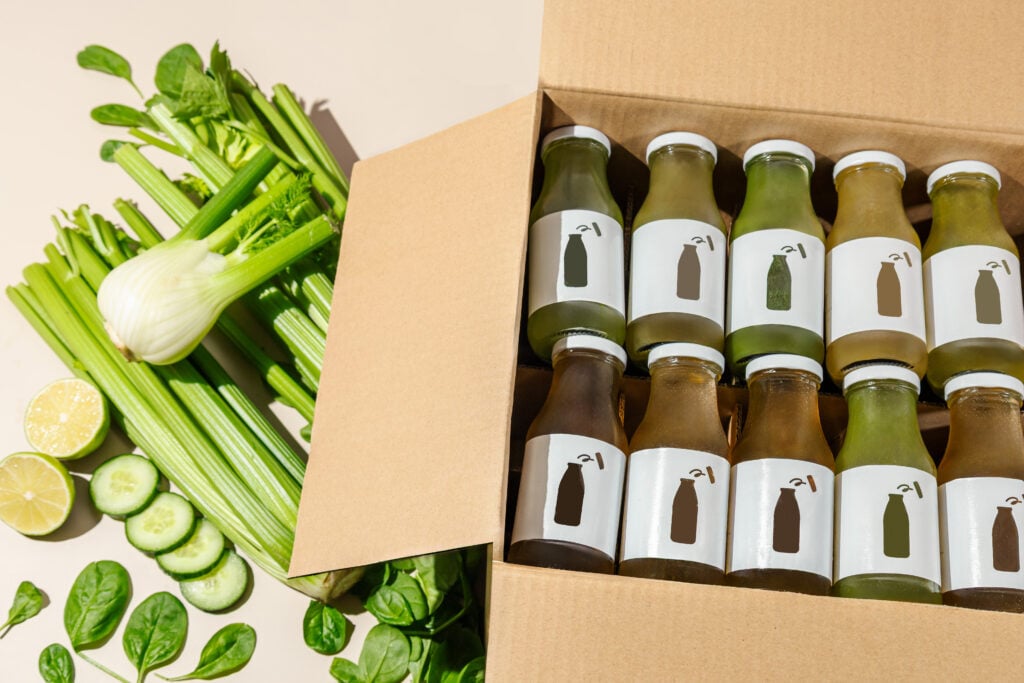
Detox is a great way to help you transition from an unhealthy lifestyle to a healthier lifestyle and give your body additional healthy nutrients. Our special detox juices are made with a professional slow juicer that applies bruising, grinding and pressing actions to the fruits and vegetables, thus better preserving enzymes and nutrients. It is similar to cold-pressing olive oil or chewing through teeth. The result is “living juice”: juice brimming with essential nutrients and living enzymes. With our slow juicer, we squeeze vegetable juice of incomparable quality. The more days you follow a detox cleanse the more health benefits it offers you. It’s good if you can keep it up for more than three days, but 1 day of detox has an effect as well. However, we recommend that you stick with the juice cleanse for at least 3 days so that you can really experience what a detox cleanse does for you.

Detox cleanse 3 days

What are the benefits?

  • You get lots of vitamins, minerals and antioxidants
  • Support your vitality and energy levels
  • Support your immune system (through vitamin C, among others)
  • Contributes to a clear mind (due to vitamin B1, among others)
  • You will be able to tackle bad eating habits
  • You will be intentional about your lifestyle
  • Good for your blood pressure (due to potassium)
  • Important for skin (due to vitamin A, among other things)
  • Good for eyesight (due to vitamin A, among others)

Once you have started the detox cleanse it is important to repeat it a few times a year, as unhealthy eating habits can creep back in anyway. In this way, you always stay aware of your health and lifestyle.

Detox juice in glass

Sapje’s detox cleanse is very effective and, under normal circumstances, extremely responsible. In addition to effectiveness, taste is a very important factor. Our juices are distinguished by their freshness and particularly original, tantalizing and unique flavor combinations. The juices contain mainly vegetables, supplemented with a little fruit and natural flavorings such as fresh herbs, superfoods and spices. Would you like to give your body extra support on the inside as well and pamper yourself on top of that with delicious juices and a hefty dose of new energy? Then the detox cleanse that you can experience for 3, 5 or 7 days from Sapje is truly a gift to your body! If you have any questions about starting a detox cleanse or the one you are doing? Please feel free to contact us.

The Sugar Addiction

We are going to talk about a problem that everyone in the Netherlands struggles with … namely the sweet seducer: sugar. We too were victims of this delicious processed magical sweetener that stays in our heads all day. We always have room left over for dessert or a sweet snack, don’t we? Sugar is in the spotlight more and more these days and maybe after reading this blog you can learn something from our experiences and the disadvantages of sugar. Several years ago we decided to completely rid our house of all ”bad” sugars and products with added sugars. It was very difficult to say the least. We both grew up in a family that loved sweets, cakes and sweet treats. It was instilled in us and until our adulthood we were never that aware of how bad it actually is for you. Don’t get us wrong… We too cheat from time to time, but we make sure this almost always happens outside our home. As soon as we reintroduce this poison (sorry for our honesty) into our home, we all eat it without sobs and shame within a few minutes, like true addicted junkies.

Fmri-sugar-cocaine

So that’s out! We will try to explain exactly why we rid ourselves of sugars in our kitchen, secret jars, under the bed, in the living room and in many secret drawers. And it wasn’t the obvious sugars, like candy, Oreos, M&Ms and Ben & Jerry’s. We really went hunting in our food stash and looked for the hidden sugars instead. For example, those delicious caeser dressing, bread, crackers, yogurt, breakfast cereals, tomato sauces, chips, ready-made sauces, soups, so-called “fresh” juices and an endless amount more. We were really shocked that almost all of our products contained so many hidden sugars. After much effort, our cupboards were completely cleared out and sugar-free and it seemed like we had nothing left to eat in the house. All we had left was some eggs, chicken, butter, vegetables and some fresh fruit.

Sugar is a drug

Sugars are known to have the same effect on the brain, as heroin and cocaine. Say what? Yes sugar is even 8x more addictive than cocaine, which is why it is often easier to leave some drugs, but not your oreo cookies. It is quite a cheap way to get high, we would say. In our opinion, the sugar industry is just as bad as the alcohol and cigarette industries. They all produce products (not food) that are bad for our health. Their motto is also as long as they line their pockets they really don’t care if half the world gets sick from it. The sugar industry which also includes Coca Cola, Nestle, Pepsi Co, Unilever are one of the best earning industries in the world, unfortunately at the expense of others. See the trailer below of Fed up, we also recommend that you buy this movie or if necessary download it somewhere.

What is sugar in ABC?

It’s a complicated long story with all these difficult terms, so we’re going to try to keep this short and simple. The white sugar you eat is broken down in your body into glucose and fructose. Glucose is essential for a million different things in our bodies. Our body can make it itself when our glucose levels are extremely low. Glucose is a part of life and we cannot exist without it. Fructose, on the other hand, is not as essential as glucose. Fructose is converted in our liver, but our liver also has a ceiling on what it can process and in everyone this is different. So what exactly is fructose in? It is found in fruit. Does this mean we can’t have fruit? No, of course not, just keep eating! However, do not take more than a few apples in a day or mangoes as that also still contains sugars. Each type of fruit also contains different amounts of fruit sugars. This is also the reason why in our juices we average 80% vegetables and 20% fruits so you get very little fruit sugars and mostly super healthy nutrients.

Only fruit in season and fructose

Thousands to hundreds of thousands of years ago, sweet fruits and honey were only available in the summer and were therefore very scarce. Our ancestors then ate an incredible amount of this so they literally and figuratively got a little more fat on their bones to prepare for the cold winters. Today, our fruit is available year-round and is manipulated and selected in such a way that it tastes mostly ant-sweet and thus contains mostly lots of fructose sugars. So even for fruit today, the rule is to eat it daily in moderation. What we have to understand is that we are basically still primal humans. As soon as you eat too many fructose sugars, mainly from processed foods, our liver cannot process them properly and panics and works overtime, which results in more insulin. And what does the liver do then very cleverly, it converts excess sugars (insulin) into fat.

Sugar infographic

Added in everything!

Sugar is spot on! And oh so delicious. If you start looking at your ingredients, it will be hard to find a basic product that does not contain (added) sugars. You can add sugar to the worst recipes and your dish becomes instantly tasty. Sugar is highly addictive, and it works in your brain in such a way that you want to eat more and more of it! Now think again about your primal man? If you were walking hungry in the woods and you saw a bush full of delicious sweet blueberries, you wouldn’t just walk by, right? No, you’d prefer to eat that whole bush all by yourself until there wasn’t a single blueberry left. That’s why we make juices with very little fruit sugar and lots of vegetables.


We always wonder why our hands reach the bottom of the cookie jar so quickly? We are so evolutionarily programmed to like sugar that we can’t really do anything but finish that whole bag of M&Ms. Because as with the blueberry, it never stays with just one cookie. Of course, the food industry knows full well that sugar is hugely addictive, which is exactly why it is added to more than 85% of the products in regular supermarkets and unfortunately also the ”healthy” supermarkets Eko plaza and Marqt. If a company sweeten their product, they are guaranteed to have lifetime customers. They want you to crave and desire the next bite of their products daily, preferably every second. For example, they do this very cleverly in soft drinks. In these they add extra sodium (salt), which makes you feel more thirsty. However, of course you don’t notice that your cola tastes salty because they mask it with sugar. So this way you are constantly thirsty because of the added salt and because of the sugar you keep drinking more and more because it tastes so damn good. To make it even worse and more bonkers, they have developed so-called calorie poor soft drinks and sweetened them with artificial sweeteners such as aspartame, saccharin, hydrolyzed stevia which are even more addictive than regular white sugar and have even more health disadvantages.

Sugar designations

There are an awful lot of different names for sugars, such as dextrose, brown sugar, grape sugar, fructose, frustose syrup, galactose, condensed fruit juice, jelly sugar, glucose syrup. Lactose, milk powder, maltodextrin, maltose, sucrose and the list goes on. It is very difficult to memorize all those dozens of other names of sugar. To make it a little easier: anything ending with ose, concentrate, syrup, nectar, syrup or sugar should basically be avoided. We swear by our own rule: if you can’t pronounce or understand it you shouldn’t eat it.

Sugar makes you sick

It is nothing new when we say that too much sugar leads to insulin resistance. Insulin resistance leads to diabetes, obesity, increased blood pressure, low bone density, increased bad cholesterol and cardiovascular disease. But what many people don’t know is that it can also lead to cancer. Cancer is characterized by uncontrolled growth and cell division. Insulin in the body is one of the key regulators of this growth. So, if we constantly have elevated insulin levels (caused by sugar consumption) it will contribute to cancer growth. In fact, cancer cells grow best on sugar; it is as addictive to them as it is to us. Strange, that a menu in a hospital (when treating cancer patients) is full of sugary products.
That’s why we keep eating it

Different foods have different effects on the brain. For example, when you eat glucose from basic carbohydrates like bread, pasta and rice it tells our brain that we are full at some point. But when we eat this in the form of fructose, it actually tells the brain that we want more of it. This can lead to overweight or obesity. Unfortunately, when we eat foods with lots of added fructose sugars, our satiety part in our brain is not activated. Therefore, we can keep eating it. When we eat sugar, the hormone dopamine (happy hormone) is produced, just like with drugs. This is why scientists say that sugar has the same effect on the brain as cocaine or heroin. Normal food (containing non-processed sugars) does not create this amount of dopamine as sugar does. And this is exactly why we keep eating those McDonalds hamburger, snickers and Oreos. You often feel so good after eating these foods, at least for a short time, that you want to eat more and more of them to experience that feeling again. Just as with drugs, you need more and more to experience the same sugar high. And lo and behold the single biggest problems in the world, countless chronic diseases, cancer, overweight and obesity. The only thing that works to get rid of your sugar addiction is complete abstinence. This is why we no longer have all the bad sugary products in our homes.

100% fat free?

Unfortunately, you still see all around you that everything is fat-free or light. The reason for this is because in the 1960s it was thought that cardiovascular disease was caused by eating saturated fat. But when everything became fat-free, the food became tasteless or rather the food tasted like cardboard. This, of course, was a big problem for the food industry. So they thought of adding sugar to make their food palatable, with all the consequences. Promise us this next time you are in the supermarket. Find a regular product and keep the fat-free or light variety next to the regular variety. Which one do you think has more sugar ?

Sugar alternatives

We hope that after reading this long blog you understand a little better that refined sugars are not good for you. Unfortunately, what most people still choose are artificial sweeteners. Artificial sweeteners are even worse for your health than sugar. avoid them as much as possible and if you still want to eat sugar prefer regular white sugar instead of artificial sweeteners. Artificial sweeteners are completely synthetic and come from a factory. We believe that if nature can’t make it itself you shouldn’t put it in your body. Of course, there are many alternative and healthy sweeteners on the market! Like Yacon syrup, raw honey, maple syrup, lucuma, mesquite and green leaf stevia. You can also sweeten your desserts with ripe banana, figs, prunes, raisins and dates. If you want to choose a natural sweetener with the most healthy properties and least impact on your blood sugar, go for the stevia plant. Just be careful which type of stevia you buy, much of it is still heavily processed, so buy the one that is really green and has a strong aftertaste.

Suiker alternatieven

Our advice

Limit and minimize processed foods in your diet as they have an incredible amount of hidden sugars. Read the packaging carefully and attentively and remember our motto, if you do not understand the ingredients, are too small to read or can pronounce you should not eat it either. These processed sugars have very serious negative effects on your health. If you do want to use sugars use it from natural sources such as in fruit or honey. If you use natural sweet substitutes try not to take more than 1 teaspoon (6 grams) per day. Good health means doing everything in moderation, even if you want to keep eating sugar daily try to be aware of what it is doing to your health. Do you find it difficult to stop eating sugars right away? A detox can help you let go of unhealthy habits.

The Sugar Addiction The Sugar Addiction