





Wild plants: dandelion and nettle
Today we want to take a look with you at the roadside, the ditch edge and the abandoned construction site. Because there, unsuspectingly, grow a number of wild plants that offer their superfood qualities to everyone for free and for nothing. There are many such plants, but in this blog we look at two of the best known: the dandelion and the nettle. Both are strong weeds that no one can ignore: on the most poor and cultivated plots of land, they often come to pioneer, to the despair of many gardeners.
Dandelion and nettle have also been used for centuries by herbalists for their nutritious qualities. Recently, their nourishing potential has also been noticed by the health food world.
Both dandelion and nettle have healthy qualities. What do these plants have to offer you? In this blog, we will take you through the following topics:
- Facts
- Nutrients
- Health benefits of dandelion and nettle
- Are dandelion and nettle dangerous?
- Are they healthy?
- How are they used in naturopathy/shamanism?
- How do you harvest wild plants?
- How can they be used in juices?
Knowing Nettle
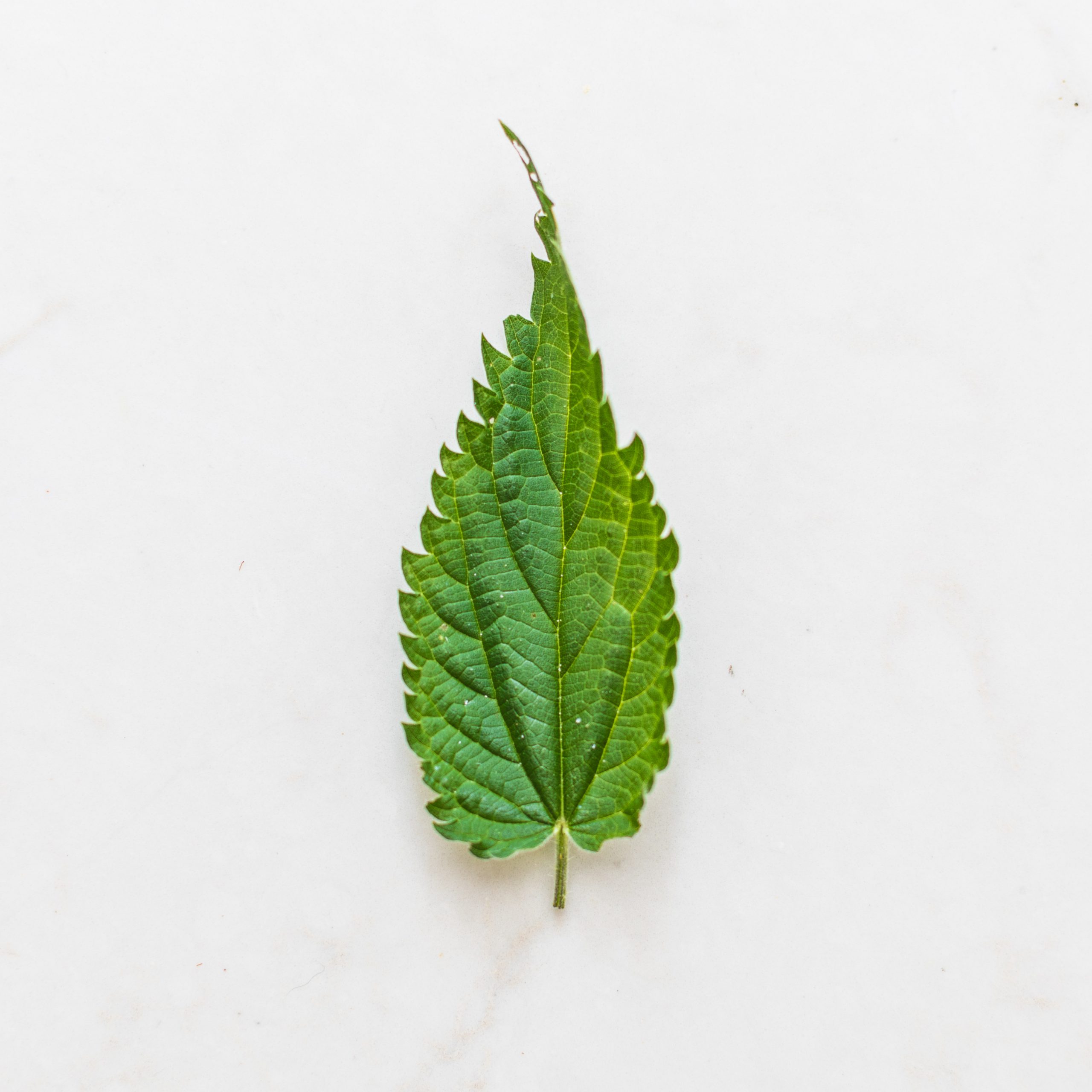
– Stinging nettles Latin name is Urtica Dioika. Uro is the Greek word for urine.
– Stinging nettle has probably been cultivated by humans for over 8,000 years.
– Stinging nettle fibers are strong and have been used for centuries for paper, strong rope, thread and durable fabrics.
– Stinging nettle is also a good natural dark green dye.
– Stinging nettle is a good soil enricher and is ideal for on compost (better without seeds) or in a “compost smoothie.”
– It is said that during the infamous Irish famine, there were people who survived for years with hardly any food other than nettles.
– The Tibetan saint Milarepa is said to have eaten nothing but nettles during his cave retreat. In the end, he was both enlightened and green.
– Stinging nettles may be annoying, but they were and are also used by a variety of folk traditions to cure arthritis, paralysis and cold feet, among other things.
Dandelion facts
– Dandelion Latin name isTaraxacum officinale. Taraxacum seems to come from the Arabic for bitter plant. Officinale is the Latin suffix for a medicine. The English word dandelion is a corruption of the French dent-de-lion (lion’s tooth). Another French name for the little plant is pissenlit (pee-in-bed).
Nutrients 100 grams of raw Nettle (in spring)
| Calories | 36,5 | |
| Protein | 6,3 g | |
| Fat | 1,4 g | |
| Dietary fiber | 9,7 g | |
| Vitamin A | 11403 IU | 432% RI |
| Vitamin A as Beta-carotene | 7860 IU | |
| Vitamin C | 0.5 mg | 1% RI |
| Calcium | 318 mg | 40% RI |
| Iron | 2.5 mg | 18% RI |
| Sodium | 87.7 mg |
Source:[1]
Nutrients 100 grams of raw Dandelion (in spring)
| Calories | 45 Kcal | |
| Protein | 2.70 g | |
| Fat | 0.70 g | |
| Dietary fiber | 3.50 g | |
| Vitamins | ||
| Folate (vitamin B11) | 27 µg | 14% RI |
| Niacin (vitamin B3) | 0.806 mg | 5% RI |
| Pantothenic acid | 0.084 mg | 1.4% RI |
| Pyridoxine (vitamin B6) | 0.251 mg | 18% RI |
| Riboflavin (vitamin B2) | 0.260 mg | 19% RI |
| Thiamine | 0.190 mg | 17% RI |
| Vitamin A | 10161 IU | 385% RI |
| Vitamin C | 35 mg | 44% RI |
| Vitamin E | 3.44 mg | 29% RI |
| Vitamin K | 778.4 µg | 1038% RI |
| Electrolytes | ||
| Sodium | 76 mg | 5% RI |
| Potassium | 397 mg | 20% RI |
| Minerals | ||
| Calcium | 187 mg | 23% RI |
| Iron | 3.10 mg | 22% RI |
| Magnesium | 36 mg | 10% RI |
| Manganese | 0.342 mg | 17% RI |
| Phosphorus | 66 mg | 9% RI |
| Selenium | 0.5 mg | 1% RI |
| Zinc | 0.41 mg | 4% RI |
| Phyto-nutrients | ||
| Carotene-a | 363 µg | — |
| Carotene-ß | 5854 µg | — |
| Crypto-xanthine-ß | 121 µg | — |
| Lutein-zeaxanthin | 13610 µg | — |
What are health benefits of dandelion and nettle?
Dandelion and nettle have a number of healthy properties and nutritional support potential. Dandelion has been used in traditional ways for centuries in various countries such as Russia, Turkey, China, Mexico and India.
The antioxidant qualities of dandelion leaf, flower and root have also been extensively researched. The plant is said to help combat oxidative stress due to the presence of several nutrients, including vitamin C and manganese. These antioxidants help your body trap harmful free radicals. In addition, the dandelion provides an awful lot of vitamin K, so it supports your blood clotting and helps keep your bones strong. Due to its high vitamin A content, dandelion is good for your eyesight and supports your immune system. Dandelion also contains phytonutrients, such as luteolin, coumaric acid and flavonoids.
Nettle
Stinging nettle has traditionally been used for an almost unbelievable variety of functions. According to herbalist Susun Weed, nettle (strong tea, juice or soup) can contribute to your health in several ways.
Stinging nettle is a very good source of calcium, so it helps keep your digestion healthy and supports your energy levels. In Mexico, because of their high calcium content, both dandelion and nettle have been used for decades to support muscles. Nettle also has a high iron content, so it helps reduce fatigue and is good for your concentration and memory function. Due to its high vitamin A content, nettle also has a positive impact on your immune system.
Is dandelion and nettle dangerous?
According to Susun Weed, there is no possible overdose of dandelion. According to science, dandelion is non-toxic due to the absence of harmful alkaloids[10]. Stinging nettle causes external irritation that usually does not last more than a few hours. Internally, there is a very small chance of negative side effects such as irritation in the digestive system and nausea. However, most people can eat dried or fresh boiled, juiced and finely ground nettles without a problem. There is, however, a New Zealand species of nettle, urtica ferox, which is so toxic that just a few hairs are enough to kill a guinea pig.
Are dandelion and nettle healthy?
Dandelion and nettle are incredibly healthy. They both contain a wide range of vitamins and minerals. Both plants have been used traditionally for centuries in many parts of the world. Now they are becoming increasingly popular in the Western world as well.
Plus, dandelion and nettle are healthy because you have to get outside to gather them for your salad or juice: that saves another stressful visit to the supermarket. And they’re healthy for your wallet, too.
How do you harvest wild plants?
The healthiest plants are precisely the ones that are most common: these are the strong plants that can conjure up lots of minerals even from poor soil with their powerful roots.
For dandelion and nettle, you don’t have to look far. However, it is wise not to harvest plants growing on the edge of fields because of the use of chemical pesticides. It’s also best to avoid plants along busy roads, and if you’re picking in town, use your farmer’s sense and don’t pick from a dog’s poop bed. Always wash anything you pick at dog-height extra well.
Nettle can be harvested all year, but is most nutritious in early spring; February or March. Dandelion leaves and roots are ditto richest in early spring before flowering. When the field turns yellow you can harvest the flowers for juice or salad: they are also the main ingredient for the classic dandelion wine. Later in the fall, the root of the dandelion can again be harvested well, but now has different molecular qualities.
For nettle, you can use gloves. Take a large linen bag and collect your harvest in it. Nettle dries very well (for tea, for example); dandelion is better consumed directly or used in a tincture.
How can wild plants be used in juices?
Most edible wild plants can just go through the juicer. In the case of dandelion, you could juice the roots, leaves and flowers all together. With each wild plant, it varies which parts are edible and which are not, and different plant parts have different qualities. Therefore, do some good research.
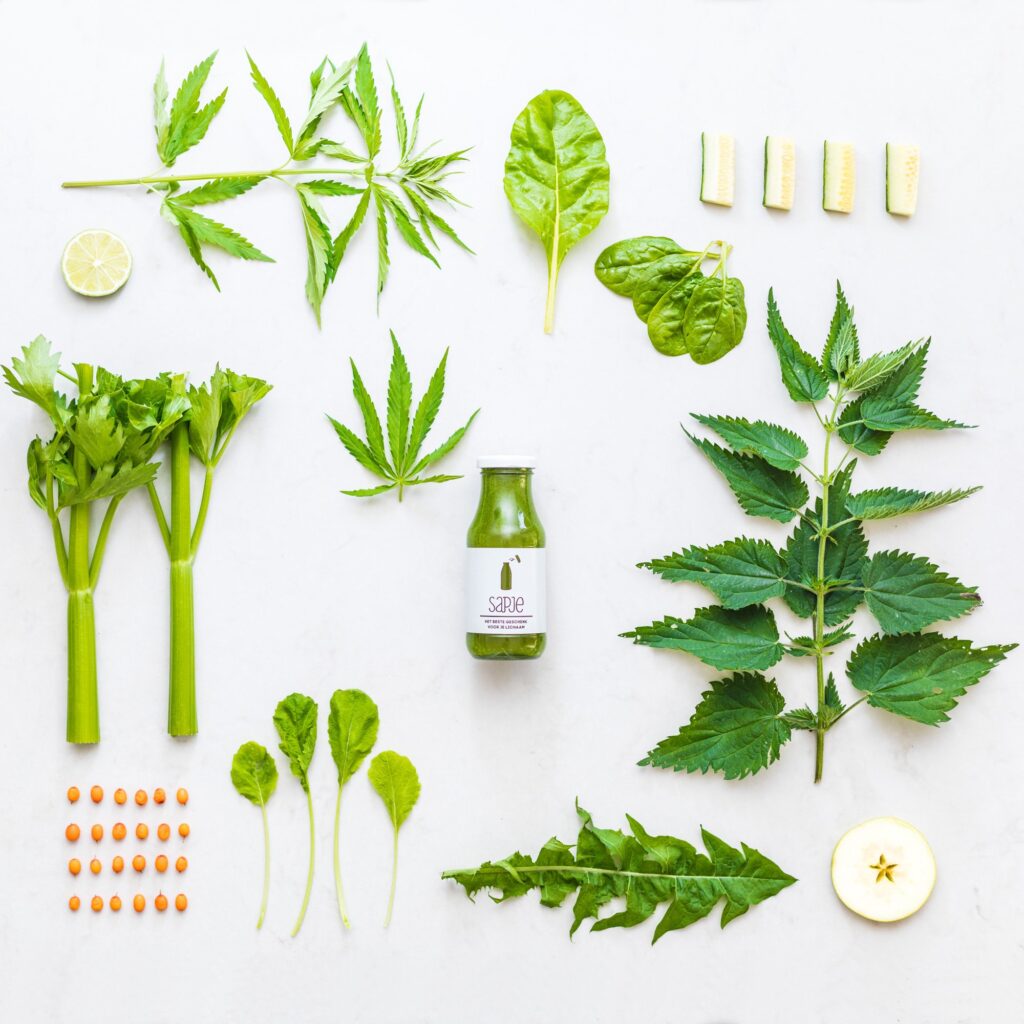
We use dandelion leaf and nettle in our juice Wild. In it you will also find wild buckthorn, hemp leaf and other exciting ingredients such as turnip greens. While we heartily recommend our juice, it may not be so easy to make at home because it contains quite a few unusual ingredients. Therefore, we hereby give you a simplified version of a super-healthy green juice:
Ingredients:
- two stalks of celery
- half a cucumber
- half a squeezed lemon
- a good handful of dandelion leaves or nettles
- one or two green apples
Wash your fresh crop well and cut celery, cucumber and apples into smaller pieces. Feed all those greens to the juicer, squeeze in half your lemon and your super healthy juice is ready.
Conclusion
Nettle and dandelion are packed with nutrients and health benefits, and they have a rich tradition of use on European soil. So you’re not going to get any more “local” than that. Moreover, eating wild plants is adventurous and cannot be done without the primal feeling of going outside to find your own food. That gives a whole other dimension to your juice, promise!