
What is a healthy smoothie?
Smoothies have a healthy image. After all, the colorful, creamy thirst-quenchers are bursting with fruits and vegetables. But are smoothies really that healthy? They certainly don’t always have to be! In fact, whether a smoothie is healthy varies quite a bit. How you can find out for yourself whether a smoothie is healthy and what are good moments to drink (or eat) a smoothie, you can read in this article!
What is healthy anyway?
Let’s start at the beginning. What is “healthy” anyway. On its own, you can’t say directly whether a product is healthy or not. It always depends on how much and how often you eat something. Your total diet and lifestyle ultimately determine whether something is “healthy” for you at that moment.
The composition of a healthy smoothie
Smoothies come in all shapes and sizes. The base usually consists of fruit and more is often added. Examples include vegetables, nuts, seeds, grains and dairy, as well as sugar and cream. Therefore, the nutrients in a smoothie vary greatly.
Sapje from concentrate
Many ready-made smoothies are made from juice from concentrate. In this process, much of the water is first removed from the fruit juice. This way it is easier to transport the juice. The concentrate is later diluted with water to make fruit juice again. You can imagine that nutrients are also lost in this process, but all the fruit sugars are retained. Sapje from concentrate therefore contains a lot of sugar, but less healthy nutrients. Because of this, it is often not the healthiest option.
What about fresh fruit?
But what if you use only fresh fruit and no concentrate? Even then, smoothies are not always an immediately healthy choice. Fruit is of course super healthy because of all the vitamins and minerals, but it also naturally contains some sugars. When you add a lot of fruit to a smoothie, the amount of sugar can quickly add up. Moreover, you drink a smoothie much easier than if you were to eat all those pieces of fruit separately. A common example is the comparison between orange juice and oranges. A freshly squeezed orange juice of 4 oranges you drink without difficulty. But eating 4 whole oranges is a lot more challenging. This is mainly due to the difference in volume and the speed at which you eat or drink it. So you get more sugar and also energy much faster. When you want to lose weight, this is not so useful, but fanatical athletes or people who want to gain weight may actually be able to use this extra energy. As a general guideline, you can choose to add a maximum of 2 pieces of fruit to your smoothie.
Vegetables in your smoothie
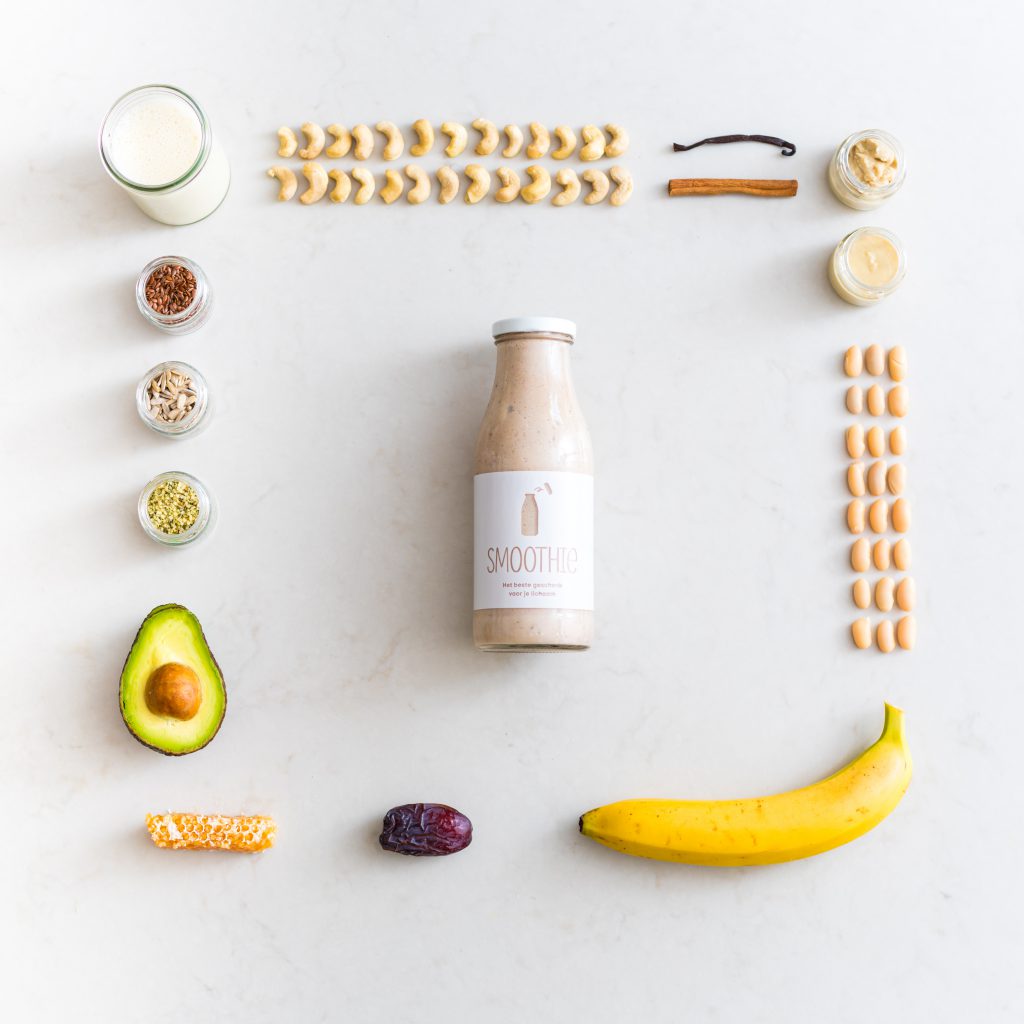
Vegetables are often added to a smoothie. This is almost always a good idea! After all, vegetables are full of healthy nutrients and contain very little energy. The advice of the Health Council of the Netherlands is to eat 250 grams of vegetables daily. Unfortunately, only 6% of the Dutch people manage to achieve this1. So there is a lot to be gained. Smoothies with lots of vegetables can help you boost your daily vegetable intake.
Proteins and fats
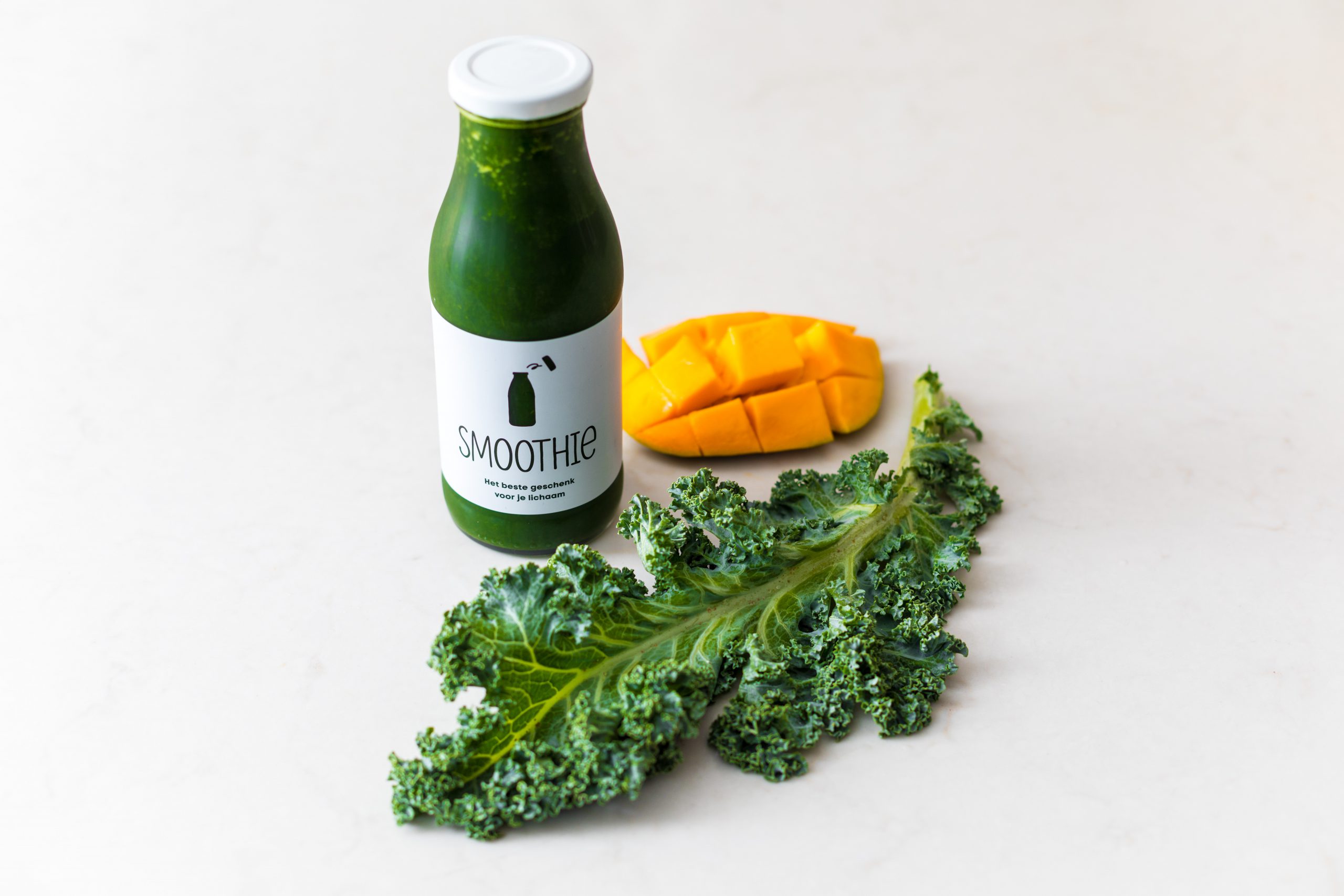
So the basis of a healthy smoothie is about 1-2 pieces of fruit with a good amount of vegetables. This way you have a delicious snack or nutritious thirst quencher. Are you planning to use your smoothie as a meal? Then you can also add extra protein and healthy fats. For extra protein, for example, you can use (vegetable) yogurt, cottage cheese or milk. Beans are also a super good way to add extra protein, vitamins and fiber to your smoothie. If you also want to add healthy fats, nuts, seeds and kernels are a great option! These provide lots of vitamins, minerals and unsaturated fats in addition to protein. Avocado and peanut butter are also great for adding extra healthy fats to your smoothie.
This is what a healthy smoothie contains
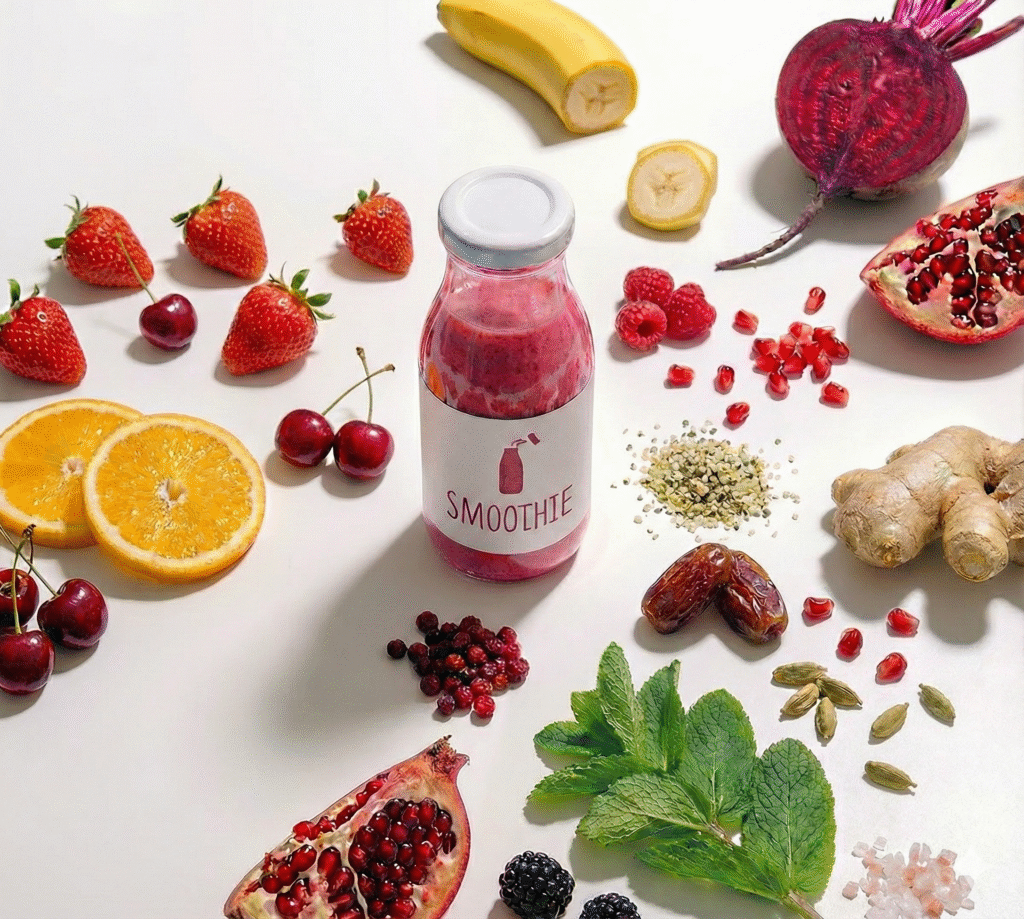
So what makes a healthy smoothie depends a bit on your personal needs and goals. However, there are certainly some things you can look out for. In general, a healthy smoothie can contain the following components:
- Fruit (1-2 pieces)
- Vegetables (100-200 grams)
- Protein (e.g. (vegetable) milk, yogurt or beans)
- Healthy fats (e.g., nuts, seeds, avocado)
- Whole grain cereals (e.g., oatmeal or whole wheat flakes)
- Herbs and spices (e.g., cinnamon, turmeric or ginger)
In addition, it is good to make sure that fruit juice from concentrate has not been used or a lot of extra sugars or cream has been added. Extra tip: You can also eat your smoothie with a spoon. That way you can enjoy it longer and it is more filling.
Sample recipe healthy breakfast smoothie
Ingredients
- 1 banana
- 100 grams of blueberries
- 100 grams of kale
- 250 ml of soy milk
- handful of cashew nuts
- 5 tablespoons of oatmeal
- 1/2 teaspoon ground cinnamon
Preparation
Put all the ingredients together in a blender and blend until smooth. Ready you are to enjoy a delicious nutritious breakfast!
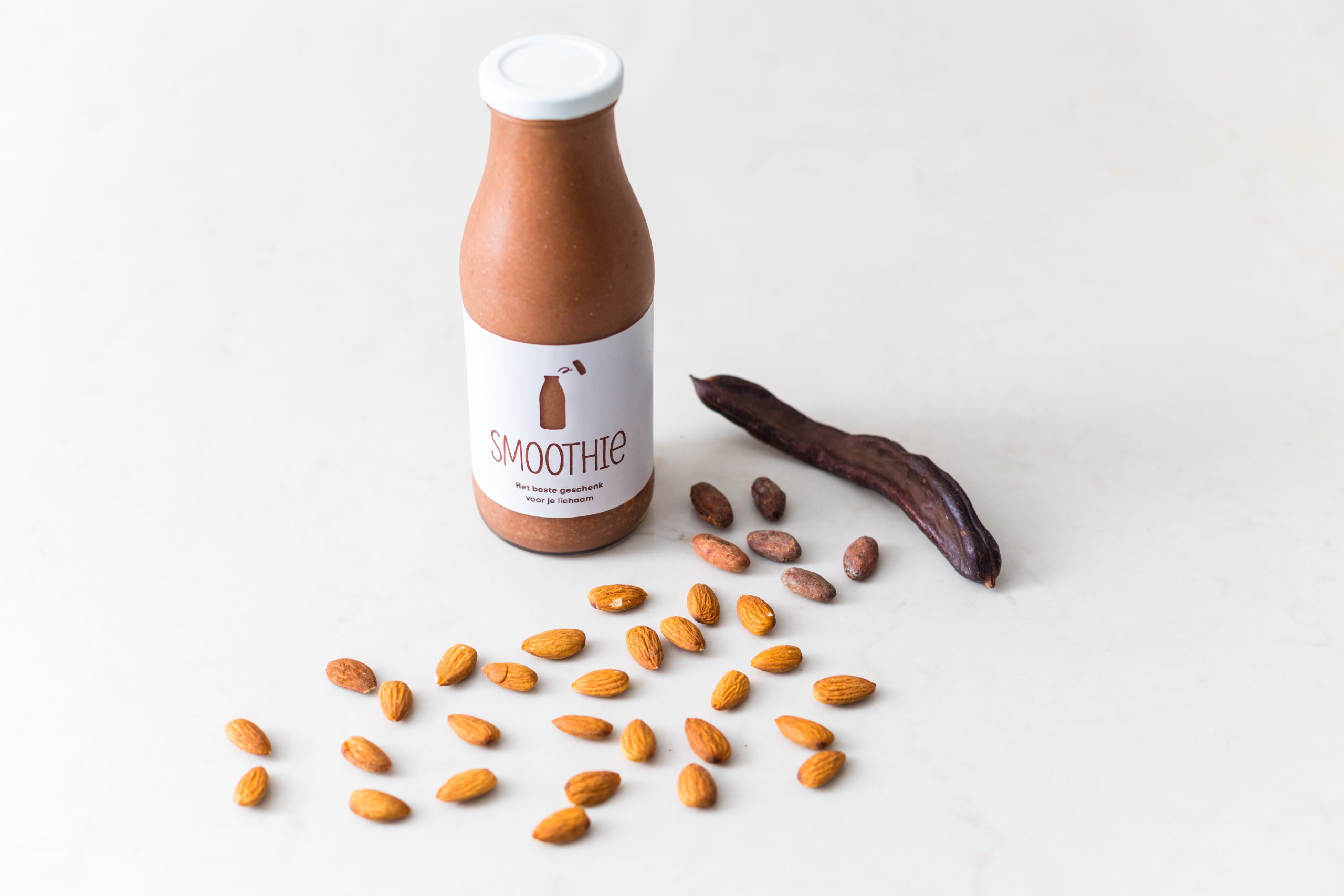
Don’t feel like standing in the kitchen yourself? Opt for Sapje’s smoothies!
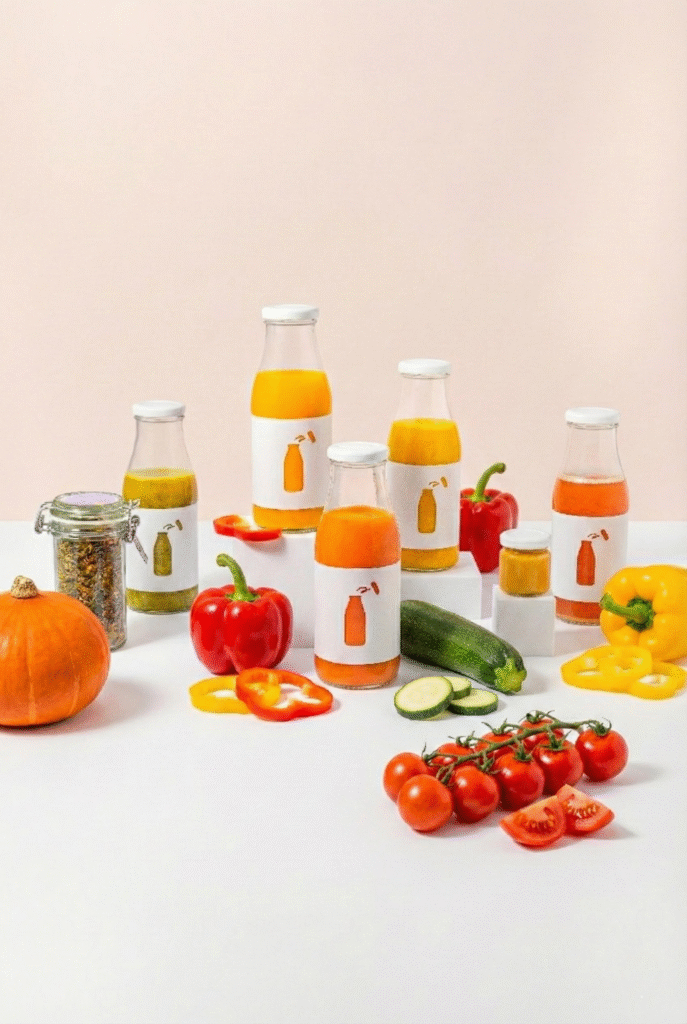
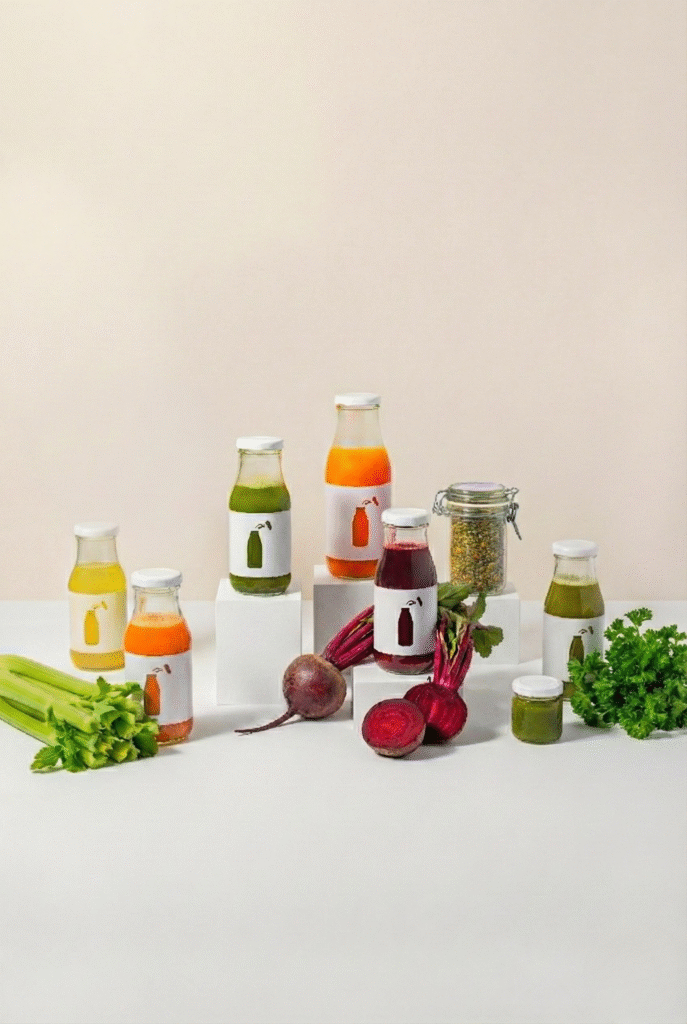
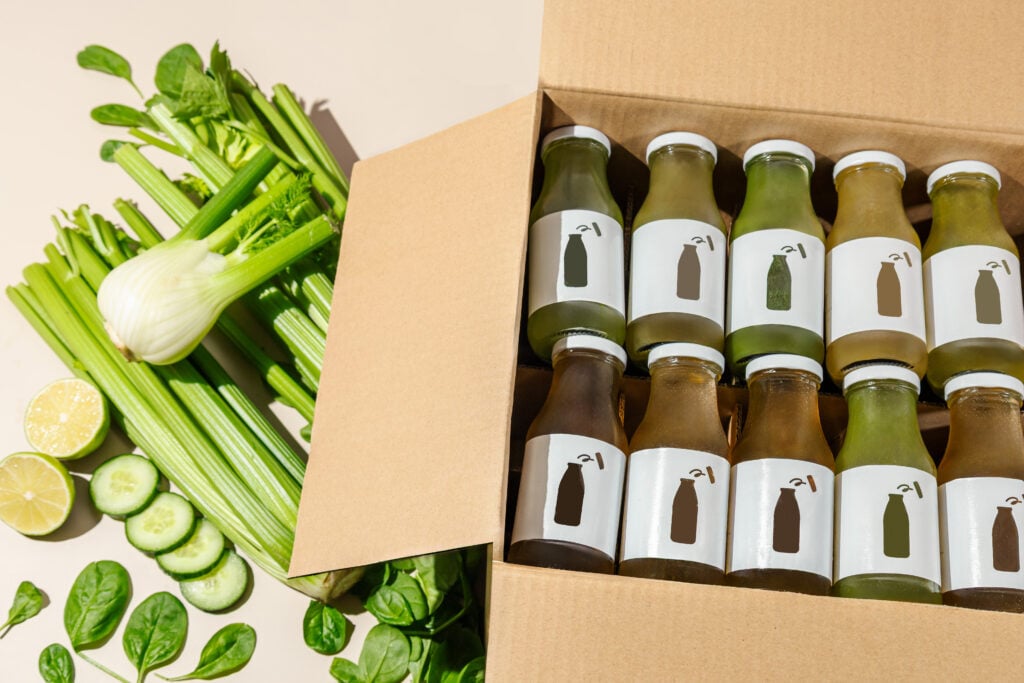
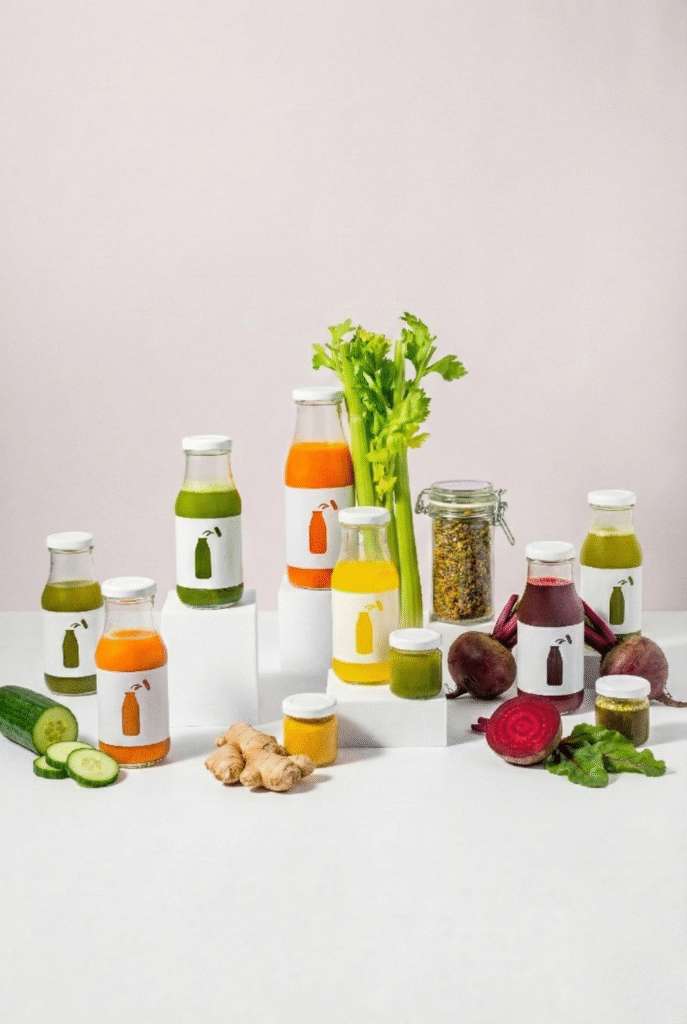
So ready-made smoothies from the supermarket are often not the healthiest choice. Fortunately, at Sapje, we approach this differently. We use only fresh, organic and pure ingredients. Our smoothies are packed with vegetables, nuts, seeds and pits and we add just enough fruit to give the smoothie a delicious taste. With additional herbs and spices, we provide an even richer taste experience.
After preparation, our smoothies are immediately frozen in the shock freezer. This not only preserves best the color, taste and smell, but also the many nutrients. So you can enjoy a deliciously fresh smoothie at home every day.
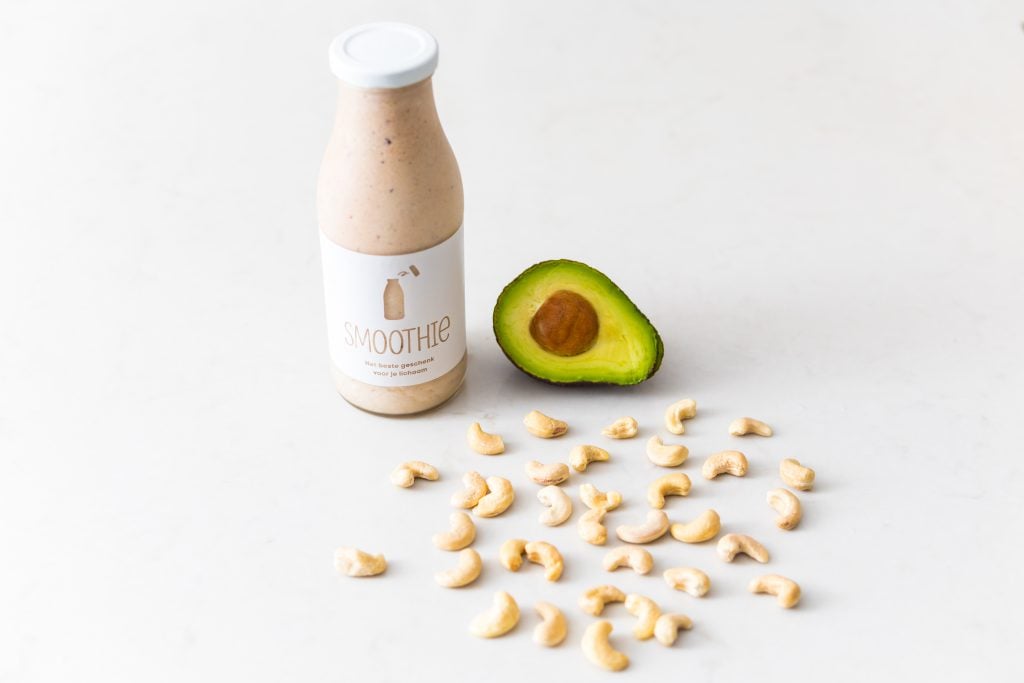
Smoothies from Sapje
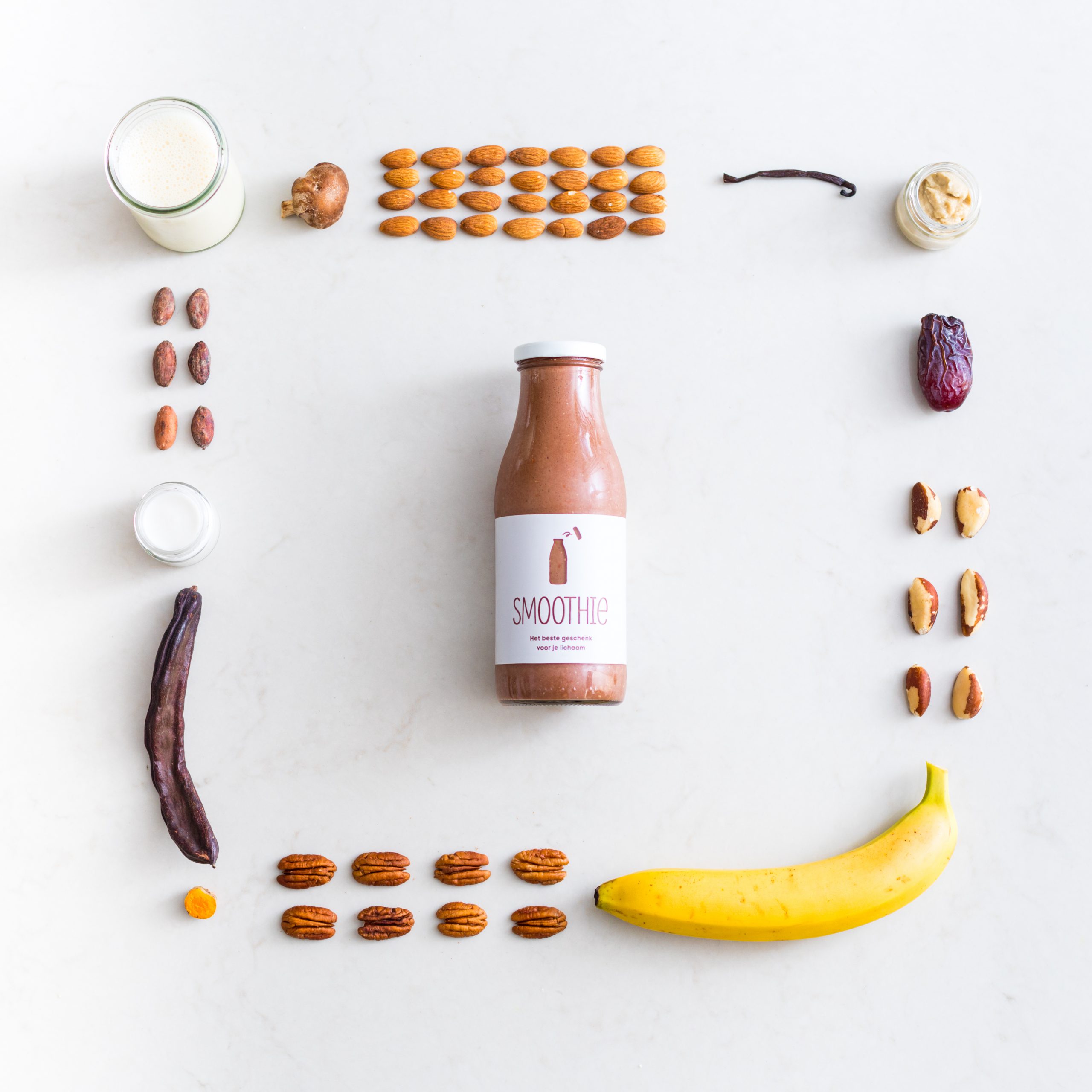
Our Green smoothie contains no less than 6(!) types of vegetables, making it ideal as a nutritious snack or refreshing thirst quencher. The Breakfast smoothie speaks for itself, of course. But this chocolate smoothie is also excellent for lunch. The combination of carbohydrates, protein and healthy fats, makes for a balanced meal. Finally, we have our protein-rich Protein smoothie. This smoothie contains a whopping 19 grams of protein per bottle. Ideal around exercise or as a tasty and nutritious breakfast.
Resources
- RIVM. (2018). Food consumption survey 2012-2016.