







The 8 benefits of carrot juice for your health
The carrot may not be the most exotic superfood. Even your grandmother liked to prepare it for you, cooked alongside a pile of peas. But don’t let its somewhat silly image fool you! The carrot is a rich source of vitamin A and other important nutrients. And better than cooked or in a pie consume it raw in a juice, of course! Carrot juice is delicious and has all kinds of unexpected health benefits. In this blog you can read everything you want to know about carrot juice, namely:
- What makes carrot juice healthy?
- What are the health benefits?
- What nutrients does carrot juice contain?
- How do you make carrot juice?
- Are there any side effects?
The carrot may not be the most exotic superfood. Even your grandmother liked to prepare it for you, cooked alongside a pile of peas. But don’t let its somewhat silly image fool you! The carrot is a rich source of vitamin A and other important nutrients. And better than cooked or in a pie consume…

What makes carrot juice healthy?
- Carrot juice contains Vitamin A, an important nutrient for skin health and for the normal functioning of your immune system.
- Carrot juice contains several B vitamins, so it supports your metabolism.
- Carrot juice is a good alternative to alcohol and soda: it is filling, sweet and mixes well.
- Carrot juice contains a combination of many important nutrients that, when combined, contribute to a balanced diet [1].
- Drinking carrot juice increases the amount of antioxidants in the body [1].
1. Rich in nutrients
Who would have thought that the ordinary carrot would contain such a broad spectrum of vitamins and bioactive compounds? We list them for you. Carrots are rich in vitamin A in the form of beta-carotene and are also a good source of folic acid. According to science, this is a palette of nutrients that could make a good contribution to a healthy diet [1].
2. Promotes metabolism
Because carrot juice contains a good amount of vitamins B1, B6 and B11, it boosts your energy metabolism. This is because these vitamins play a role in the activity of many different enzymes in your body that are involved in energy metabolism. In this way, drinking carrot juice can support your energy levels.
3. Good for the eyes
You’ve probably heard that carrots are good for your eyes. This is not just a myth. Carrots are in fact very rich in the substance beta-carotene, which can be converted in your body to vitamin A. This vitamin plays a role in the normal functioning of your eyes. It helps you keep your vision sharp and helps maintain normal moisture balance in your eyes.
4. Good for the skin
Vitamin A (or beta-carotene) is also important for your skin. It supports the skin’s ability to repair itself, so it helps keep your skin healthy. By drinking a glass of carrot juice daily, you support the skin’s ability to recover. Moreover, carrot juice contains a lot of manganese and vitamin C, which is important for a good condition of the skin
5. Good for the heart and blood vessels
Drinking a good glass of carrot juice every day can also support your cardiovascular health. This is because carrot juice contains nice amounts of vitamins B1 and C. Vitamin B1 has a beneficial effect on the functioning of your heart. Vitamin C contributes to the formation of collagen, which supports the condition of your blood vessels. In fact, collagen is important for keeping your vessel walls strong and supple.
6. Good for the immune system
Another, but by no means insignificant, health benefit of carrot juice is that it can provide additional support to your immune system. Due to its high content of vitamin A and folic acid, carrot juice has a positive impact on your immune system, helping to keep your resistance good. In addition, the antioxidants vitamin C and manganese help protect healthy cells and tissues. So the ideal way to support your resilience.
7. Good for brain and mental health
The B vitamins (1, 6 and 11) in carrot juice not only help maintain your energy levels, but are also involved in brain function. In fact, they contribute to the ability to concentrate, and contribute to brain and nerve functions involved in learning performance and memory functioning. In addition, B vitamins contribute to mental resilience, resistance to stress and are good for mood.
8. Good for digestion
Because carrot juice contains calcium, it can support your digestion. This is because calcium plays a role in the action of certain enzymes involved in releasing energy from your food. As a result, calcium supports digestion.
Nutritional profile of carrot juice
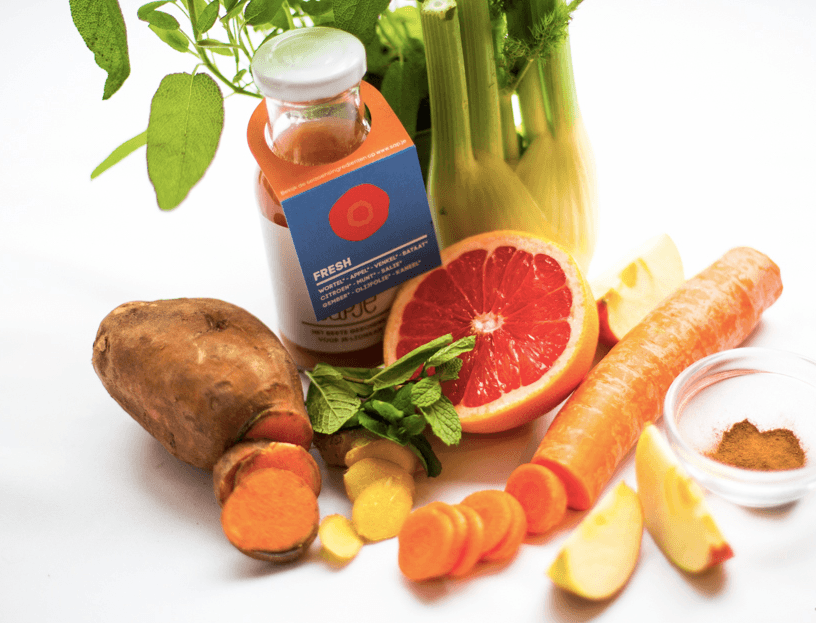
Nutritional value of our Fresh (per 100 ml)
| Energy | 34 kcal / 142 kj |
| Protein | 0.8 g |
| Fats | 0.3 g |
| Of which saturated fat | <0.1 g |
| Carbohydrates | 7.5 g |
| Natural sugars | 5.4 g |
| Salt | <0.2 g |
| Nutritional feeds | 1,1 g |
Vitamins and Minerals (per bottle of Fresh)
| Name | Value | % of RDA |
| Potassium | 1013 mg | 51% |
| Vitamin A | 2275 μg | 284% |
| Vitamin B1 | 0.21 mg | 19% |
| Vitamin B2 | 0.11 mg | 8% |
| Vitamin B3 | 1.6 mg | 10% |
| Vitamin B5 | 0.8 mg | 13% |
| Vitamin B6 | 0.36 mg | 26% |
| Vitamin B11 | 69 μg | 35% |
| Vitamin C | 22 mg | 28% |
| Vitamin E | 2.2 μg | 18% |
| Vitamin K | 103 μg | 137% |
| Calcium | 120 mg | 15% |
| Phosphorus | 121 mg | 17% |
| Iron | 1.6 mg | 11% |
| Iodine | 11 μg | 7% |
| Copper | 0.2 mg | 20% |
| Magnesium | 29 mg | 8% |
| Manganese | 0.8 mg | 40% |
| Zinc | 0.6 mg | 6% |

How do you make carrot juice?
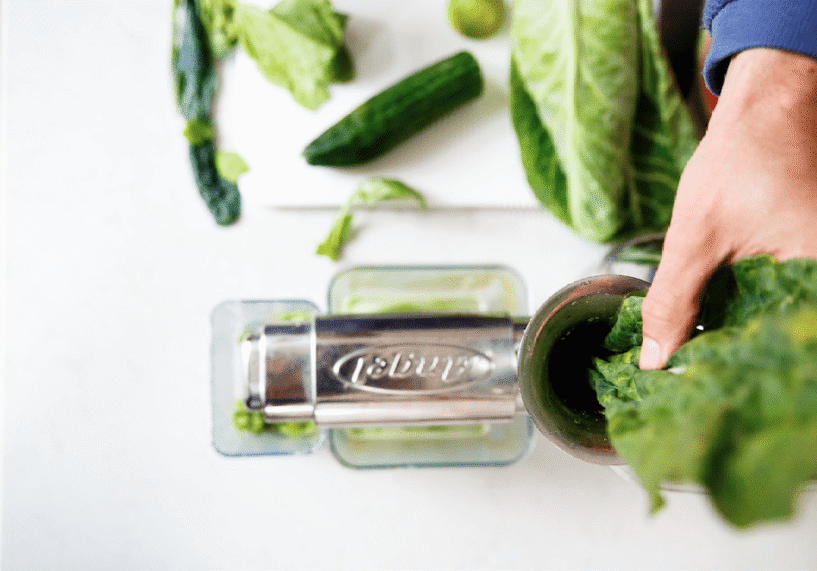
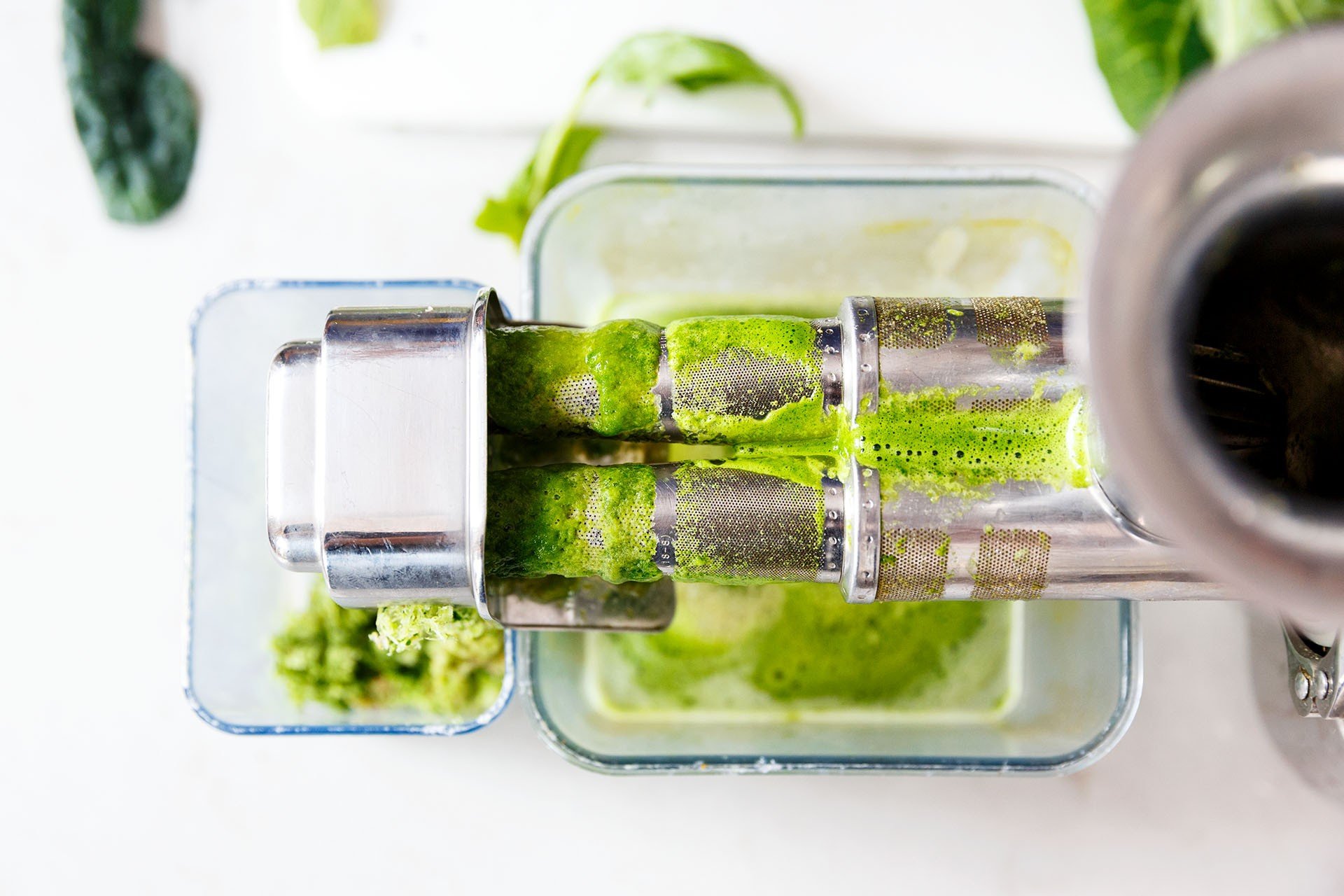
It is easiest to make carrot juice with a (slow) juicer, but it can also be done with a good quality blender. Here’s how to proceed:
– Take two or three medium-sized organic carrots. Wash them and scrape or peel if necessary. Chop them into small pieces and put them in the juicer one at a time or in the blender all at once.
– If you use a blender, add some water. You can also add juice from other vegetables, or, for example, ginger or elderflower lemonade or kombucha.
– Carrot juice is delicious in combination with all kinds of vegetables and fruits! Try and vary. Carrot is sweet, but low in fructose, so can be added well as a sweetener to a green juice or detox juice. It is delicious with celery, fresh ginger, apple, lemon or beet.
– If you use a blender, strain your juice through a cheesecloth. You can also leave the fibers in and eat them while drinking.
– Drink your juice as soon as possible after you make it!
Other ways to include carrot juice in your diet:
– Try it as a low-fat salad dressing
– Use it as a liquid in cake recipes
– Use it as a cooking liquid for grains or rice
Keep in mind that you naturally get the most vitamins raw.
Does carrot juice also have side effects?
Carrot juice has the very noticeable but harmless side effect that it can turn your skin orange! The orange pigment in beta carotene, when taken in moderated amounts, makes your skin glowing, but be careful not to overdo it!
Conclusion
Carrot juice may not be the most spectacular superfood, but it is certainly a nutritious and healthy addition to your daily diet. A daily glass of carrot juice can help support overall health, digestion, skin and eyes, brain and cardiovascular health. Making your own carrot juice is cheap and easy, and you can keep varying and combining it with all kinds of vegetables, fruits, herbs and spices. Don’t have time to make your own carrot juice? Then order organic carrot juice at Sapje. Enjoy!
How can I make my own carrot juice?
– Take two or three medium-sized organic carrots. Wash them and scrape or peel if necessary. Chop them into small pieces and put them in the juicer one at a time.
– If using a blender, add some water. You can also add juice from other vegetables, or, for example, ginger, elderflower lemonade or kombucha.
– Carrot juice is delicious in combination with all kinds of fruits and vegetables. Carrot is sweet but low in fructose. Therefore, it can be added well as a sweetener to a green juice or detox juice. It is delicious with celery, fresh ginger, apple, lemon juice and/or beet.
– If using a blender, strain your juice through a cheesecloth. You can also leave the fibers in and eat them while drinking.
– Drink your juice as soon as possible after you make it!
So what makes carrot juice so healthy?
– Carrot juice contains vitamin A: an important component for your skin health and immune system.
– Carrot juice contains several B vitamins (B1, B6, B11), so it supports your metabolism.
– Carrot juice is a good alternative to alcohol and soda: it is filling, sweet and mixes well with other drinks.
– Carrot juice contains a combination of many important nutrients that contribute to a balanced diet.
– Drinking carrot juice increases the amount of antioxidants in the body. These tackle free radicals in your body.