Cart

No products in the cart.

NRC

Sept. 21, 2020

We eat only organic and don’t pay attention to price when shopping – as long as it tastes good. We should not spray the planet with pesticides. By doing so you destroy biodiversity and ingest toxins yourself. When I am free, I love to walk in the woods: peace and quiet, mind at zero, fresh air, exercise. Your stress level drops immediately. I also do a lot of yoga. Read the full article on their website.

Dutch newspaper

Sept. 5, 2020

From Red Bull to vegetable juices: ‘Chewing gum is pure plastic, that doesn’t come into our house.’ His girlfriend studied dietetics. That’s how Joel Goudsmit (34) discovered the importance of vegetables; his inhaler could go in the trash. Now he preaches his new lifestyle by selling green juices and a health book. Read the full article on their website

Why a ginger shot is good for your health

More and more people are using plants and herbs to stay healthy. For example, ginger has become increasingly popular in recent years. Many cafes have ginger tea on the menu, and ordering ginger juice or a ginger shot is also becoming more common. But is a ginger shot really healthy? And does consuming ginger carry any risks? In this article, we describe what scientists know about the health effects of ginger anno 2020.

In this article you can read more about:

Scientific research on the health effects of ginger

In recent years, more and more research has been conducted on the health effects of ginger. Among other things, the vitamins and minerals in Zingiber officinale, as ginger is officially called, are being studied. The compounds Gingerol and shogaol from ginger are also getting a lot of attention. However, less than 40% of the studies on ginger are of sufficient quality to draw sound conclusions[1]. The studies are often conducted with too few people. Moreover, a fixed dose of ginger is often not used when people take a ginger shot, ginger tea or ginger capsules. As a result, the absorption and effect of the active ingredients in the body cannot be reliably determined[1, 2].

Is ginger safe?

Many people think that herbs are harmless because they are natural products. This is not necessarily true. Fortunately, ginger seems to be generally safe. For example, in the elderly, ginger does not appear to have any effect on the medications they take[3]. However, some people do experience unpleasant abdominal symptoms such as heartburn, nausea and diarrhea when using ginger excessively[1]. You also notice when you take a ginger shot that it tingles a bit or if the concentration of ginger is even higher, it can even cause a burning sensation. So a ginger shot on an empty stomach is not a good idea if you know you are sensitive to it.

Sometimes there are rumors that pregnant women should be careful with ginger. In large studies, ginger during pregnancy did not increase the risk of pregnancy problems and birth defects in the child[4-7]. However, there are some small studies in which babies had lower birth weight and a slightly increased risk of congenital anomalies or stillbirth if the mother had used a lot of ginger during pregnancy[6]. However, the quality of these studies was poor.

Ginger for your energy metabolism

Drinking ginger shots not only provides a nice spicy taste, it also helps your body release energy from your meals. This is because the mineral copper in the shots plays a role in the activity of various enzymes involved in your metabolism. In this way, by having a nice shot, you can also directly boost your energy metabolism.

Ginger shots and the effect on your joints and muscles

Copper from a shot of ginger helps maintain cartilage in your body. Cartilage is an important part of your joints. For the movement of your body, of course, your muscles are also incredibly important. In the muscles, it is precisely the mineral potassium from ginger that can benefit you. In fact, potassium plays a role in maintaining supple and strong muscles.

Ginger shots against oxidative damage

The antioxidant copper from the shot helps trap free radicals. Free radicals are substances that can cause damage to your cells and tissues. You do not want too many of these free radicals in your body. By getting enough antioxidants through your diet, you ensure that your body is better protected against this damage. Drinking a shot of ginger regularly is one way to do this.

Ginger for your immune system

Last, but certainly not least, we want to talk about the positive influence on your immune system. This is because copper from ginger shots supports your body’s defenses and therefore helps to ensure a good resistance.

More research

So ginger shots have all sorts of positive health effects, with generally minimal side effects. Much research continues to be done on the benefits of ginger. We will therefore update this blog regularly as new insights emerge.

How can you use ginger for your health?

The recommended dosage is about 1 gram of fresh ginger per day. You can, of course, incorporate this into your food. For example, there are all kinds of delicious Oriental dishes that use ginger. Do you prefer to drink ginger? Below are tasty recipes for ginger juice and ginger tea. Want to give your health an extra boost without too much fuss? Then try a ginger shot.

Ginger juice

Recipe for ginger juice

Ginger juice can be drunk with water or fruit juice, but is also very suitable as a sauce in Oriental dishes or as a salad dressing. For half a liter of ginger juice, mix 6 cm of peeled and chopped fresh ginger root with the lemon juice of 1 or 2 lemons. Mix the ginger and lemon with 1 teaspoon turmeric and half a liter of water in the slow juicer or blender. The more ginger you use the sharper the ginger juice becomes. You can also order ginger juice with turmeric, lemon and black pepper from us. We also wrote an article with several recipes on how to make ginger juice yourself.

Ginger tea

Recipe for ginger tea

Making ginger tea is very simple. Put some thin slices of ginger in your teacup and pour hot water on top. Or dissolve ginger powder in hot water. Add lemon and/or honey to taste. Easy to make and super healthy for you.

Recipe for ginger shot

A ginger shot has many benefits. Of course, you can order your ginger shot, but did you know that making your own ginger shot is also very easy? The ingredients for a ginger shot are ginger root (2-3 cm) and half a lemon. Cut the peeled lemon and ginger root into small pieces or slices and blend them in a juicer or slow juicer until you have a cloudy ginger juice. You can also use a blender or hand blender. Optionally, you can add a little maple syrup or honey. Drink the ginger shot in one sitting. Of course, you can also vary: replace the lemon with tangerine, orange, pineapple and/or apple. And add turmeric, cayenne pepper or cinnamon to taste: just what you like in your ginger shot.

Ginger shot

What should you pay attention to when preparing ginger?

You can store ginger shots in the refrigerator for up to three days. You can also freeze them by the serving, such as in an ice cube mold. That way you only have the work of the ginger shot once while the effect remains. Dry ginger is best stored at room temperature in a shady area. Then you can certainly enjoy it for several weeks.

Conclusions

In short, although it has not yet been conclusively proven, ginger seems to be good for your health and you can use it safely. With our recipes for ginger juice, ginger shots and ginger tea, you can easily and tastefully add a healthy ginger shot to your diet. Enjoy!

What is a ginger shot good for?
A ginger shot is a powerful, concentrated drink that supports the body in multiple ways. Ginger is known for its anti-inflammatory, digestive and immune-boosting effects. It can help with nausea, reduce bloating and activate your metabolism. Combining it with lemon, turmeric or cayenne pepper – often added to shots – gives you an extra health boost.
How many ginger shots can you take per day?
For most people, one ginger shot a day is enough to experience the health benefits. Do you have a sensitive gastrointestinal system or use blood thinners? If so, it’s smart to start with half a shot and consult with a doctor if in doubt. More than two a day is usually not recommended because of the pungent, active ingredients.
Are ginger shots good for losing weight?
Ginger shots can indirectly contribute to weight loss. Ginger can slightly increase your metabolism, stabilize blood sugar and reduce appetite somewhat. They also promote healthy digestion, which is important during weight loss. But: it is not a panacea – it works best as part of a healthy diet and exercise regimen.
Why take a ginger shot on an empty stomach?
A ginger shot on an empty stomach provides a powerful start to your digestion and metabolism. The active substances are absorbed faster and can do their job better. Many people find that it makes them feel more alert and energetic in the morning. Note: If your stomach bothers you quickly, it is better to eat something first or dilute the shot with water.

Resources

  1. Ahn NH, et al. Ginger on human health: a comprehensive systematic review of 109 randomized controlled trials. Nutrients 2020;12:157. PubMed ID: 31935866. Article
  2. Vázquez-Fresno A, et al. Herbs and Spices- Biomarkers of Intake Based on Human Intervention Studies – A Systematic Review. Genes & Nutrition 2019;14:18. PubMed ID: 31143299. Article
  3. Agbabiaka TB, et al. Concurrent use of prescription drugs and herbal medicinal products in older adults: a systematic review. Drugs Aging 2017;34:891-905. PubMed ID: 29196903. Article
  4. Ahmed M, et al. Safety classification of herbal medicines used among pregnant women in Asian countries: a systematic review. BMC Complementary and Alternative Medicine 2017;17:489. PubMed ID: 29137614. Article
  5. Stanisiere J, et al. How safe is ginger rhizome for decreasing nausea and vomiting in women during early pregnancy? Foods 2018;7:50. PubMed ID: 29614764. Article
  6. Lindblad AJ, et al. Ginger for nausea and vomiting of pregnancy. Canadian Family Physician 2016;62:145. PubMed ID: 26884528. Article
  7. Viljoen E, et al. A systematic review and meta-analysis of the effect and safety of ginger in the treatment of pregnancy-associated nausea and vomiting. Nutrition Journal 2014;13:20. PubMed ID: 24642205. Article

Celery juice recipe

Making celery juice is actually very easy. Basically, all you need is a stalk of organic celery and something to press it with. Organic celery is preferable because non-organic celery generally contains a lot of pesticides. Can’t get that? Then make sure you wash the celery extra well before making celery juice. Optionally, you can add some organic lemon juice for flavor, as we do in our Support juice. If you want to make celery juice of the best quality, you need a slow juicer. Then you can be sure that all the beneficial nutrients from your stalk of celery actually end up in your glass. Want to know even more? Then you can read all the benefits of celery juice with scientific evidence here.

Celery juice

MAKE CELERY JUICE WITH A (SLOW) JUICER:

  • Take one stalk (400-600 grams) of organic celery and cut the stalks loose from the base.
  • Wash the stems and leaves carefully because of sand.
  • Cut the stems and leaves into smaller pieces and put them in your juicer.
  • Squeeze any additional ingredients for flavor, such as a little organic lemon.
  • For additional health benefits: Drink your celery juice in the morning, on an empty stomach. Wait at least 15 minutes before eating or drinking anything else.

MAKE CELERY JUICE WITH A BLENDER:

Making celery juice without a juicer is also possible. Making celery juice with a blender is a pretty good alternative. Here’s how you do it:

  • Take one stalk of organic celery and cut the stalks loose from the base.
  • Wash the stems and leaves carefully.
  • Cut the stems and leaves into smaller pieces (about 2 cm) and put them in your blender.
  • Add approximately 60 ml of water.
  • Blend everything until you have a nice even consistency.
  • Place a cheesecloth over a (measuring) jug or bowl and pour your celery juice from the blender over it bit by bit, separating the fibers from the juice.
  • Squeeze out any leftover juice with your hands, if necessary. For additional health benefits: Drink your celery juice in the morning, on an empty stomach. Wait at least 15 minutes before eating or drinking anything else.

DRINKING CELERY JUICE: HELPFUL TIPS AND FACTS

  • Don’t always have time to make celery juice in the morning? Then possibly make several servings at once and put the rest in a sealed jar or bottle in the refrigerator for the next day or store it in the freezer. Of course, the fresher your celery juice, the healthier it is.
  • Does your body react sensitively to celery juice? Then start with a smaller amount than 500 ml and build up your intake slowly.
  • Not fond of the taste of celery juice? Optionally, you can also add apple or cucumber to your juice to soften the taste. You can then gradually reduce the amount of flavoring until you get used to the taste. Note: According to Anthony William, pure celery juice is the healthiest.
  • Does drinking celery juice daily change your bowel movements? That’s quite possible, because it has a strong effect on your digestion. Watch it for a while.
Celery juice

BUYING CELERY JUICE: WHAT TO LOOK OUT FOR?

Making your own celery juice is quite a chore. Maybe, despite the tips above, you just don’t have enough time for it. Buying celery juice is a good alternative, but what should you pay attention to? For celery juice to be truly healthy, it is important that it contains an optimal amount of the celery’s original nutrients. Therefore, choose:

SLOWJUICE CELERY JUICE

Slow juicing is the best way to extract as many healthy nutrients from vegetables as possible. So buying slowjuice celery juice is recommended.

PURE CELERY JUICE

Because pure and natural celery juice is the healthiest, it’s best to buy celery juice with as few additives as possible. That means not only without other fruits and vegetables, but also without preservatives. The method of preservation is also important for nutritional value.

FROZEN CELERY JUICE

Today there are several ways to extend the shelf life of vegetable juice. These include preservatives, HPP (high pressure treatment) or freezing the juice . At Sapje, we believe the latter option makes for the healthiest celery juice. Here the nutrients are optimally preserved, in an entirely natural way.

CELERY JUICE IN GLASS

Plastic bottles are known for their ability to release harmful substances into the contents. In addition, they are bad for the environment. That’s why it’s best to buy celery juice in a glass bottle. This is because glass does not detract from the quality of the contents and is endlessly recyclable. At Sapje, we also use bottles made of recycled glass.

ORDER CELERY JUICE

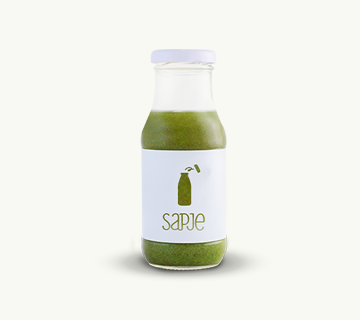
Want to buy celery juice from Sapje and prefer not to make your own? Then our Support juice is the purest option. The Wild, Reboot and Detox juices also have celery juice as an ingredient. In addition, our detox cleanses also include celery juices. Ordering our organic, slowjuice celery juice is easy. You specify when you want to receive it and we will come and deliver it frozen to your home at a time that suits you. All you have to do is take it out of the freezer the night before and you can drink delicious fresh celery juice the next morning.

How do I make celery juice?
You can make a good celery juice in many different ways. For example, you can make a healthy juice in the (slow) juicer or in the blender, with lemon or with other ingredients. So there are many different ways to make this delicious and especially healthy juice. Check out our extensive recipe to make your own delicious and healthy celery juice.
What makes your celery juice recipe so healthy?
At Sapje, we make our celery juice with a slow juicer. By using a slow juicer (instead of a blender) for your juices, you get more vitamins and minerals.
We also add an organic lemon to the recipe. This is good for a healthy dose of vitamin C, which gives your resistance optimal support. Together with the many other nutrients from the celery, this makes a perfect combination for your health!
What should I pay attention to when using this celery juice recipe?
There are no specific points to watch out for. The recipe is easy to follow. However, we do recommend that you use organic celery.
Non-organic celery generally contains a lot of pesticides, which are bad for your health. You can also add some organic lemon for flavor, as we do in our Support juice.
If you want to make celery juice of the best quality, use a slow juicer. Then you can be sure that all the beneficial nutrients from the stalk of celery actually end up in your glass.
What should I look for when buying celery juice?
Would you rather spend your time doing other things than making celery juice, but still want the very healthiest thing for your body? Then it makes sense to buy healthy and organic celery juice. But how can you be sure it is healthy and fresh? We give some tips you should pay attention to when buying celery juice.
You naturally want to get the highest amount of original nutrients from the celery in your glass. Therefore, it’s best to buy celery juice that:

– is made with a slow juicer;
– is pure and organic;
– comes from local farmers;
– is bottled in glass instead of plastic (better for the environment);
– is frozen (that way it retains the good vitamins and minerals).
Can celery go in the slow juicer?
Yes, celery will do just fine in the slow juicer. In fact, it is one of the most popular vegetables to juice because of its high moisture content and health benefits, such as:
– Rich in potassium, vitamin K and antioxidants
– Works diuretic and anti-inflammatory
– Good for digestion and blood pressure

Tip: Cut the stalks into smaller pieces before putting them in the slow juicer so that the fibers don’t clog the machine.

Happy Healthy

March 17, 2020

In this review you will read about my experiences with Sapje’s vegetable juices. These are juices full of seasonal vegetables, fruits, herbs and spices.I have been enjoying Sapje’s vegetable juices for some time now and I get a lot of questions about them. So I thought it would be easiest to write a review about it and answer all your questions. You will read everything you need to know about these vegetable juices and detox, how it works, my experiences and what the cost is. Read the full article on their website and find out if Sapje’s juices are worth it for you!

Why we freeze our juice

At Sapje, we make every effort to get our vegetable juices to your home as fresh as possible. We do this by freezing the juice in the shock freezer soon after pressing . This best preserves the color, flavor and aroma, as well as the many nutrients. We have discovered that freezing juice produces the highest quality; even better than if we delivered fresh. Read on and find out why!

But first: what is conservation anyway?

Preservation is a name for various methods by which you make foods last longer, for example. To achieve this goal, microorganisms such as bacteria, fungi, viruses and yeasts must be controlled. This can be done in various ways, such as heating food (pasteurization), cooling or freezing it, adding preservatives or exposing it to very high water pressure (high pressure processing or pascalization). Other methods include adding a lot of salt, acid or sugar, but since this comes at the expense of flavor and health value, we rejected these immediately. In addition, we strive for the purest product possible, so adding preservatives was not an option for us either. Below you can read more about pasteurization, high pressure processing and freezing.

Pasteurization

Pasteurization is a way of making juices last longer by heating. Usually the liquid is heated for a short time to a temperature higher than 72 degrees Celsius. This is a good way to kill fast-growing bacteria, but some bacteria can still survive the heating. As a result, pasteurized juice only keeps for a certain amount of time and must be kept refrigerated. Another disadvantage of this preservation method is that it changes the cell structure of the juice and leads to the loss of certain vitamins, minerals and enzymes. Since we want to preserve as many nutrients as possible from our fresh vegetables, we didn’t think pasteurization was the best method.

HPP (high pressure processing, or pascalization)

HPP is a fairly new method of preservation in which foods are exposed to very high water pressure in large machines. Most microorganisms such as bacteria and fungi cannot withstand this high pressure and die from it. The same may be true for healthy organisms, nutrients and enzymes. You can find more and more juices in supermarkets that have undergone HPP. These are touted as “fresh” and can be stored in the refrigerator for weeks. A disadvantage of this is that there can be a lot of time between the time of preservation and the time of consumption. During that time, the juice can still lose many nutrients due to exposure to light, oxygen and time. Usually the nutrients are greatly reduced after a few days. If you drink the juice even later, you are basically just ingesting empty calories. Although HPP produces better results than pasteurization, we at Sapje thought there was still room for improvement.

Freezing (Shockfreezing)

At Sapje, we believe that freezing our juices is the best way to keep them tasty and healthy for as long as possible. After we get the ingredients delivered fresh, we slowjuice them as quickly as possible. This is done in a refrigerated environment to prevent loss of nutrients. Then the juices go straight into the shock freezer. In there, they are deep frozen in just one hour. Freezing prevents microorganisms from growing: time actually comes to a standstill. When frozen, the juices can stay fresh for up to a year. In nature, frozen organisms also retain their life force. Therefore, once thawed, our juices are as tasty and healthy as just after pressing. Of course, it is important that you drink them as soon as possible after thawing to take full advantage of this. The only thing better than frozen juices are fresh juices that you have squeezed yourself at home and then drink immediately. If you don’t have time or energy for that, our juices are the best alternative!

What about fresh rendition?

When we just started making fresh vegetable juices and our detox, we delivered them fresh to a small group of interested people in the neighborhood. That went fine with the cargo bike, but when our customer base started to grow, we had to find another solution. Our customers are now spread all over the Netherlands and Belgium, so the juices take longer to deliver. If we were to deliver them fresh, they could lose nutritional value through exposure to light, oxygen and time on the road. Moreover, they would have to be drunk immediately upon arrival for the best results. But then you wouldn’t easily order several bottles at once, even though it would be so convenient and also more sustainable. After all, we would have to drive less often. You can keep the frozen bottles in your freezer until you have time to enjoy them. This way you always have fresh vegetable juice at your convenience!

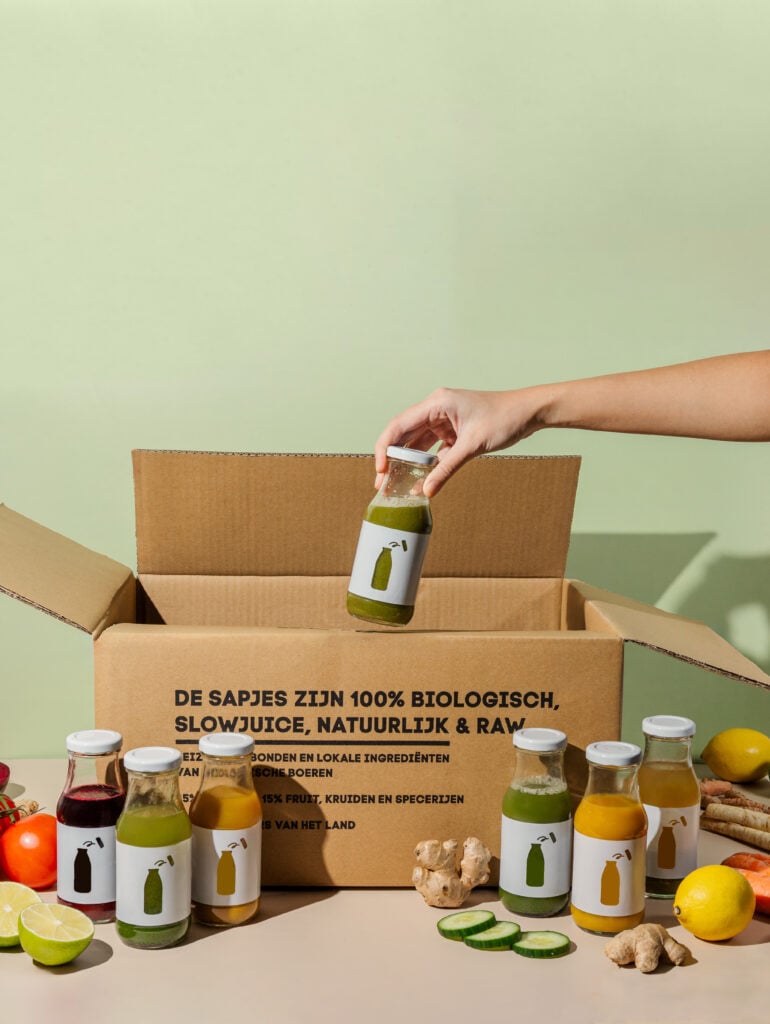
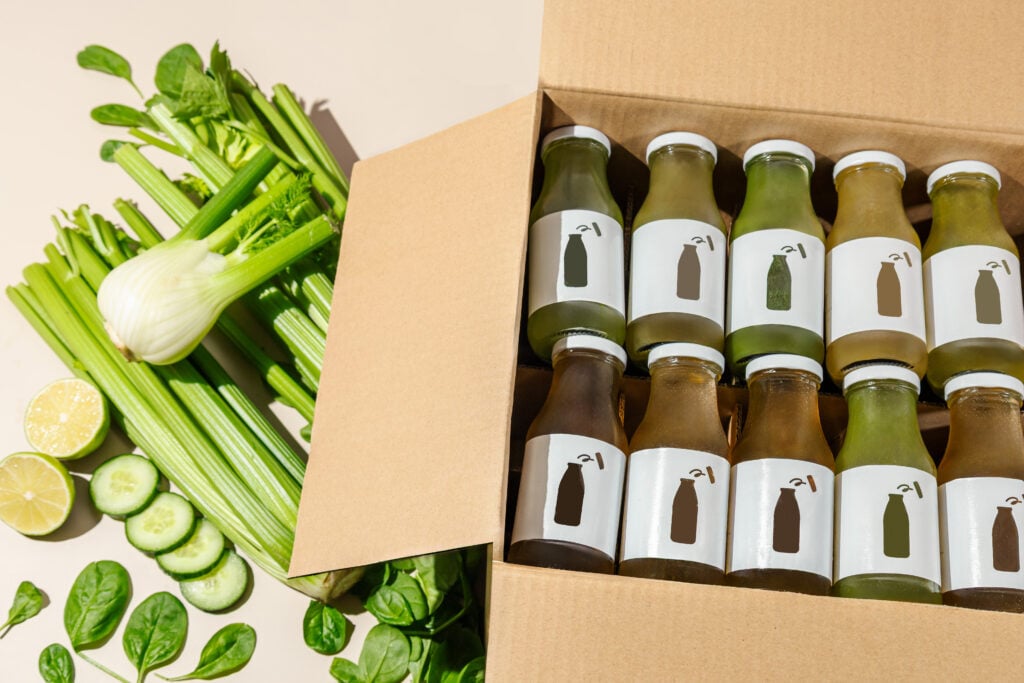
Frozen juice delivery
Why do you freeze the juices?
By freezing the juices right after they are squeezed, you preserve the healthy vitamins and minerals found in the juices. These vitamins and minerals come from the organic vegetables we process in our juices. When you do not freeze the juices, but store them in the refrigerator, the juice loses the healthy vitamins and minerals. This is a shame, because healthy vitamins and minerals are very important for your health.
Freezing stops microorganisms from growing: time actually comes to a standstill. As a result, the color, flavor and aroma, as well as many nutrients, are best preserved. We have found that freezing juices produces the highest quality; even better than having them delivered to you fresh.
We use a special method for freezing our juices: shock freezing. Want to know what this is? We explain it in detail at the top of the page.
How do you freeze the juices?
To preserve the important vitamins and minerals in our vegetable juices, we use a special method of freezing the juices: shock freezing. By placing the juices directly into the shock freezer, they are deeply frozen in just one hour. Shockfreezing keeps the juices fresh for up to a year. So you only get fresh juices delivered to your home, packed with vitamins, minerals and antioxidants.
Will the juices be delivered fresh to my home?
The juices are delivered to your home, frozen. This best preserves the color, taste and aroma, as well as the many nutrients. We have discovered that freezing juices delivers the highest quality; even better than delivering them fresh. So you are guaranteed to get healthy nutrients and your body gets only the very healthiest.
How can I freeze my own juice?
If you make your own juices from the slow juicer and want to store them, we also recommend freezing them immediately after preparation. This way you preserve the important vitamins and minerals in the juice. We understand that you may not have a special shock freezer at home. It is therefore best to store the juices in your own freezer immediately after making them to make them last longer. Just be sure to drink the juices within a few weeks. That way you can be sure you are getting the important vitamins and minerals.

Centrifugal juicing, slow juicing, blending or cold pressing?

At Sap.je, we are obsessed with the quality of our vegetable juice. That’s why we did a lot of research on the best method to get the tastiest and healthiest juice. Below we compare centrifugal juicing, slow juicing, blending and cold pressing. Important aspects are the price of the machine, the quality of the juice, the taste of the juice, the amount of pulp left, the ease of cleaning the machine, the noise level (some machines make a lot of noise) and the types of ingredients that can be squeezed. Find out below which method and machine produces the best vegetable juice!

Making vegetable juice: what are the actual methods?

Making vegetable juice can be done in many ways these days. In fact, there are so many machines available that you can soon lose sight of the forest for the trees. Fortunately, you can save time and effort by reading our findings on four well-known methods: centrifugal juicing, blending, cold pressing and slow juicing. We discuss each method separately and go over such things as the texture, nutritional value, color, smell and taste of the juice you make with it. We also discuss how efficient juicing is, i.e., how much food is lost with it.

Best vegetable juice

Centrifugal juices

The first juicer we had – we didn’t know much about it at the time – was a standard centrifugal juicer. After a while we bought another juicer because a centrifugal juicer was very tedious to clean and, more importantly, it wasted an enormous amount of fruits and vegetables. The pulp remained very wet and leafy vegetables and herbs remained fairly intact, so it looked like not much juice had come out. In addition, the speed of the turntable was very fast which created quite a lot of heat and that heat could potentially cause important nutrients to be lost.

The Juice Extractor

In recent years, more and more people have had a juicer appear on their kitchen counter. The name refers to the way the machine handles fruits and vegetables. A juicer swings them around at high speed. This also produces quick results, which is an advantage for some people. But there are also disadvantages to centrifugal juicing. This is because the rapid swirling releases heat, causing the juice to lose nutritional value.

The juicer suffers from oxidation relatively quickly: the ingredients are exposed to oxygen. In the process, important nutrients are also lost. Another disadvantage of a juicer is that it does not work equally well with all types of fruits and vegetables. In our experience, only tougher fruits and vegetables were suitable for centrifugal juicing. In addition, we were not satisfied with the efficiency. The pulp left over was still very wet, so we felt we had to throw away a lot of food.

Blenden

You will also find a blender in many kitchens. You can use it to make everything from juices to soups and sauces. In a blender, fruits and vegetables are basically pureed using sharp blades. The juice is not separated from the rest of the ingredients: you get out what you put in, just in a more liquid form. Because the result is usually a kind of mush, you will usually have to add liquid to get a smoothie you can drink. As a result, you can only use a limited amount of fruits and vegetables for a full glass. That also means you get fewer vitamins and minerals per glass than with other methods.

What you do get is a lot of fiber. Good for bowel movement, but it also makes you feel full. This makes a smoothie actually a meal in itself, rather than a supplement to your diet. Want to read more about whether a juice or smoothie is healthier?

Cold pressing (cold pressing)

Cold pressing is done with a machine that actually crushes or squeezes the ingredients between two plates. This method has its advantages. Cold pressed juice from such a machine is not exposed to heat like juice from a juicer. You get more juice and less fiber than with a smoothie, so you can also count on more nutrients. One disadvantage of this pressing method is that the juice is not optimal in terms of taste and texture. Often the result is a bit watery. Moreover, crushing vegetables and fruits is not the best way to extract all the substances from them. leafy vegetables, herbs and spices, cannot be juiced with this method, because the ingredients are not crushed, but crushed. Cold pressing is only suitable for tougher and more watery fruits and vegetables. In this area, this method falls short of our favorite: slow juicing.

Slowjuicing

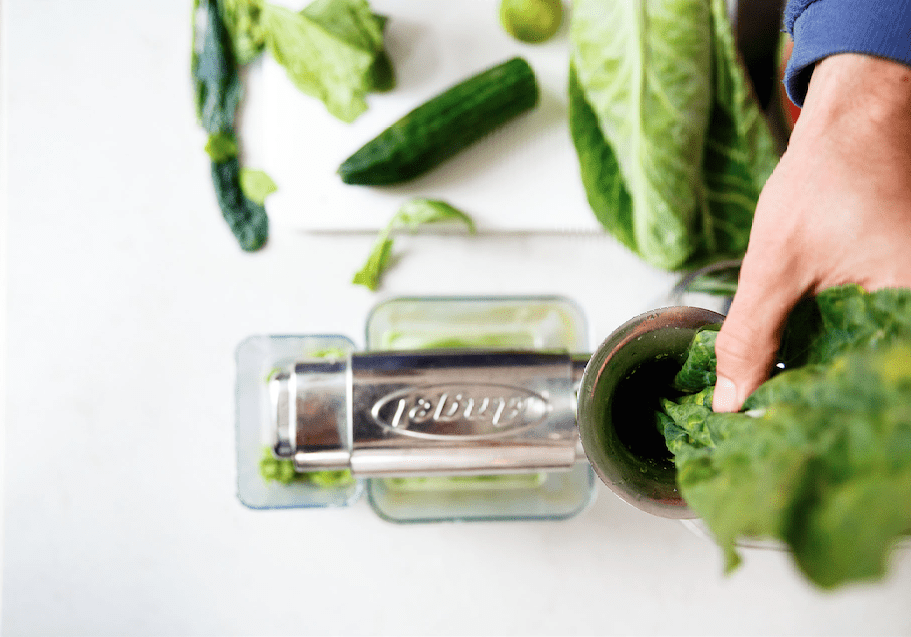
Last but not least: slow juicing. As you probably know, at Sap.je we only work with this method. This is because our research has shown that it gives you the highest quality, delicious and healthy juice, in the most efficient way. Our stainless steel Angel slow juicer has a powerful screw press that grinds vegetables, fruits, herbs, spices and seaweed slowly and efficiently.

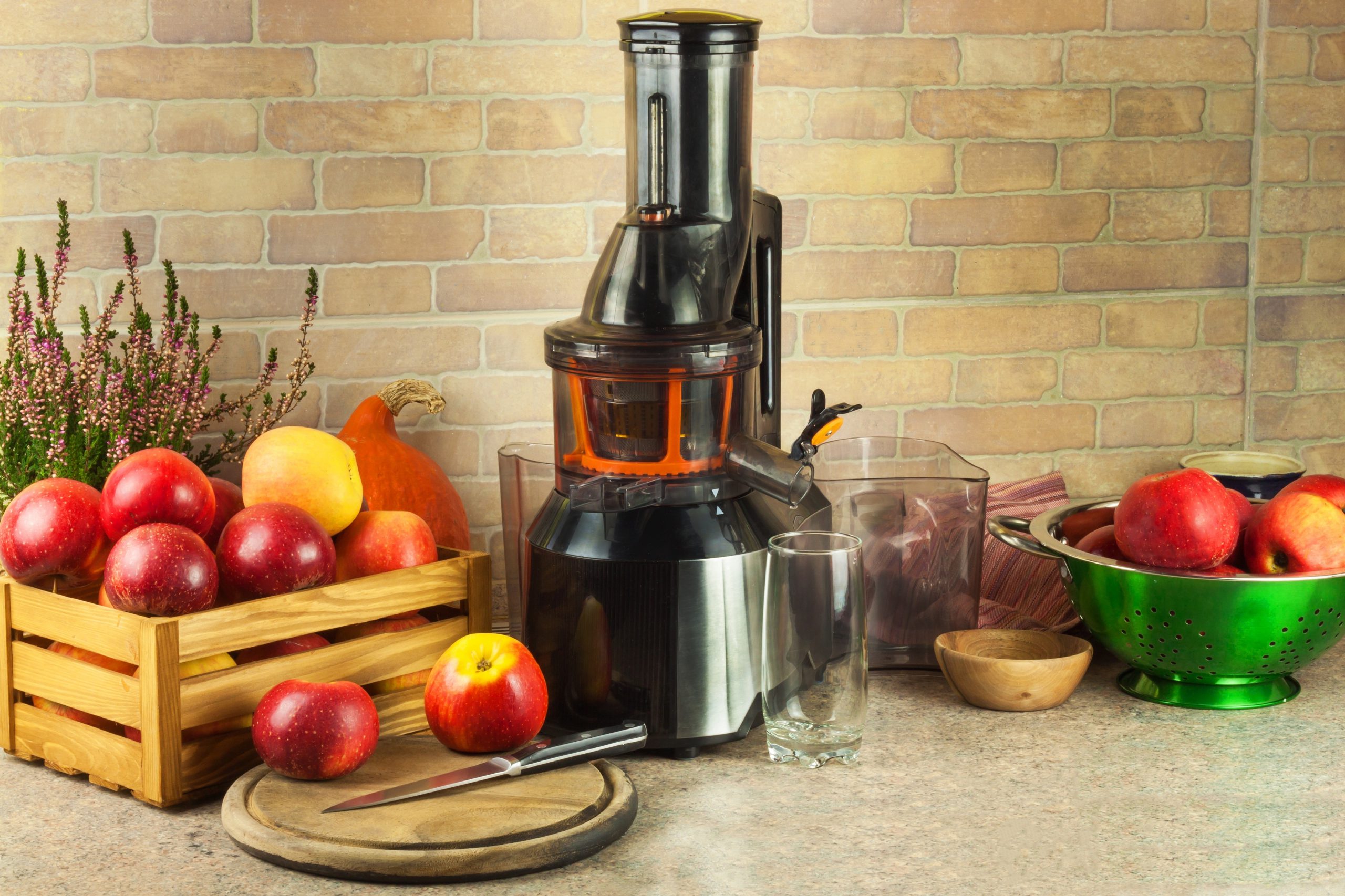
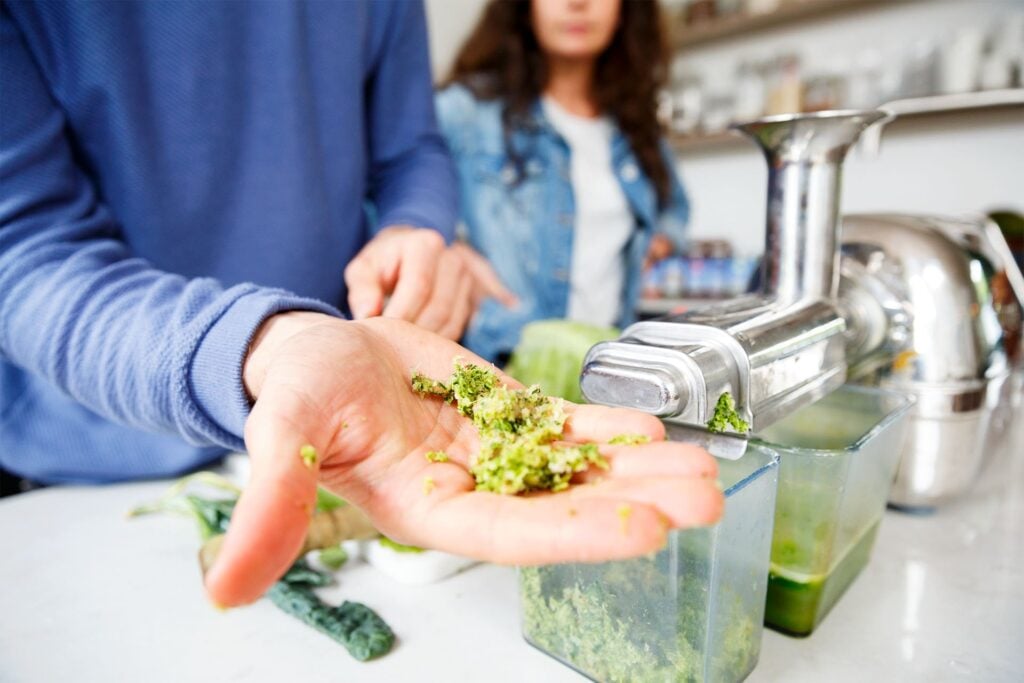
Slow juicing does not involve heat (slow juicing is also a form of cold pressing) and the ingredients are not exposed to oxygen. This machine imitates the chewing movements of your mouth, with this the machine extracts all the good nutrients from the ingredients. These are therefore easier for your body to absorb. The smell, color and taste of the juice are also better. Moreover, hardly any food is lost: all the juice is squeezed from the ingredients. The little pulp that remains is as dry as sawdust. By the way, even this is still good to use, for example in a homemade vegetable soup or vegetable omelet. Because you use up all the ingredients this way, you need to buy less. In this way, you will recoup the investment of the machine over time. What more could you want? Read more benefits of slow juicing here.

The king among slow juicers

After a long search, we changed our minds and bought the – in our opinion – king among current slow juicers: the Angel juicer. You can actually drink the divine juice from this device like water. The pulp that comes out of it is as dry as sawdust; even our rabbit won’t eat the leftover pulp. You get much more juice from fruits and vegetables than with previous juicers, which ends up saving money in the long run. The taste of the juice is also fuller and even more nutrients and enzymes are retained due to the unique grinding quality with stainless steel screws. This juicer can even juice hard tubers, herbs, spices, seaweed and all grasses. Ideal for high quality vegetable juice and to experience a detox . Also nice to know: cleaning this juicer takes as much time as cleaning a centrifugal or other slow juicer.

Dry pulp slow juicer

What should you look for when buying a slow juicer?

  • The juicer should be able to juice grasses, leafy vegetables, sprouts, herbs, hard tubers and fruits.
  • Look for a juicer that grinds ingredients slowly (slow).
  • The temperature should not exceed 40 °C during pressing (cold pressing).
  • The juicer should have a very dry pulp yield, preferably as dry as sawdust.
  • The juicer should be easy to clean in five minutes.
  • The device should not make too much noise.
  • The juicer should be stainless steel and not plastic so that the ingredients do not come into contact with harmful substances from plastic.

How we make the healthiest juice possible

At Sap.je, we consistently strive to make the best vegetable juice. To achieve this ambitious goal, we thought long and hard about every step of the production process. We weren’t satisfied until everything was right, from growing the vegetables to packaging the juices. Read on to discover what we do at Sap.je to make the healthiest juice possible!

How we make healthy juice

https://youtu.be/H0VHDrU8d4c

Selecting 100 percent organic ingredients 1.

If you drink vegetable juice for your health, it’s a shame if you get a dose of pesticides with every sip. That’s one of the reasons why at Sap.je we only choose organic vegetables. We have been SKAL (organic) certified for 6 years.

Best juice

2. Use as many local ingredients as possible

At Sap.je, we have a heart for nature. That’s another reason for choosing organic vegetables. We prefer to buy these from local farmers as well, to preserve the environment and ensure that the vegetables are fresh and truly organic. Some of our vegetables come from surrounding countries such as Belgium and Germany. Certain, more exotic ingredients come from France, Greece and Spain. By sourcing as much as possible from Europe, we try to reduce our CO2 emissions.

3. Opt for seasonal ingredients

We use as many seasonal ingredients as possible, grown in natural conditions. This is a way to do the planet a favor, but also to offer you as much variety as possible. Every vegetable has its own nutrients to offer. Therefore, it is a waste to eat the same vegetables all year round. Plus, variety keeps juicing exciting!

Vegetable juice recharge

4. Making juices in all the colors of the rainbow

The colors of vegetables, fruits, herbs and spices are partly responsible for the specific nutrients they contain. In short, a purple vegetable has different nutrients to offer than an orange one. By matching ingredients largely by color, we ensure that you can very specifically choose a juice that suits your needs.

5. Collaborate with healthexperts & Michelin star chefs

At Sap.je, we like to make vegetable juice that is both super healthy and super delicious. To achieve that, we work with experts as much as possible. These include health gurus such as Juglen Zwaan, David Wolfe, Joe Cross and Richard de Leth as well as top chefs such as Ron Blaauw, Jonnie Boer and Sergio Herman.

Wild by david wolfe

6. Use lots of vegetables

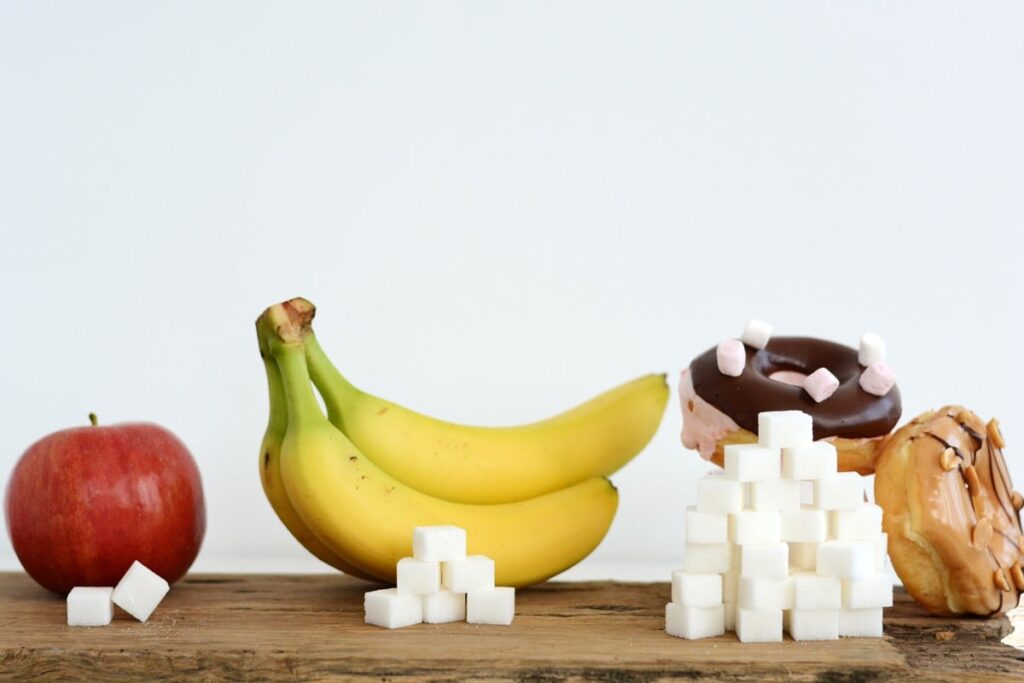
With one Sap.je, you get more vegetables in one go than you minimally need in a day. The nutrition center prescribes a minimum of 250 grams, but our juices often contain 370 to 420 grams of vegetables. And if you follow our detox you even get several kilos per day! Our vegetable juices consist of at least 85 percent vegetables, supplemented with fruits, herbs and spices. By using few fruits, we keep the fruit sugars limited. As a result, you won’t get a strong spike in your blood sugar after drinking a juice. It’s also better for your tooth enamel. Read about the benefits of drinking vegetable juice here.

7. Selecting freshly picked ingredients

Because Sap.je sources most of its ingredients from the Netherlands, we can better guarantee that they are freshly picked. We work with farmers who grow and harvest their vegetables with love and let them ripen in the open air and sunshine as much as possible. Their vegetables are picked within 24 to 48 hours, after which sand, insects and other debris are removed as much as possible. Then they go directly to our juice lab, where we further process the ingredients ourselves.

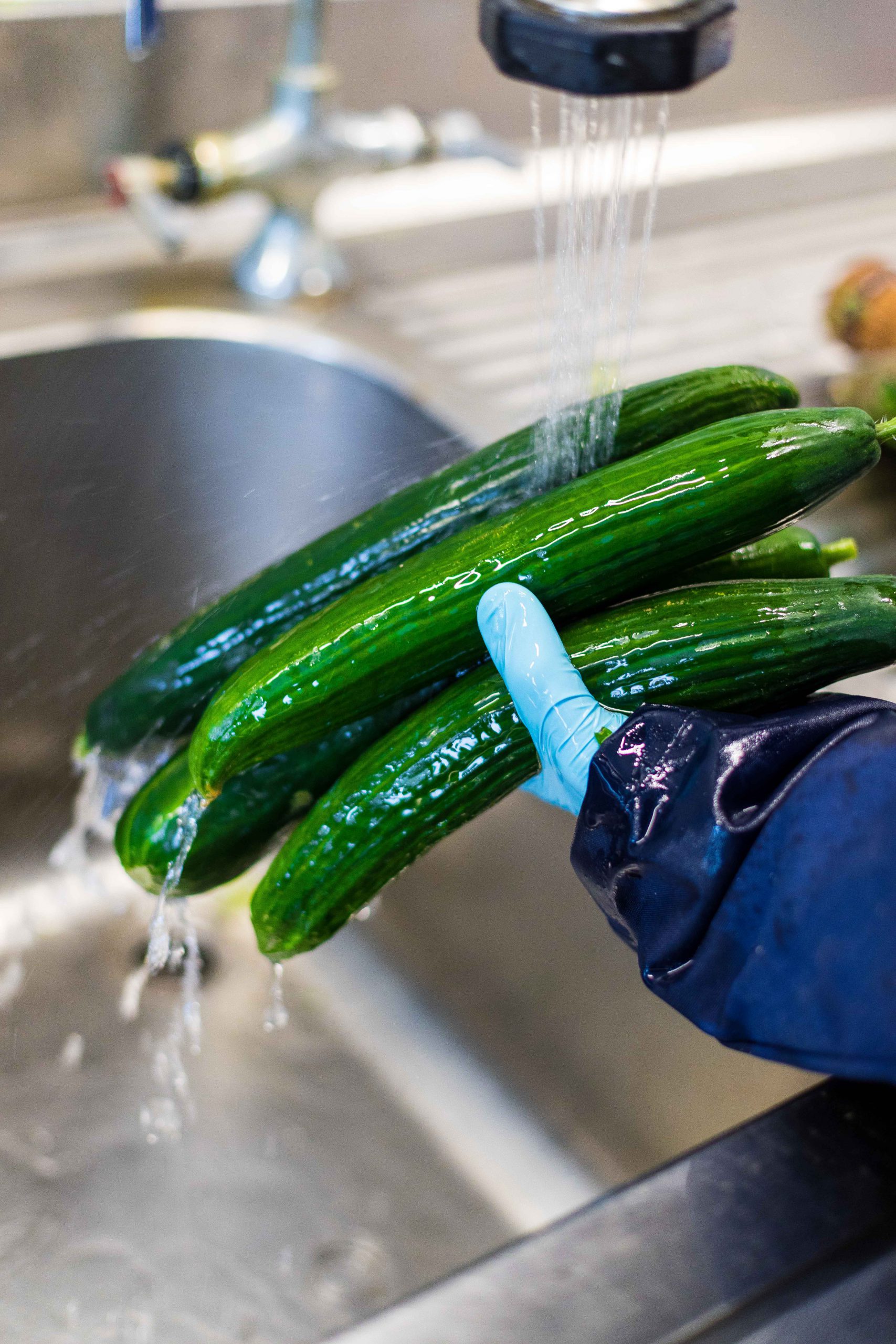
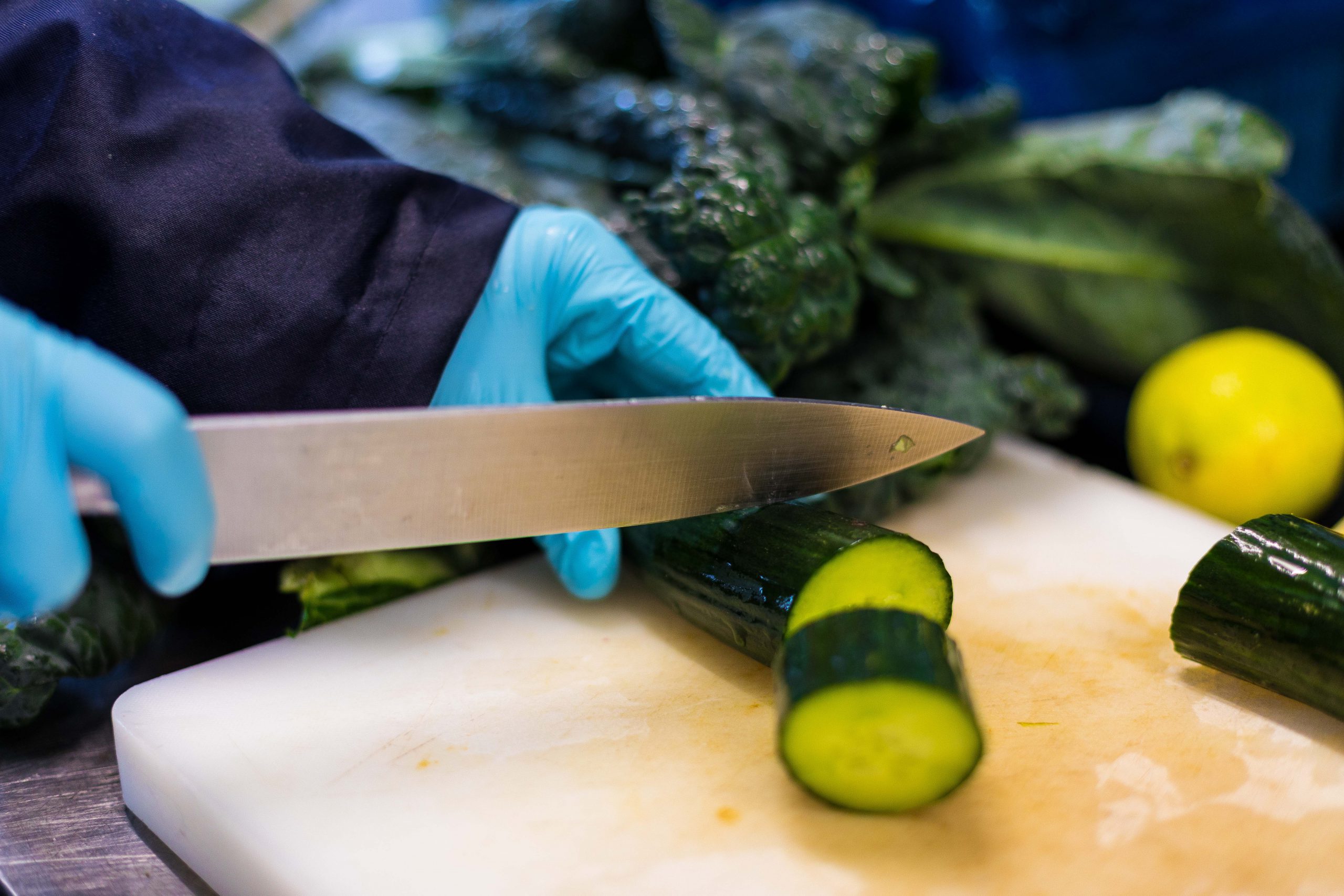
8. Washing, cutting and pressing vegetables by hand

Washing, cutting and pressing are all done by hand at Sap.je. This artisanal method allows us to guarantee high quality.

Chop vegetables

9. Using a slow juicer

After doing extensive research, we have discovered that we can use a slow juicer to make the very best juices. These are the richest in nutrients, but also excel in color, aroma and taste. Moreover, little food is lost with slow juicing. In fact, the relatively small amount of pulp that remains goes to the animals on a local biodynamic farm each week. We use a custom-made slow juicer that is made entirely of stainless steel. This prevents unwanted substances in the juice, such as plastic particles. Read about the benefits of a slow juicer here .

Slowjuicer

10. Not using plastic in production

You won’t find any plastic at all in our production process. Everything we use, from the slow juicer to the juice barrels, spoons and bottling equipment, is stainless steel.

11. Cool pressing the juice

We squeeze the juice in a closed kitchen, where it is 7 degrees Celsius. No heat is released during the pressing itself either. This way we preserve as many nutrients as possible from the ingredients.

12. Do not add anything to the juice

Our juices consist 100 percent of organic, raw vegetables, fruits, herbs and spices; nothing else. We use no preservatives, fragrances, colors or flavors and add absolutely no water to the juices. Also, the ingredients are not processed in any way; there is no HPP or pasteurization. As a result, vitamins, minerals, enzymes and other nutrients are better preserved.

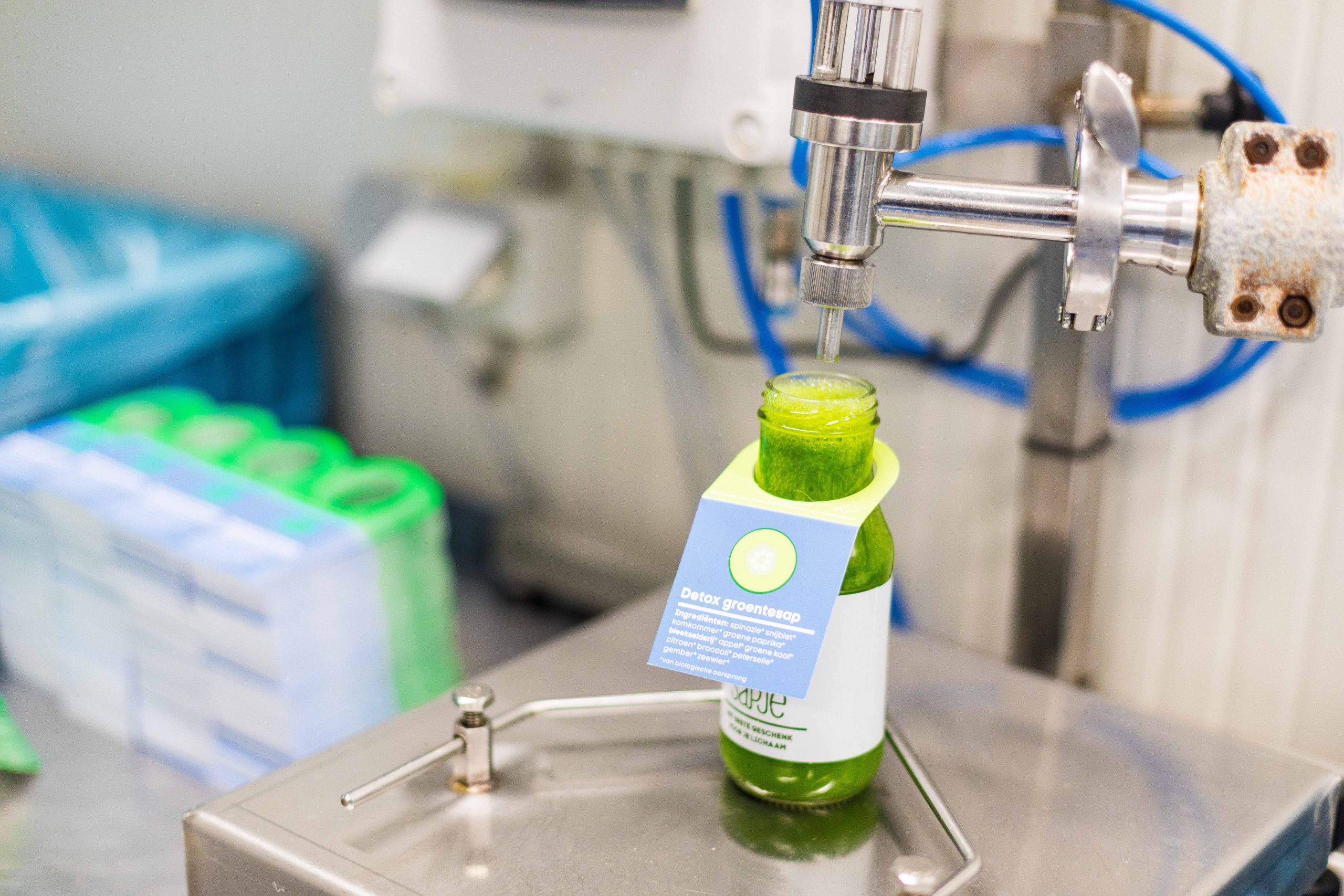
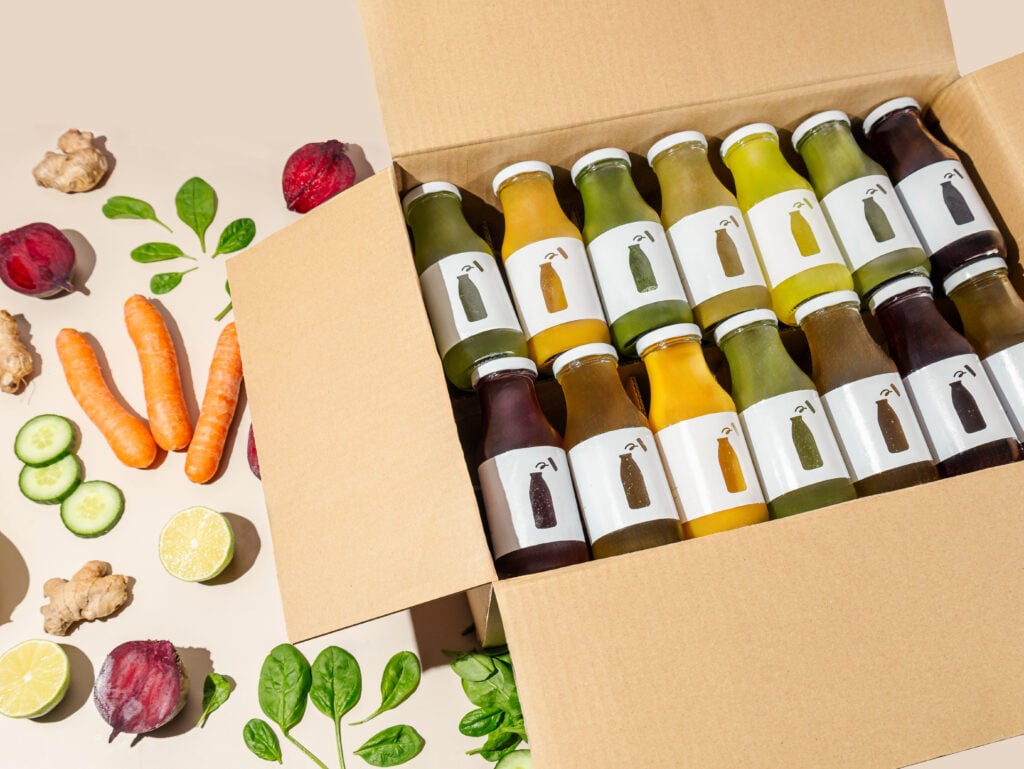
13. Bottling the juice in glass.

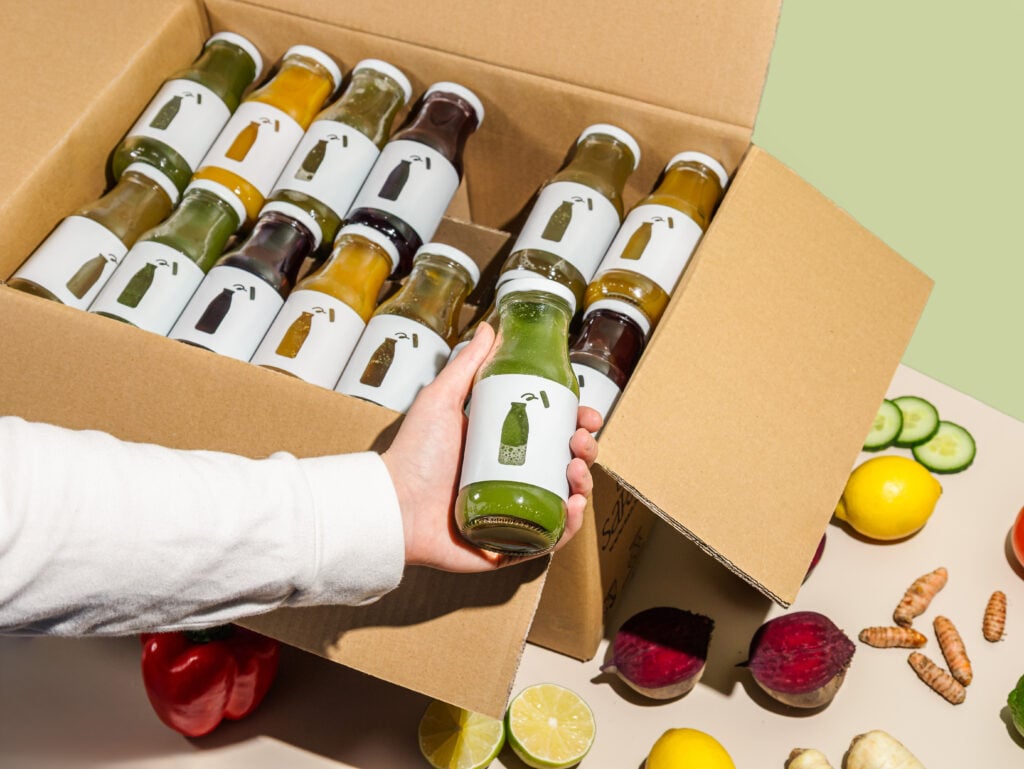
To keep the quality of the juice as good as possible, we bottle it in glass bottles. With plastic bottles you run the risk of toxins “leaking” into the juice, with glass you don’t. Moreover, glass is a much more environmentally friendly material. Ours is recycled and the caps are also recyclable. By the way, the labels and additional packaging materials are all FSC certified, meaning they come from responsible forestry.

Juices

14. Freezing the juice.

Immediately after pressing, our juices go into the shock freezer. This freezes the juices at lightning speed, keeping them fresh for as long as possible. If we were to deliver the juices fresh, they would lose their nutritional value before they reach you. With frozen juices, we don’t have that problem.

15. Use natural cleaning products

We clean all our materials with natural, plant-based cleaning agents. This prevents any unexpected harmful substances from reaching the juice. This is also better for the environment and our employees.

16. Running entirely on solar and wind power

At Sap.je, we like to look at the bigger picture. Then we can only conclude that what is good for the world is good for us and good for you. That’s why we run entirely on local sustainable solar and wind energy, directly from Zeeland.

Vegetable juice from juiceje

Why we choose glass

What many people notice when they receive their first Sap.je is that our vegetable juice comes in a glass bottle. Vegetable juice in glass is just not that common, but as far as we are concerned, this will soon change! This is because we believe that with juice in glass you can avoid many of the disadvantages of plastic bottles. Since we regularly get questions about the advantages of glass versus plastic, we decided to dedicate this blog to all the reasons why we choose glass. Among other things, we will discuss the benefits of vegetable juice in glass for your health and the environment. Read on to find out why we think juice in glass is best!

Why vegetable juice in glass?

One question we still get regularly at Sap.je is why we deliver our juice and detox in a glass bottle. The short answer is: Because it is better for the quality of our juice, the health of our customers and for the environment. We did a lot of research to reach this conclusion. We studied several studies, for example, on the benefits of glass versus plastic. We also went to see companies that recycle glass, landfills and waste plants to orient ourselves properly. If you would like to know what our conclusions were, read on. Below we list the main points for you.

Detox juice in glass

Glass versus plastic

Non-alcoholic beverages, such as soft drinks, fruit juices, smoothies and vegetable juices are mainly sold in plastic bottles. Plastic is a light material, which has natural practical advantages when it comes to transportation and storage. But for us, the disadvantages of plastic outweigh the advantages. Plastic is bad for the environment; its production is unsustainable and polluting. Moreover, plastic waste is not biodegradable and difficult to recycle. In addition, the chemicals in the plastic can mix with the juice. This is detrimental to the taste and health of vegetable juice. Glass is a heavier material and breaks more easily. But the advantages are great: glass is made from natural materials, can be recycled again and again, and does not compromise the quality and nutritional value of our vegetable juice. To further save the environment, we at Sap.je have chosen to use 100 percent recycled glass.

Empty glass bottles

More on the environmental drawbacks of plastic bottles

Plastic bottles are still widely used worldwide. According to recent figures, around 1 million plastic bottles are used every minute around the world. In the Netherlands, 900 million plastic bottles are thrown away every year. These are not biodegradable. Plastic recycling is still difficult. Only 14 percent of plastic waste worldwide is collected for recycling. Only 2 percent of this is actually recycled. Plastic, by the way, cannot be recycled endlessly. What is not recycled often ends up in landfills or in the ocean (where it becomes part of the plastic soup). Or it is burned, releasing many toxins into the atmosphere. The production of plastic is also not sustainable. In fact, making one plastic bottle requires a quarter of a liter of oil, which must be extracted from the earth. Petroleum and other polluting toxic chemicals are used in the production of a plastic bottle. Moreover, they are bad for your health.

Dangers of drinking from plastic to your health

As mentioned, plastic is made from various chemicals. Many plastic bottles are so-called PET (polyethylene clay terephthalate) bottles. These contain substances that can be carcinogenic and endocrine disruptors, such as:
-antimony
-DEHA
-bisphenol A (BPA) and other plasticizers
-dioxin
-vinyl chloride
-styrene

These substances can start to mix with the liquid in a plastic bottle, causing you to ingest them unnoticed. They can also negatively affect the taste of the contents of the bottle. Heating or repeated use of a PET bottle would promote the release of these substances. So be careful with plastic bottles near a heater or in hot sunlight. Want to reuse your plastic bottle to save the environment? Then this can be harmful to your health. On top of that, plastic is susceptible to mold, especially at the screw cap. So drinking from plastic is not good for your health either.

More on the benefits of vegetable juice in glass

By now you probably understand better why Sap.je chose vegetable juice in glass. Many of our customers choose our juices because they are organic, raw and of good quality. This makes them perfect to support your health, so we want to prevent you from unwittingly ingesting harmful substances through the packaging. Moreover, we depend on nature to grow our vegetables, fruits, herbs, spices and other ingredients. Therefore, we do what we can to spare them as much as possible. Glass is made from sand, soda and limestone. These are all natural raw materials. No chemical additives or additives are needed to make the material suitable as packaging for juice. As a result, you don’t have to worry about harmful substances. If you throw the bottles in the bottle bank, they are excellently recycled, so no raw materials are lost. Glass can be recycled endlessly without losing quality. That makes it very sustainable. So at Sap.je, we only use recycled glass. This is not only better for your health and the environment, but is also pleasant to use. We like the feel, weight and clarity of glass.

10 benefits of drinking vegetable juice

These days you hear more and more people jubilating about the benefits of drinking vegetable juice. That a good portion of vegetables is important for your health may not be news. But what exactly is so good about drinking vegetable juice was possibly still a mystery to you. Recognizable? Then read on to discover the 10 most important benefits of drinking vegetable juice!

Benefits of drinking vegetable juice

1. Vegetable juice is packed with vitamins

Drinking vegetable juice is a great way to get lots of vitamins naturally. Most vegetables are packed with vitamins, such as vitamins A, B, C and E. These support your immune system, energy levels and contribute to normal cell differentiation. Especially if you choose an organic, fresh vegetable juice that has been slow-pressed, you are giving your body perfect support with these. Best of all, you get them naturally, without unnecessary additives.

Vegetable juice

2. Vegetable juices contain many minerals

Your body needs several minerals to function properly. For example, iron contributes to normal concentration and supports energy levels, magnesium plays a role in maintaining smooth muscles and is good for the nervous system, calcium is good for the skeleton, and zinc helps ensure good resistance and normal hormone levels. These and other minerals are found in a good vegetable juice in good amounts.

3. Vegetable juice is rich in antioxidants

Antioxidants are various vitamins, minerals and other substances that help protect your body from free radicals. Free radicals can cause damage to your cells and tissues. Various vegetables, fruits, herbs and spices are rich in antioxidants and many of these can be found in our juices. Check out our antioxidant shot!

Palm kale vegetable juice

4. Drinking vegetable juice can support your immune system

Your immune system helps make your body resilient. Various vitamins, minerals and antioxidants, such as vitamin A, vitamin C, folic acid, iron and copper can support your immune system. They are widely represented in most juices, but with a special ginger shot, you are sure to get a good dose.

5. Drinking vegetable juices can give you more energy

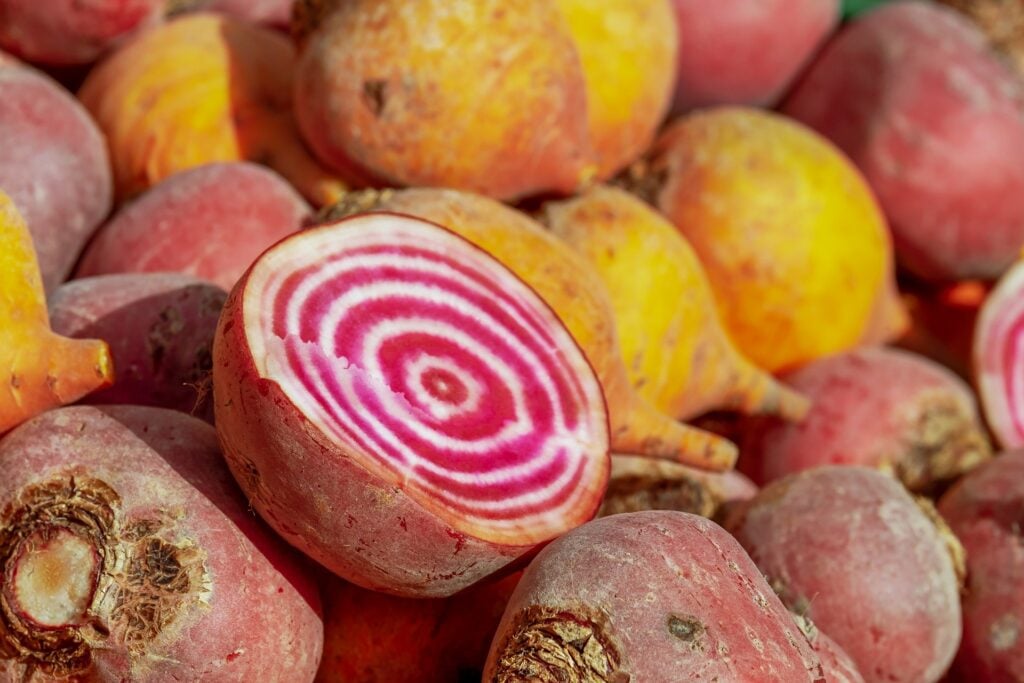
Could your energy levels use some support? Then drinking vegetable juices is a good idea. Especially choose juices rich in vitamin C, the B vitamins, iron, magnesium and calcium. This will support your immune system and contribute to a clear mind. Most juices are energy bombs, but our red beet juice is a real winner.

6. Replace unhealthy habits

Vegetable juices are packed with nutrients and can be used very well to make a new healthy start. They contain no harmful substances, but instead are high in minerals such as potassium and calcium, which support your health. Replace your daily cups of coffee, cigarettes or snacks with juices and experience how much cleaner, fresher and more energetic you can feel then. The detox juice is made for it. You can also replace all your meals with fresh juices with a special detox cleanse of 3, 5 or 7 days from Sap.je. Here you will also get all the guidance you need to do a detox cleanse effectively and responsibly.

Detox juice

7. No added sugars

Of course this does not apply to all vegetable juice in the supermarket, but if you make it yourself or buy it from us, the vegetable juice contains no added sugars. With pure and only vegetables, fruits, herbs and spices, you can make very tasty juices that have all the above benefits, you don’t need unhealthy added sugars for that.

8. Drinking vegetable juice can support your brain function

Several nutrients can contribute to the proper functioning of your brain. For example, the B vitamins, vitamin C and magnesium are good for your memory and ability to concentrate and for good mental balance. Now let these vitamins and minerals be plentiful in our juices….

9. Drinking vegetable juice is easier than eating vegetables

According to the nutrition center, we need to eat at least 250 grams of vegetables a day to stay healthy. With one Sap.je per day, you already reach that number. In fact, most juices contain 400 grams of different types of vegetables. They are pressed in a cool environment with a special slow juicer, which mimics the grinding motion of your own jaws and molars. Then they are quickly bottled and frozen. This way, you get the full benefit of all the nutrients from the vegetables.

10. Drinking vegetable juice is delicious

Last but not least, drinking vegetable juice is delicious! Of course, everyone has a different taste, but at Sap.je we do everything we can to ensure that our vegetable juices are not only healthy, but also taste delicious. That’s why we regularly collaborate with top chefs to ensure that every bottle of vegetable juice gives you a tantalizing taste experience. Which juice will you try and order?

Experience the power of vegetable juice
So what makes vegetable juice so healthy?
Drinking vegetable juice is a great way to get lots of vitamins naturally. Most vegetables are packed with vitamins, such as vitamins A, B, C and E, which contribute to your immune system, energy levels and play a role in cell differentiation, among other things.
Many people fail to eat enough vegetables in a day. This is due, for example, to busy (work) schedules or simply because people don’t like it. A juice contains vitamins from sometimes up to 5 kilos of vegetables! So by drinking one juice a day, you get all the important vitamins and minerals to keep your health good. No time or inclination for vegetables? Then drink a juice quickly!
Do you also have a healthy vegetable juice recipe to make at home?
We have plenty of healthy vegetable juice recipes that you can easily make at home. Take a look at our site and discover the delicious and most importantly healthy juice recipes for the slow juicer at home.
No slow juicer? Don’t panic! You can also use a blender, hand blender or juicer. Just be aware that the juices are a little less effective for your body.
What does vegetable juice do to your body?
Vegetable juices have numerous benefits for your health. We list the benefits for you:

Vegetable juice is packed with vitamins.
Vegetable juices are high in minerals.
Vegetable juice is rich in antioxidants.
Drinking vegetable juice supports your immune system.
Drinking vegetable juice gives you more energy.
Drinking vegetable juice can support your brain function.
Drinking vegetable juice increases your vegetable intake
Drinking vegetable juice is easier than eating vegetables.
Drinking vegetable juice is tasty.

We explain the benefits in detail to you at the top of the page.
How many vegetable juices a day?
The ideal amount of vegetable juices per day depends on your goal, but in general:

For daily consumption as a supplement to your diet: 1 to 2 vegetable juices per day is enough to get extra vitamins, minerals and antioxidants.

During a juice fast/detox cleanse: usually 5 to 6 vegetable juices per day, spread throughout the day, to support your body while you are temporarily not eating solid foods.

It is important that you choose cold-pressed, high-fiber and vegetable-rich juices, with little to no added sugars or fruit, so that you get the health benefits without raising your blood sugar too quickly.
10 benefits of drinking vegetable juice 10 benefits of drinking vegetable juice